Hospices Civils de Lyon, Hôpital Edouard Herriot, Service d'Hygiène, Epidémiologie et Prévention, Lyon, France ; Université de Lyon, université Lyon 1, CNRS UMR 5558, laboratoire de Biométrie et de Biologie Evolutive, Equipe Epidémiologie et Santé Publique, Lyon, France.
PLoS One. 2013 Sep 11;8(9):e73970. doi: 10.1371/journal.pone.0073970. eCollection 2013.
Contacts between patients, patients and health care workers (HCWs) and among HCWs represent one of the important routes of transmission of hospital-acquired infections (HAI). A detailed description and quantification of contacts in hospitals provides key information for HAIs epidemiology and for the design and validation of control measures.
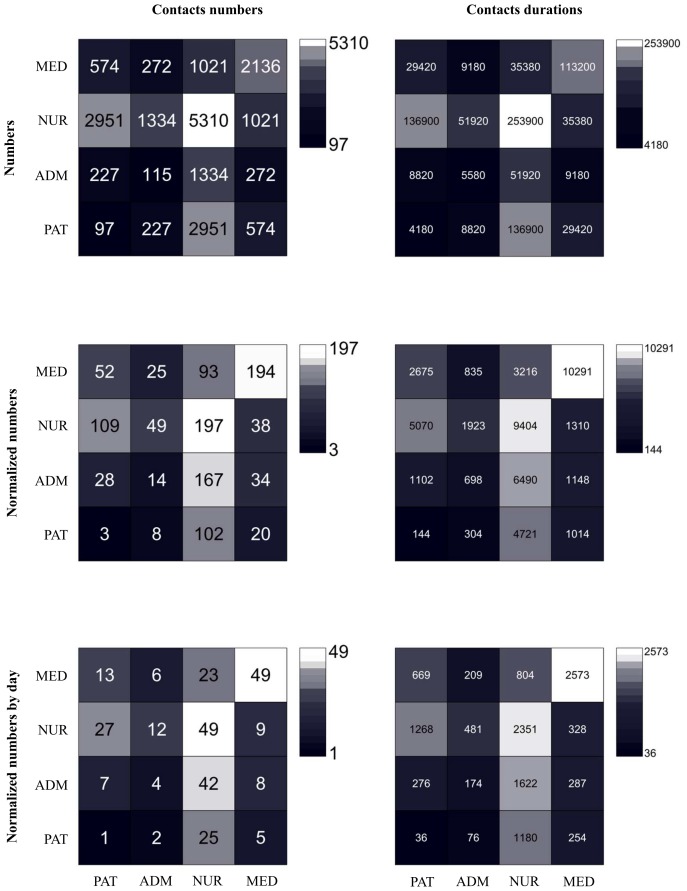
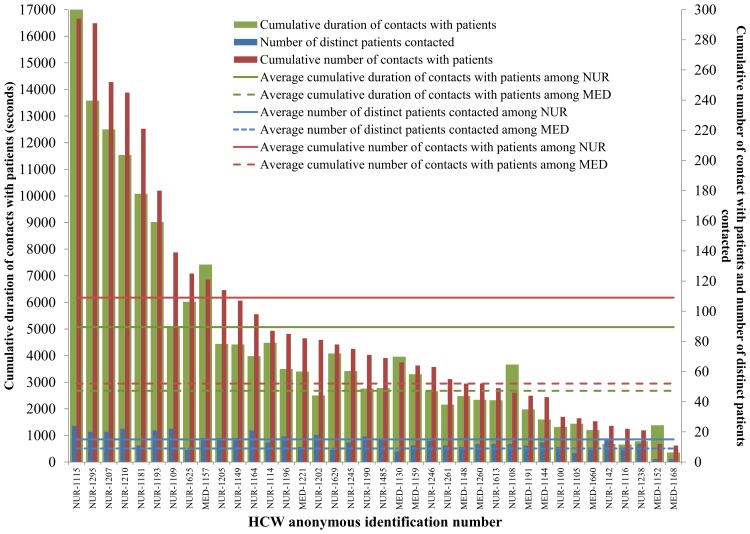
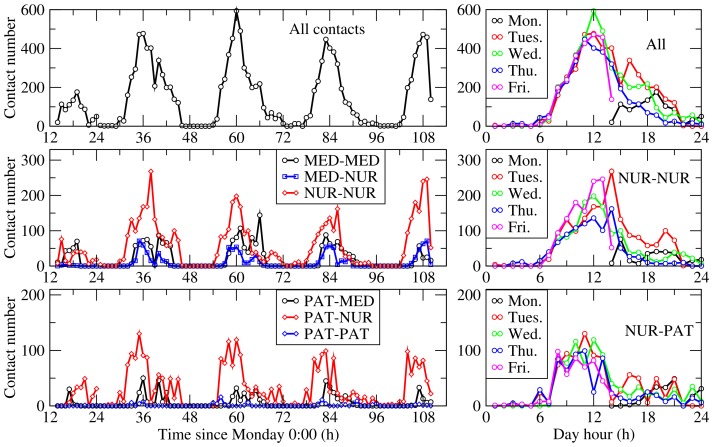
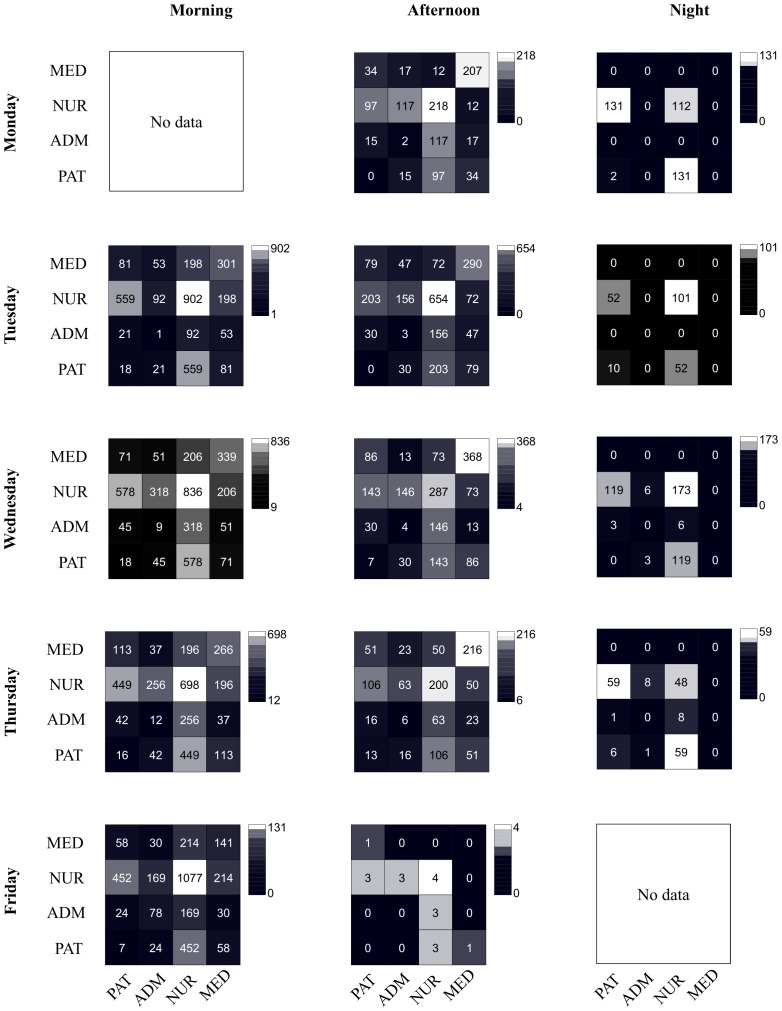
We used wearable sensors to detect close-range interactions ("contacts") between individuals in the geriatric unit of a university hospital. Contact events were measured with a spatial resolution of about 1.5 meters and a temporal resolution of 20 seconds. The study included 46 HCWs and 29 patients and lasted for 4 days and 4 nights. 14,037 contacts were recorded overall, 94.1% of which during daytime. The number and duration of contacts varied between mornings, afternoons and nights, and contact matrices describing the mixing patterns between HCW and patients were built for each time period. Contact patterns were qualitatively similar from one day to the next. 38% of the contacts occurred between pairs of HCWs and 6 HCWs accounted for 42% of all the contacts including at least one patient, suggesting a population of individuals who could potentially act as super-spreaders.
Wearable sensors represent a novel tool for the measurement of contact patterns in hospitals. The collected data can provide information on important aspects that impact the spreading patterns of infectious diseases, such as the strong heterogeneity of contact numbers and durations across individuals, the variability in the number of contacts during a day, and the fraction of repeated contacts across days. This variability is however associated with a marked statistical stability of contact and mixing patterns across days. Our results highlight the need for such measurement efforts in order to correctly inform mathematical models of HAIs and use them to inform the design and evaluation of prevention strategies.
患者、患者与医护人员(HCWs)之间以及 HCWs 之间的接触是医院获得性感染(HAI)传播的重要途径之一。详细描述和量化医院内的接触情况可为 HAI 流行病学以及控制措施的设计和验证提供关键信息。
我们使用可穿戴传感器来检测大学医院老年病房中个体之间的近距离互动(“接触”)。接触事件的测量空间分辨率约为 1.5 米,时间分辨率为 20 秒。该研究包括 46 名 HCWs 和 29 名患者,持续了 4 天 4 夜。总共记录了 14,037 次接触,其中 94.1%发生在白天。接触次数和持续时间在早晨、下午和晚上之间有所不同,并且为每个时间段构建了描述 HCW 和患者之间混合模式的接触矩阵。接触模式从一天到另一天的定性相似。38%的接触发生在 HCWs 对之间,而 6 名 HCWs 占所有接触的 42%,其中至少有一名患者,这表明存在一些潜在的超级传播者。
可穿戴传感器代表了一种用于测量医院接触模式的新工具。收集的数据可以提供有关影响传染病传播模式的重要方面的信息,例如个体之间接触次数和持续时间的强烈异质性、一天中接触次数的变化以及重复接触的比例跨越几天。然而,这种可变性与接触和混合模式在几天内的显著统计稳定性相关。我们的研究结果强调了这种测量工作的必要性,以便正确为 HAI 的数学模型提供信息,并利用这些模型来为预防策略的设计和评估提供信息。