Department of Pharmacology, College of Medicine, University of Saskatchewan, Saskatoon, Saskatchewan, Canada.
PLoS One. 2013 Sep 10;8(9):e74212. doi: 10.1371/journal.pone.0074212. eCollection 2013.
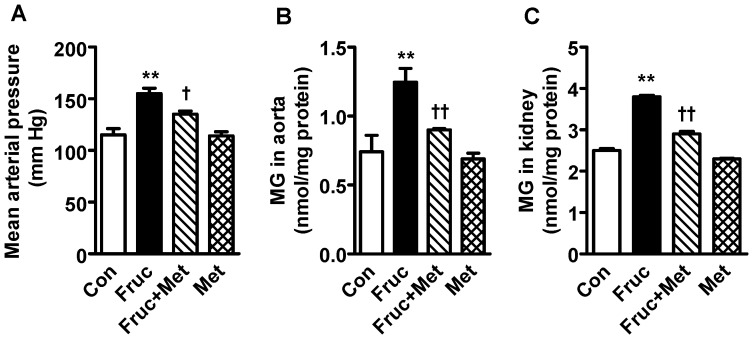
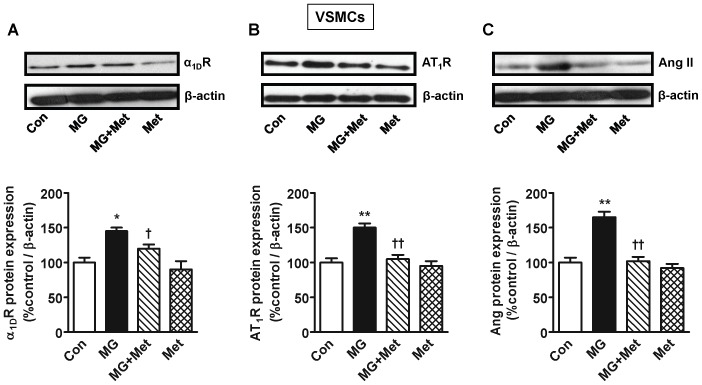
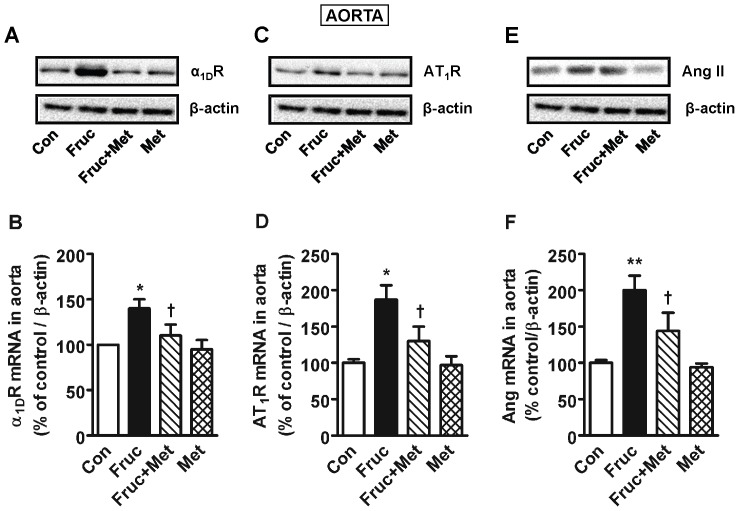
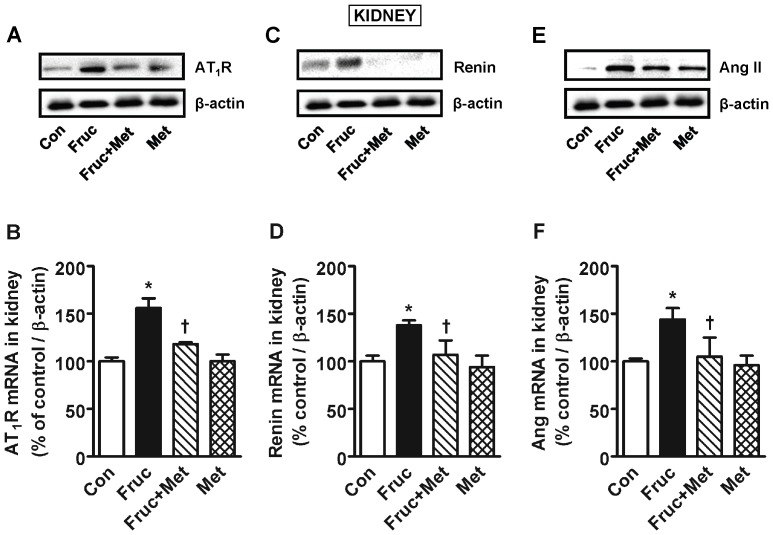
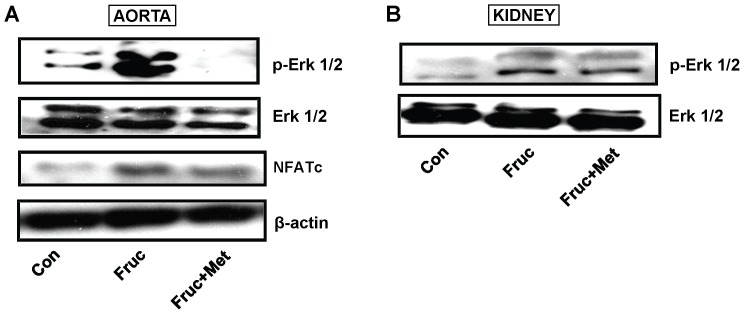
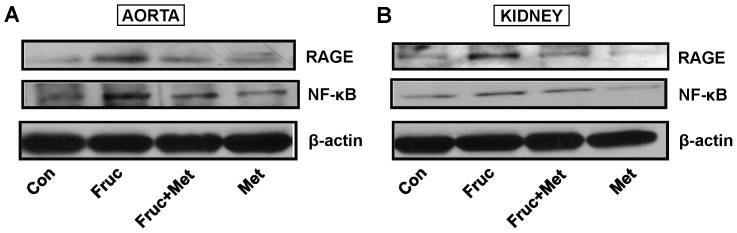
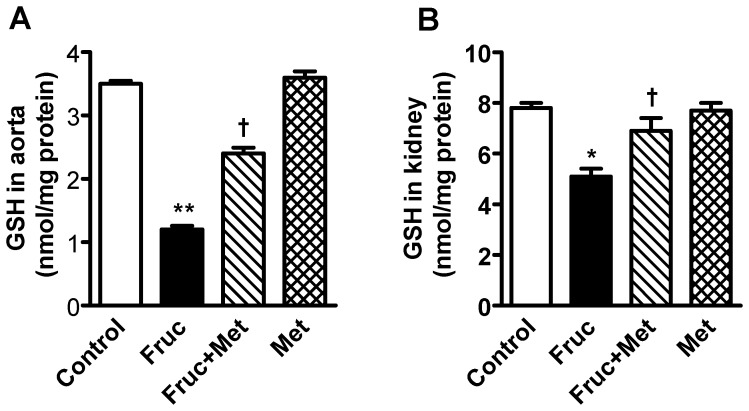
The current epidemic of obesity and type 2 diabetes is attributed to a high carbohydrate diet, containing mainly high fructose corn syrup and sucrose. More than two thirds of diabetic patients have hypertension. Methylglyoxal is a highly reactive dicarbonyl generated during glucose and fructose metabolism, and a major precursor of advanced glycation end products (AGEs). Plasma methylglyoxal levels are increased in hypertensive rats and diabetic patients. Our aim was to examine the levels of methylglyoxal, mediators of the renin angiotensin system and blood pressure in male Sprague-Dawley rats treated with a high fructose diet (60% of total calories) for 4 months. The thoracic aorta and kidney were used for molecular studies, along with cultured vascular smooth muscle cells (VSMCs). HPLC, Western blotting and Q-PCR were used to measure methylglyoxal and reduced glutathione (GSH), proteins and mRNA, respectively. Fructose treated rats developed a significant increase in blood pressure. Methylglyoxal level and protein and mRNA for angiotensin II, AT1 receptor, adrenergic α1D receptor and renin were significantly increased, whereas GSH levels were decreased, in the aorta and/or kidney of fructose fed rats. The protein expression of the receptor for AGEs (RAGE) and NF-κB were also significantly increased in the aorta of fructose fed rats. MG treated VSMCs showed increased protein for angiotensin II, AT1 receptor, and α1D receptor. The effects of methylglyoxal were attenuated by metformin, a methylglyoxal scavenger and AGEs inhibitor. In conclusion, we report a strong association between elevated levels of methylglyoxal, RAGE, NF-κB, mediators of the renin angiotensin system and blood pressure in high fructose diet fed rats.
当前肥胖和 2 型糖尿病的流行归因于高碳水化合物饮食,主要含有高果糖玉米糖浆和蔗糖。超过三分之二的糖尿病患者伴有高血压。甲基乙二醛是葡萄糖和果糖代谢过程中产生的一种高度反应性二羰基化合物,也是晚期糖基化终产物(AGEs)的主要前体。高血压大鼠和糖尿病患者的血浆甲基乙二醛水平升高。我们的目的是研究雄性 Sprague-Dawley 大鼠在高果糖饮食(总热量的 60%)治疗 4 个月后,甲基乙二醛、肾素血管紧张素系统介质和血压的水平。胸主动脉和肾脏用于分子研究,以及培养的血管平滑肌细胞(VSMCs)。HPLC、Western blot 和 Q-PCR 分别用于测量甲基乙二醛和还原型谷胱甘肽(GSH)、蛋白质和 mRNA。果糖处理的大鼠血压显著升高。果糖喂养大鼠的主动脉和/或肾脏中,甲基乙二醛水平以及血管紧张素 II、AT1 受体、肾上腺素能α1D 受体和肾素的蛋白和 mRNA 水平显著升高,而 GSH 水平降低。果糖喂养大鼠主动脉中 AGEs 受体(RAGE)和 NF-κB 的蛋白表达也显著增加。MG 处理的 VSMCs 表现出血管紧张素 II、AT1 受体和α1D 受体的蛋白表达增加。甲基乙二醛的作用被二甲双胍(一种甲基乙二醛清除剂和 AGEs 抑制剂)减弱。总之,我们报告了高果糖饮食喂养大鼠中甲基乙二醛、RAGE、NF-κB、肾素血管紧张素系统介质和血压之间的强烈关联。