Signaling Systems Laboratory, University of California San Diego, La Jolla, California, United States of America.
PLoS Negl Trop Dis. 2013 Sep 5;7(9):e2424. doi: 10.1371/journal.pntd.0002424. eCollection 2013.
Brucellosis, a zoonotic infection caused by one of the Gram-negative intracellular bacteria of the Brucella genus, is an ongoing public health problem in Perú. While most patients who receive standard antibiotic treatment recover, 5-40% suffer a brucellosis relapse. In this study, we examined the ex vivo immune cytokine profiles of recovered patients with a history of acute and relapsing brucellosis.
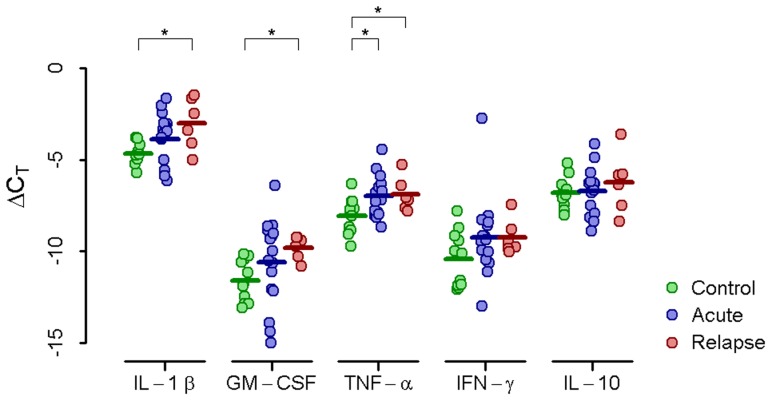
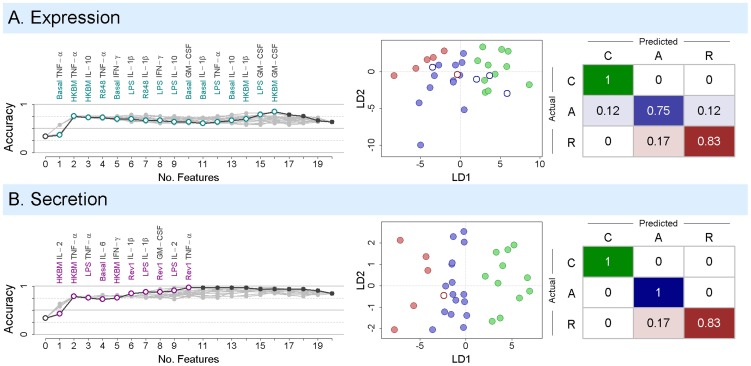
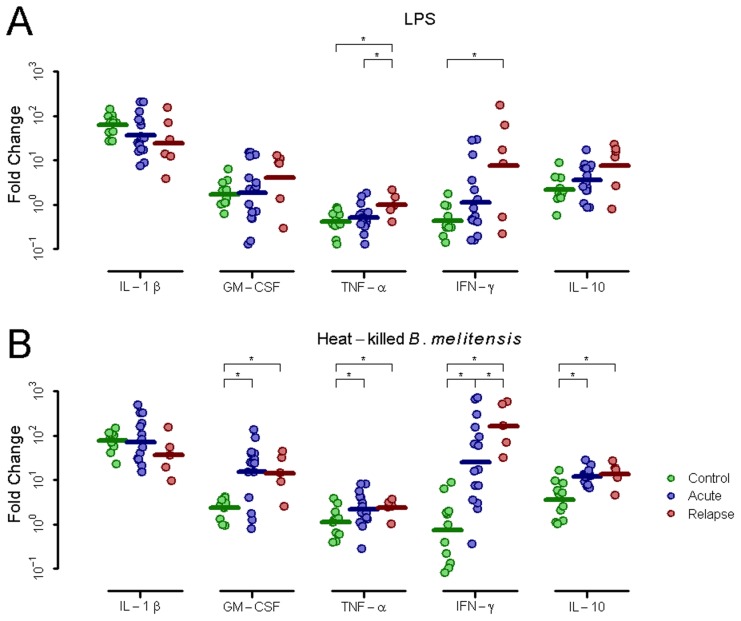
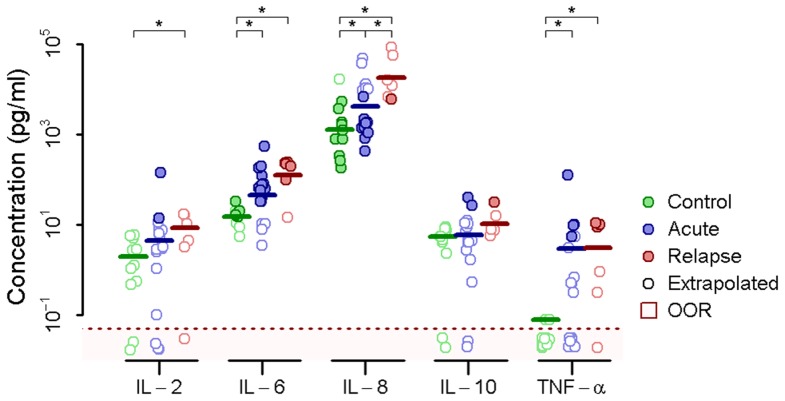
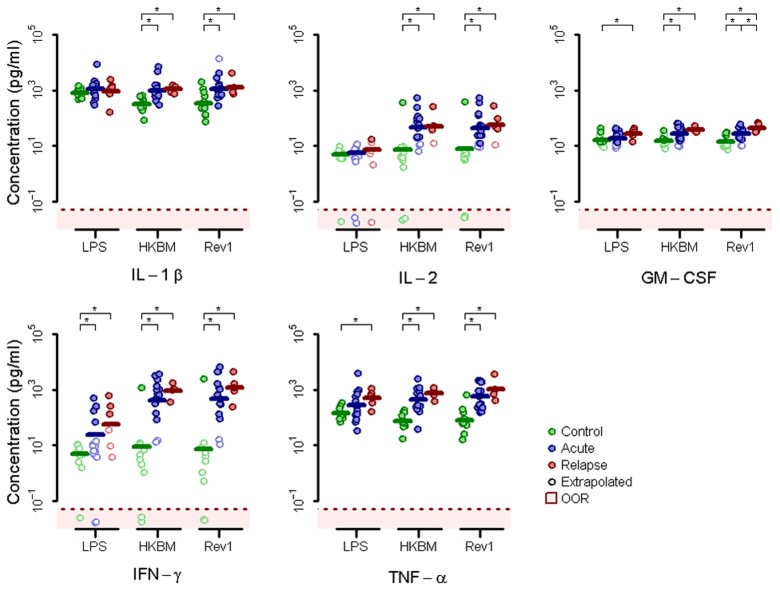
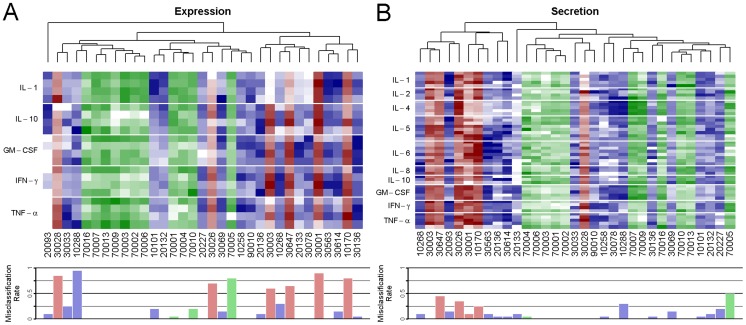
METHODOLOGY/PRINCIPAL FINDINGS: Blood was taken from healthy control donors, patients with a history of acute brucellosis, or patients with a history of relapsing brucellosis. Peripheral blood mononuclear cells were isolated and remained in culture without stimulation or were stimulated with a panel of toll-like receptor agonists or heat-killed Brucella melitensis (HKBM) isolates. Innate immune cytokine gene expression and protein secretion were measured by quantitative real-time polymerase chain reaction and a multiplex bead-based immunoassay, respectively. Acute and relapse patients demonstrated consistently elevated cytokine gene expression and secretion levels compared to controls. Notably, these include: basal and stimulus-induced expression of GM-CSF, TNF-α, and IFN-γ in response to LPS and HKBM; basal secretion of IL-6, IL-8, and TNF-α; and HKBM or Rev1-induced secretion of IL-1β, IL-2, GM-CSF, IFN-Υ, and TNF-α. Although acute and relapse patients were largely indistinguishable by their cytokine gene expression profiles, we identified a robust cytokine secretion signature that accurately discriminates acute from relapse patients. This signature consists of basal IL-6 secretion, IL-1β, IL-2, and TNF-α secretion in response to LPS and HKBM, and IFN-γ secretion in response to HKBM.
CONCLUSIONS/SIGNIFICANCE: This work demonstrates that informative cytokine variations in brucellosis patients can be detected using an ex vivo assay system and used to identify patients with differing infection histories. Targeted diagnosis of this signature may allow for better follow-up care of brucellosis patients through improved identification of patients at risk for relapse.
布鲁氏菌病是一种由布鲁氏菌属革兰氏阴性细胞内细菌引起的人畜共患感染,在秘鲁仍是一个持续存在的公共卫生问题。虽然大多数接受标准抗生素治疗的患者会康复,但仍有 5-40%的患者会出现布鲁氏菌病复发。在这项研究中,我们检测了既往有急性和复发性布鲁氏菌病病史的康复患者的体外免疫细胞因子谱。
方法/主要发现:采集健康对照供体、既往有急性布鲁氏菌病病史的患者或既往有复发性布鲁氏菌病病史的患者的血液。分离外周血单核细胞,在无刺激或用一组 Toll 样受体激动剂或热灭活布鲁氏菌(HKBM)分离物刺激的情况下进行培养。通过定量实时聚合酶链反应和基于微珠的多重免疫测定法分别测量先天免疫细胞因子基因表达和蛋白分泌。急性和复发患者与对照组相比,细胞因子基因表达和分泌水平始终升高。值得注意的是,这些包括:LPS 和 HKBM 刺激后 GM-CSF、TNF-α 和 IFN-γ 的基础和刺激诱导表达;IL-6、IL-8 和 TNF-α 的基础分泌;以及 HKBM 或 Rev1 诱导的 IL-1β、IL-2、GM-CSF、IFN-γ 和 TNF-α 的分泌。尽管急性和复发患者的细胞因子基因表达谱差异不大,但我们确定了一个准确区分急性和复发患者的强大细胞因子分泌特征。该特征包括基础 IL-6 分泌、LPS 和 HKBM 刺激后的 IL-1β、IL-2 和 TNF-α 分泌以及 HKBM 刺激后的 IFN-γ 分泌。
结论/意义:这项工作表明,使用体外检测系统可以检测到布鲁氏菌病患者的信息性细胞因子变化,并用于识别具有不同感染史的患者。对该特征的靶向诊断可能通过更好地识别有复发风险的患者,从而为布鲁氏菌病患者提供更好的随访护理。