1] Center for Molecular Imaging, The Brown Foundation Institute of Molecular Medicine, University of Texas Health Science Center at Houston, Houston, Texas 77030, USA [2].
Nat Commun. 2013;4:2472. doi: 10.1038/ncomms3472.
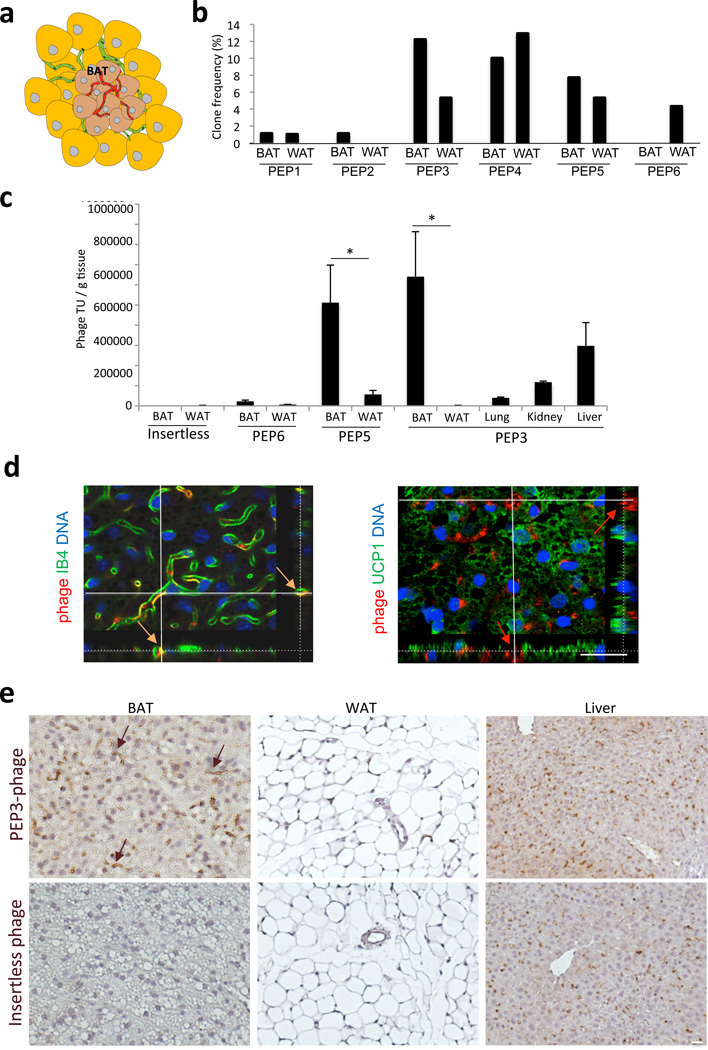
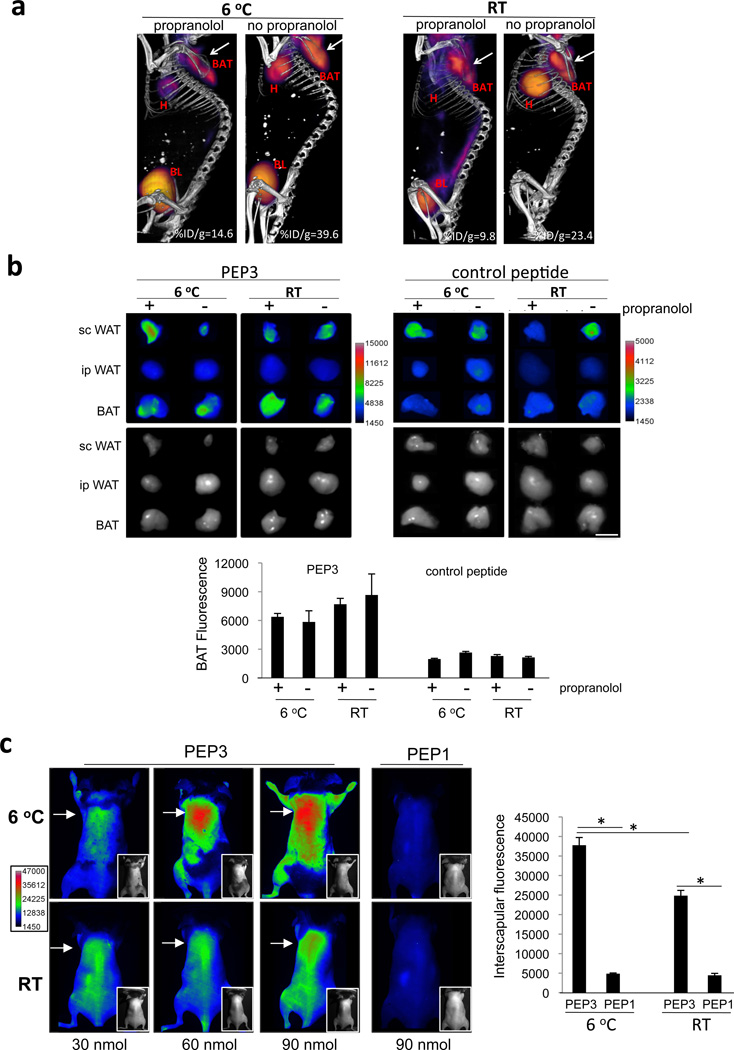
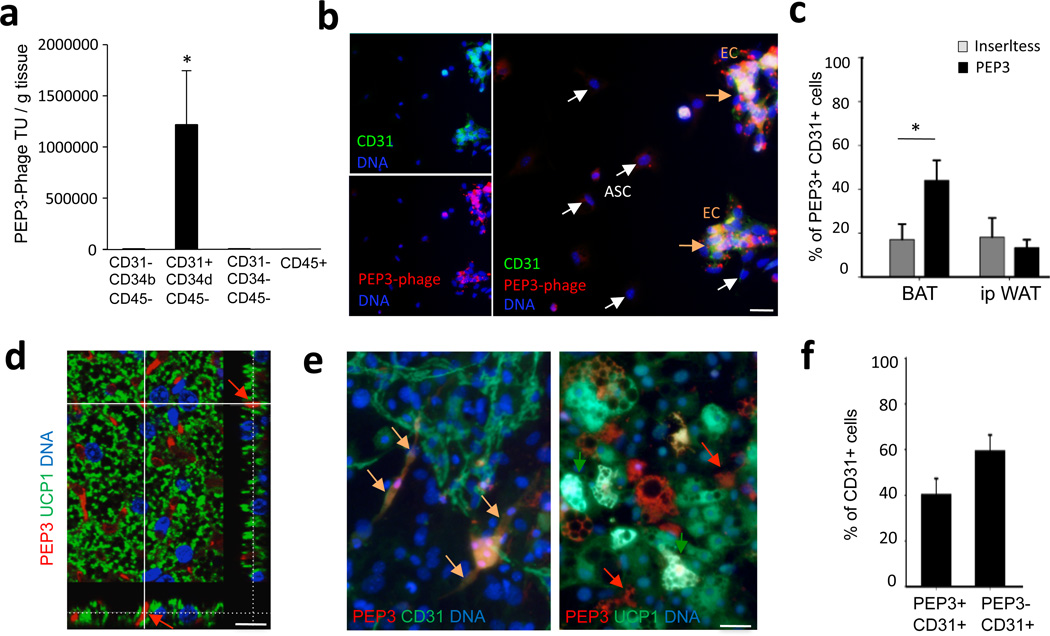
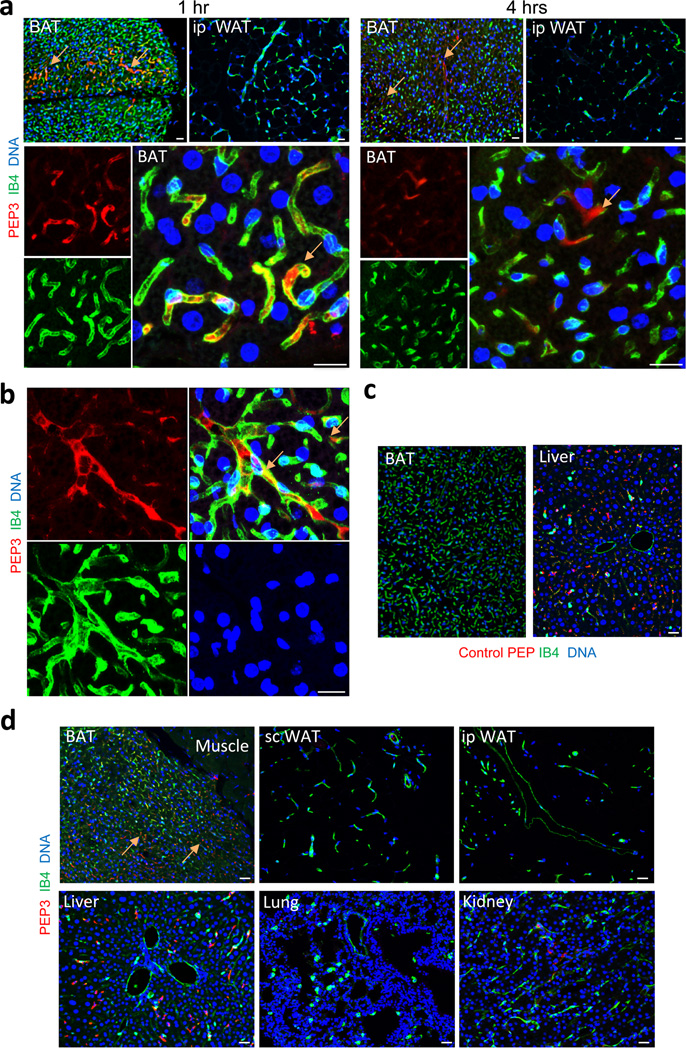
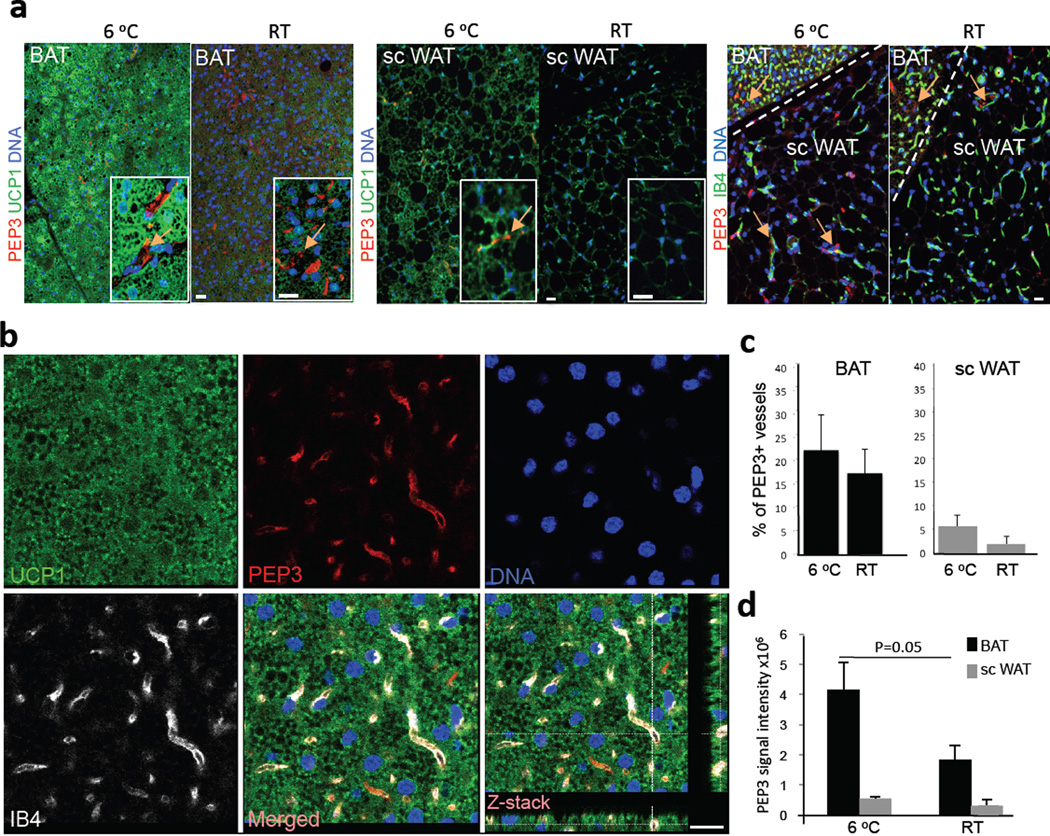
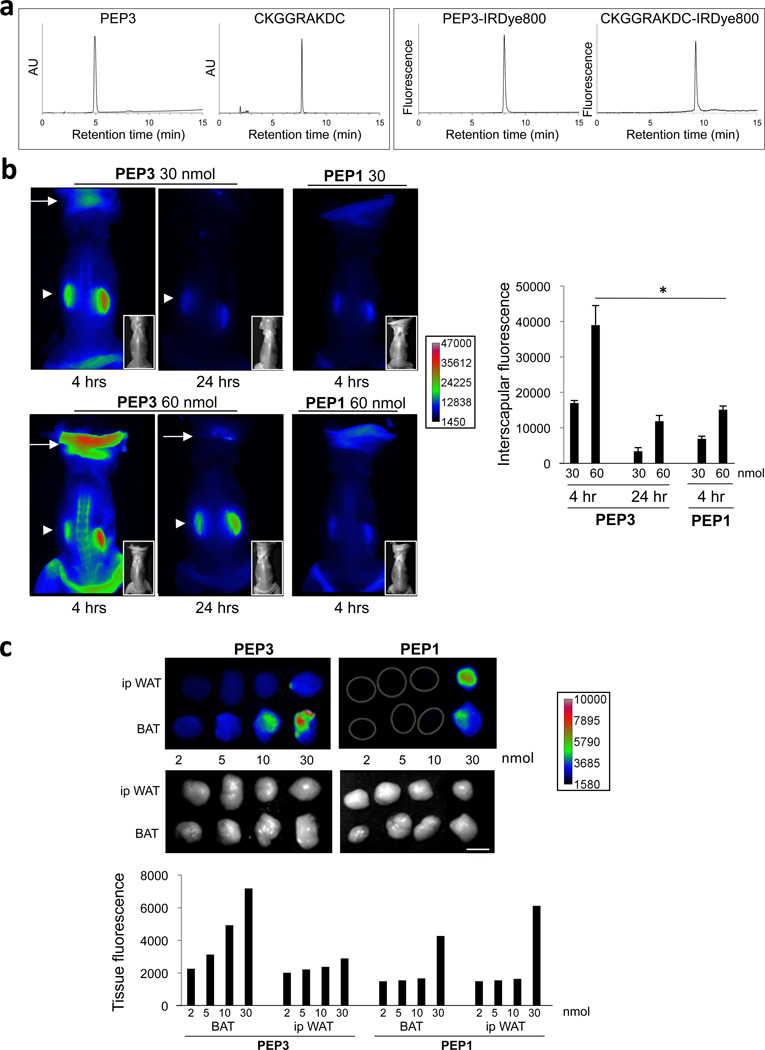
The presence of brown adipose tissue responsible for thermogenic energy dissipation has been revealed in adult humans and has high clinical importance. Owing to limitations of current methods for brown adipose tissue detection, analysing the abundance and localization of brown adipose tissue in the body has remained challenging. Here we screen a combinatorial peptide library in mice and characterize a peptide (with the sequence CPATAERPC) that selectively binds to the vascular endothelium of brown adipose tissue, but not of intraperitoneal white adipose tissue. We show that in addition to brown adipose tissue, this peptide probe also recognizes the vasculature of brown adipose tissue-like depots of subcutaneous white adipose tissue. Our results indicate that the CPATAERPC peptide localizes to brown adipose tissue even in the absence of sympathetic nervous system stimulation. Finally, we demonstrate that this probe can be used to identify brown adipose tissue depots in mice by whole-body near-infrared fluorescence imaging.
棕色脂肪组织负责产生热量以消耗能量,其存在已在成年人体内得到证实,具有重要的临床意义。由于目前用于检测棕色脂肪组织的方法存在局限性,因此分析体内棕色脂肪组织的丰度和定位一直具有挑战性。在这里,我们在小鼠中筛选了一个组合肽文库,并鉴定出一种肽(序列为 CPATAERPC),该肽选择性地与棕色脂肪组织的血管内皮结合,但与腹腔内白色脂肪组织的血管内皮不结合。我们表明,除了棕色脂肪组织外,该肽探针还识别皮下白色脂肪组织中类似棕色脂肪组织的褐色脂肪组织样储器的血管。我们的结果表明,即使没有交感神经系统的刺激,CPATAERPC 肽也能定位于棕色脂肪组织。最后,我们证明该探针可通过全身近红外荧光成像来识别小鼠体内的棕色脂肪组织储器。