Unidade de Parasitologia Médica, Centro de Malária e outras Doenças Tropicais, Instituto de Higiene e Medicina Tropical, Universidade Nova de Lisboa Lisbon, Portugal.
Evol Appl. 2013 Sep;6(6):910-24. doi: 10.1111/eva.12075. Epub 2013 Jun 10.
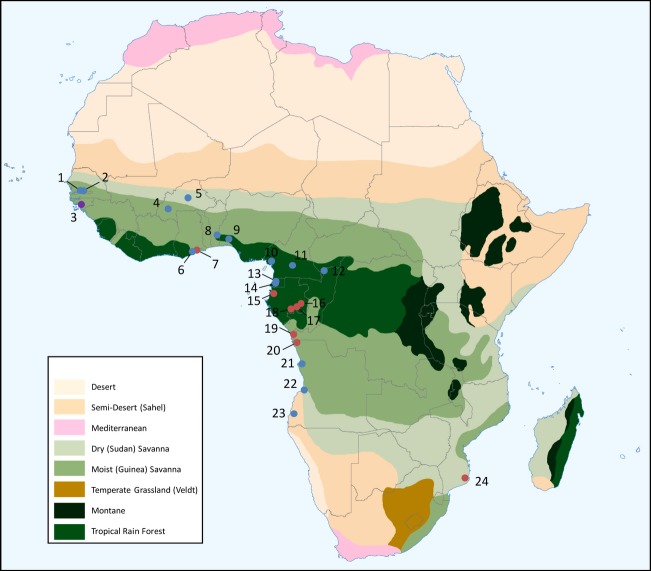
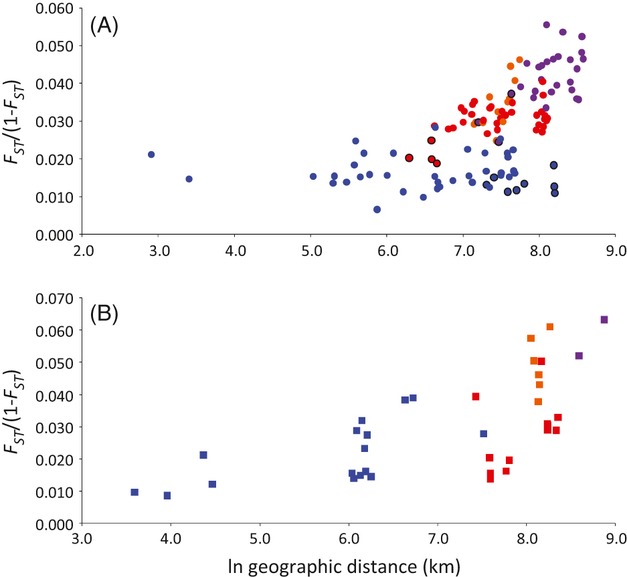
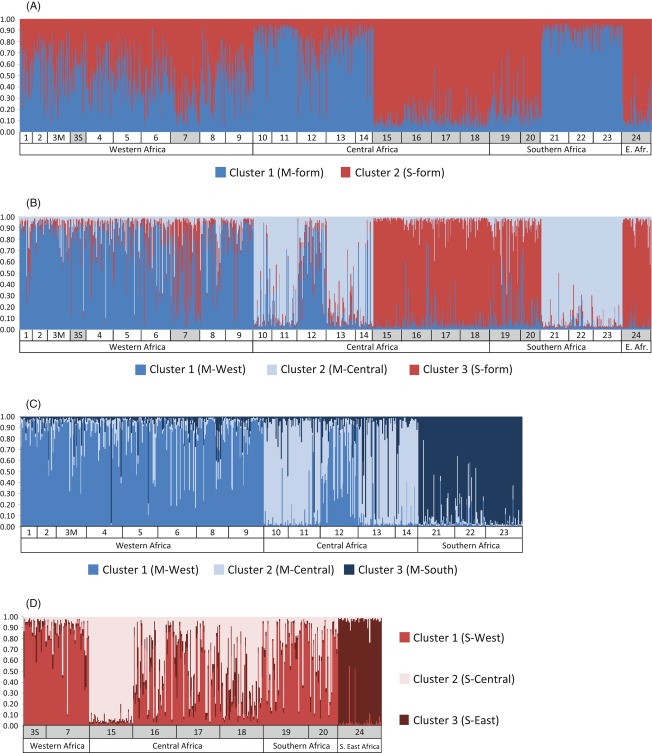
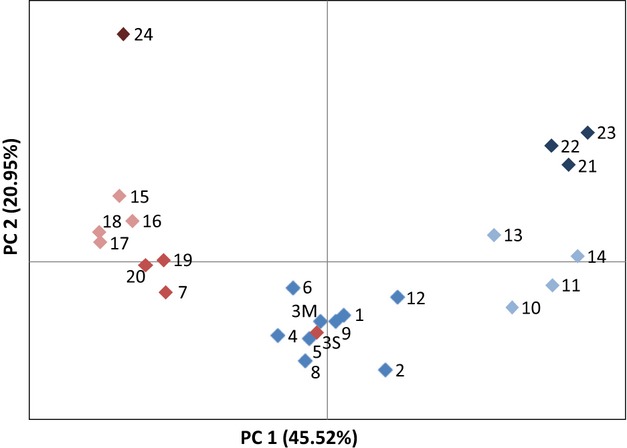
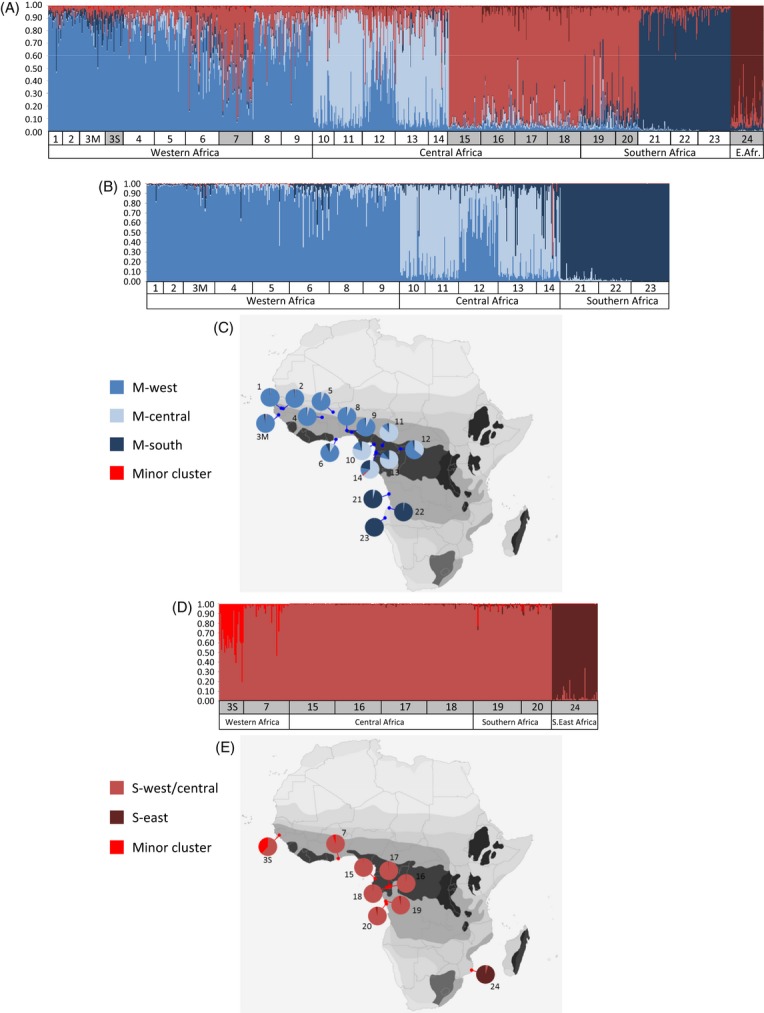
The primary Afrotropical malaria mosquito vector Anopheles gambiae sensu stricto has a complex population structure. In west Africa, this species is split into two molecular forms and displays local and regional variation in chromosomal arrangements and behaviors. To investigate patterns of macrogeographic population substructure, 25 An. gambiae samples from 12 African countries were genotyped at 13 microsatellite loci. This analysis detected the presence of additional population structuring, with the M-form being subdivided into distinct west, central, and southern African genetic clusters. These clusters are coincident with the central African rainforest belt and northern and southern savannah biomes, which suggests restrictions to gene flow associated with the transition between these biomes. By contrast, geographically patterned population substructure appears much weaker within the S-form.
主要的非洲疟疾蚊媒按蚊冈比亚亚种具有复杂的种群结构。在西非,这种蚊子分为两种分子形式,在染色体排列和行为上表现出局部和区域的变化。为了研究宏观地理种群亚结构的模式,从 12 个非洲国家采集了 25 个按蚊冈比亚亚种样本,在 13 个微卫星基因座上进行了基因分型。该分析检测到了存在额外的种群结构,M 型进一步细分为明显的西非、中非和南非遗传聚类。这些聚类与中非热带雨林带以及北部和南部稀树草原生物群系相吻合,这表明与这些生物群系之间的过渡相关的基因流受到限制。相比之下,S 型内的地理模式种群亚结构则要弱得多。