Bellone Matteo, Calcinotto Arianna
Cellular Immunology Unit, Department of Immunology, Infectious Diseases and Transplantation, San Raffaele Scientific Institute , Milan , Italy.
Front Oncol. 2013 Sep 11;3:231. doi: 10.3389/fonc.2013.00231.
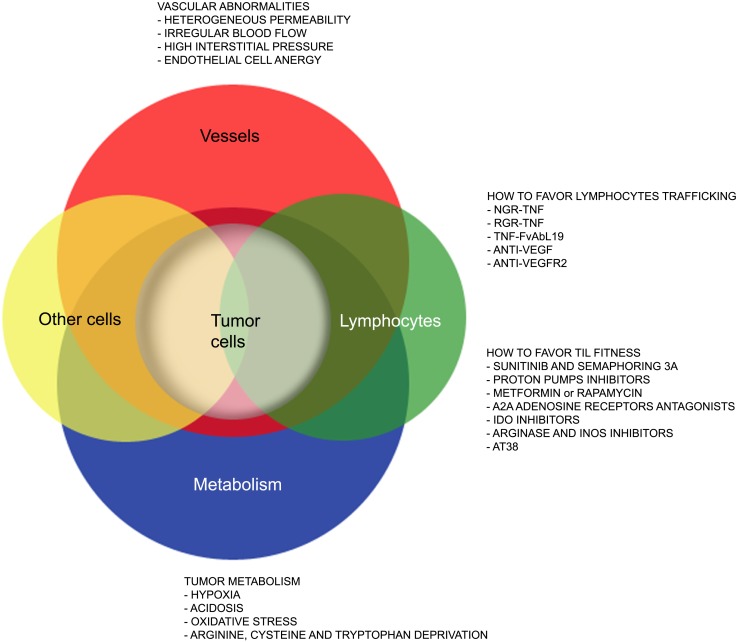
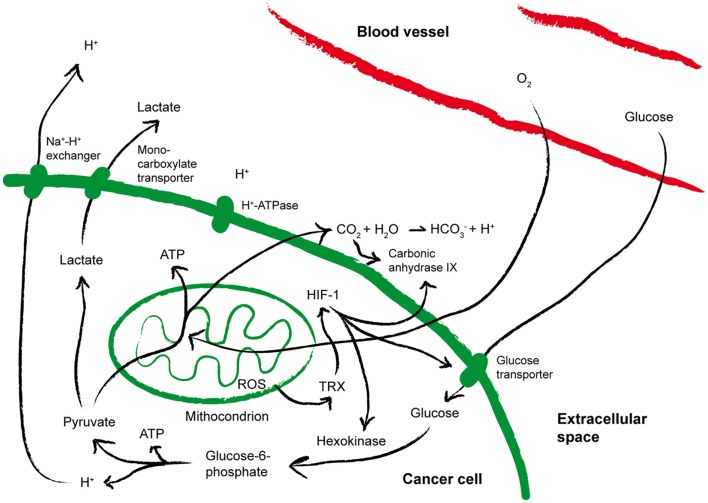
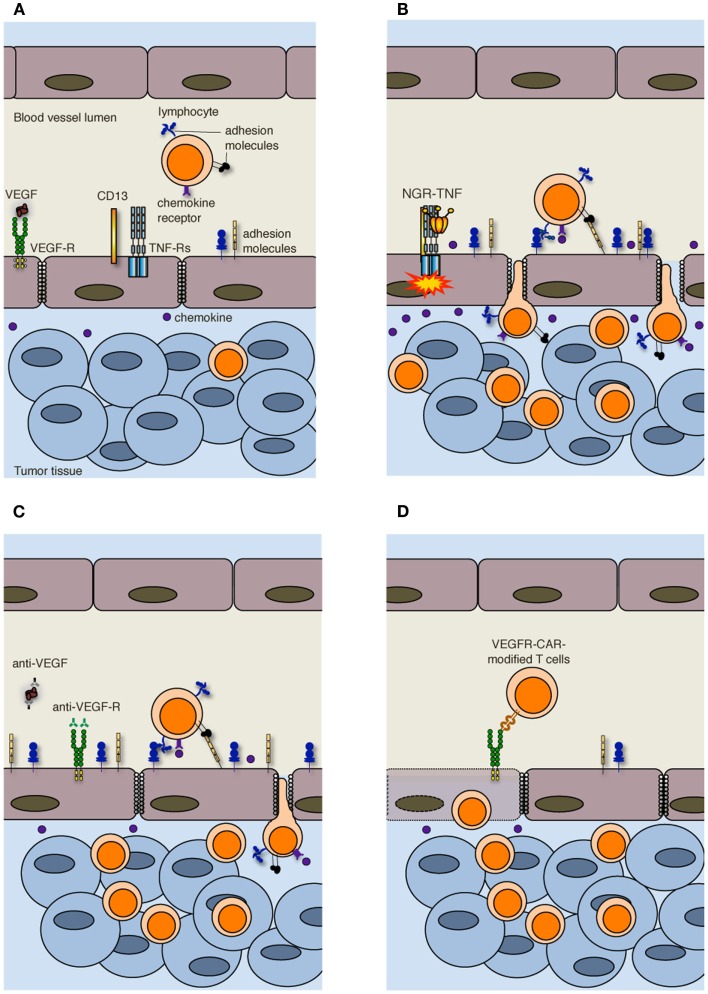
The tumor is a hostile microenvironment for T lymphocytes. Indeed, irregular blood flow, and endothelial cell (EC) anergy that characterize most solid tumors hamper leukocyte adhesion, extravasation, and infiltration. In addition, hypoxia and reprograming of energy metabolism within cancer cells transform the tumor mass in a harsh environment that limits survival and effector functions of T cells, regardless of being induced in vivo by vaccination or adoptively transferred. In this review, we will summarize on recent advances in our understanding of the characteristics of tumor-associated neo-angiogenic vessels as well as of the tumor metabolism that may impact on T cell trafficking and fitness of tumor infiltrating lymphocytes. In particular, we will focus on how advances in knowledge of the characteristics of tumor ECs have enabled identifying strategies to normalize the tumor-vasculature and/or overcome EC anergy, thus increasing leukocyte-vessel wall interactions and lymphocyte infiltration in tumors. We will also focus on drugs acting on cells and their released molecules to transiently render the tumor microenvironment more suitable for tumor infiltrating T lymphocytes, thus increasing the therapeutic effectiveness of both active and adoptive immunotherapies.
肿瘤对于T淋巴细胞来说是一个不利的微环境。事实上,大多数实体瘤所具有的血流不规则以及内皮细胞(EC)无反应性,会阻碍白细胞的黏附、渗出和浸润。此外,癌细胞内的缺氧和能量代谢重编程,将肿瘤块转变为一个恶劣的环境,这限制了T细胞的存活和效应功能,无论T细胞是通过疫苗接种在体内诱导产生的,还是通过过继转移获得的。在这篇综述中,我们将总结近期在理解肿瘤相关新生血管的特征以及可能影响T细胞运输和肿瘤浸润淋巴细胞适应性的肿瘤代谢方面取得的进展。特别是,我们将关注肿瘤EC特征的知识进展如何促使人们确定使肿瘤血管正常化和/或克服EC无反应性的策略,从而增加白细胞与血管壁的相互作用以及淋巴细胞在肿瘤中的浸润。我们还将关注作用于细胞及其释放分子的药物,这些药物可使肿瘤微环境暂时更适合肿瘤浸润T淋巴细胞,从而提高主动免疫疗法和过继性免疫疗法的治疗效果。