Department of Plant Genetic Engineering, Center for Research and Advanced Studies-Irapuato Unit, National Polytechnic Institute, Km 9.6 libramiento norte carretera Irapuato-León, Irapuato, Guanajuato 36821, Mexico.
Int J Mol Sci. 2013 Sep 16;14(9):19025-53. doi: 10.3390/ijms140919025.
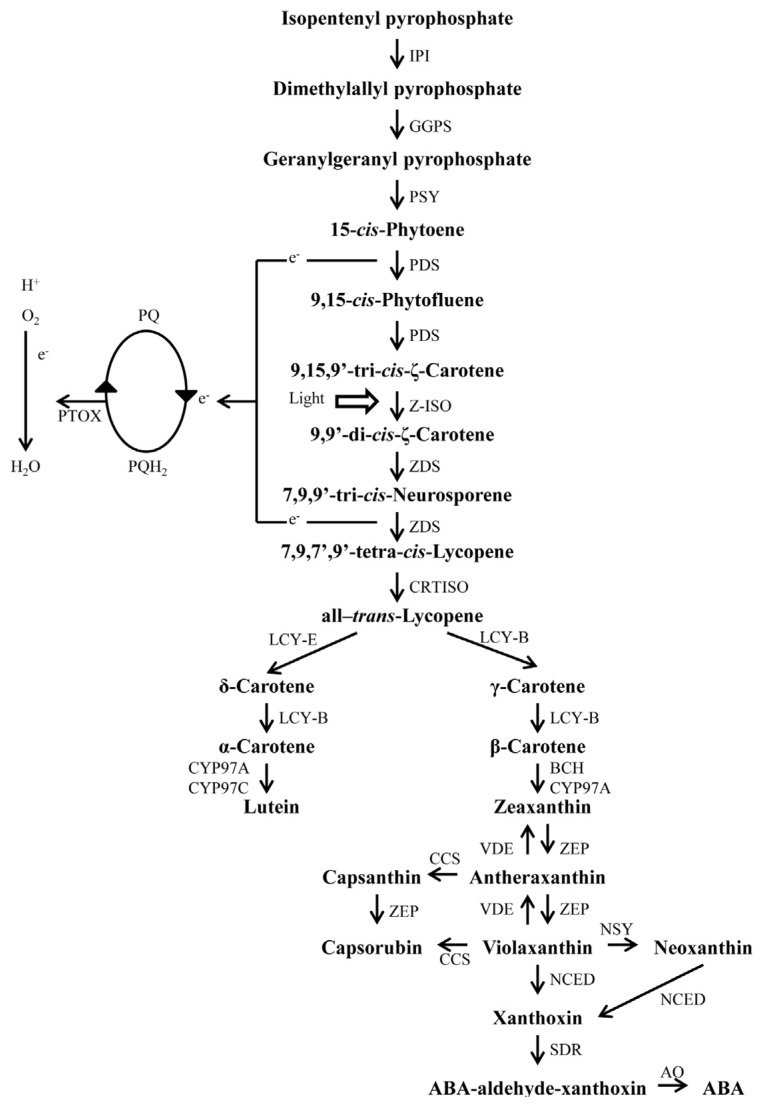
Capsicum species produce fruits that synthesize and accumulate carotenoid pigments, which are responsible for the fruits' yellow, orange and red colors. Chili peppers have been used as an experimental model for studying the biochemical and molecular aspects of carotenoid biosynthesis. Most reports refer to the characterization of carotenoids and content determination in chili pepper fruits from different species, cultivars, varieties or genotypes. The types and levels of carotenoids differ between different chili pepper fruits, and they are also influenced by environmental conditions. Yellow-orange colors of chili pepper fruits are mainly due to the accumulation of α- and β-carotene, zeaxanthin, lutein and β-cryptoxanthin. Carotenoids such as capsanthin, capsorubin and capsanthin-5,6-epoxide confer the red colors. Chromoplasts are the sites of carotenoid pigment synthesis and storage. According to the most accepted theory, the synthesis of carotenoids in chili peppers is controlled by three loci: c1, c2 and y. Several enzymes participating in carotenoid biosynthesis in chili pepper fruits have been isolated and characterized, and the corresponding gene sequences have been reported. However, there is currently limited information on the molecular mechanisms that regulate this biosynthetic pathway. Approaches to gain more knowledge of the regulation of carotenoid biosynthesis are discussed.
辣椒属植物的果实会合成并积累类胡萝卜素色素,这些色素使果实呈现出黄色、橙色和红色。辣椒已被用作研究类胡萝卜素生物合成的生化和分子方面的实验模型。大多数报告涉及不同物种、品种、变种或基因型的辣椒果实中类胡萝卜素的特征描述和含量测定。不同辣椒果实中的类胡萝卜素类型和水平不同,它们也受到环境条件的影响。辣椒果实的橙黄色主要归因于α-和β-胡萝卜素、玉米黄质、叶黄素和β-隐黄质的积累。辣椒红素、辣椒玉红素和辣椒红素-5,6-环氧化物等类胡萝卜素则赋予了果实红色。质体是类胡萝卜素色素合成和储存的部位。根据最被广泛接受的理论,辣椒中类胡萝卜素的合成受三个基因座控制:c1、c2 和 y。已经分离和鉴定了参与辣椒果实类胡萝卜素生物合成的几种酶,并报道了相应的基因序列。然而,目前关于调节该生物合成途径的分子机制的信息有限。讨论了获得更多关于类胡萝卜素生物合成调控知识的方法。