Department of Genetic Engineering, Dong-A University, Busan, Republic of Korea.
PLoS One. 2012;7(10):e48287. doi: 10.1371/journal.pone.0048287. Epub 2012 Oct 31.
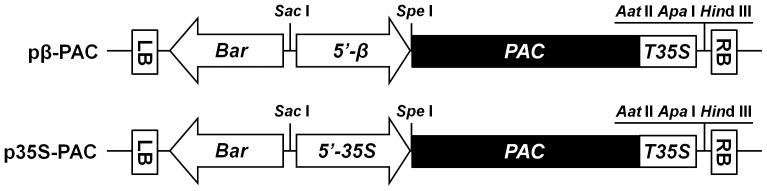
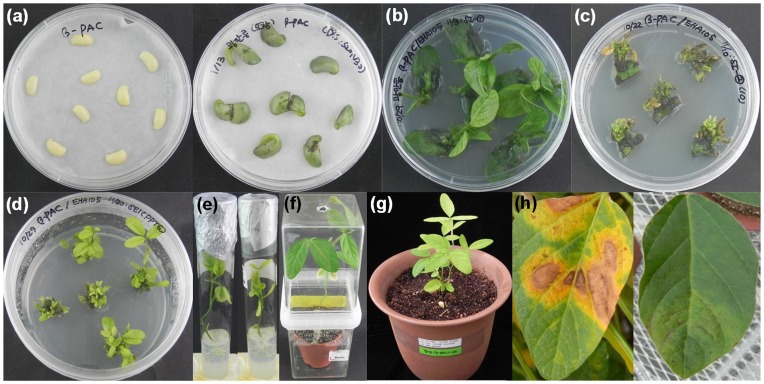
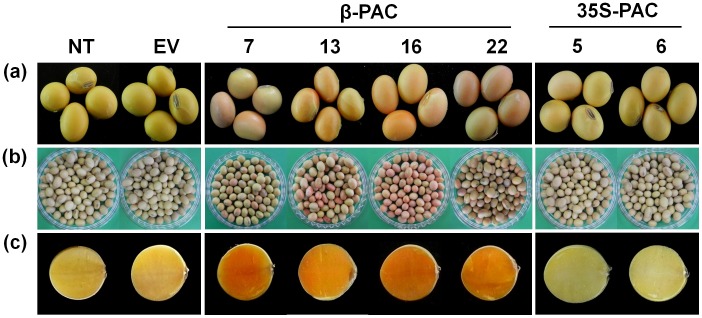
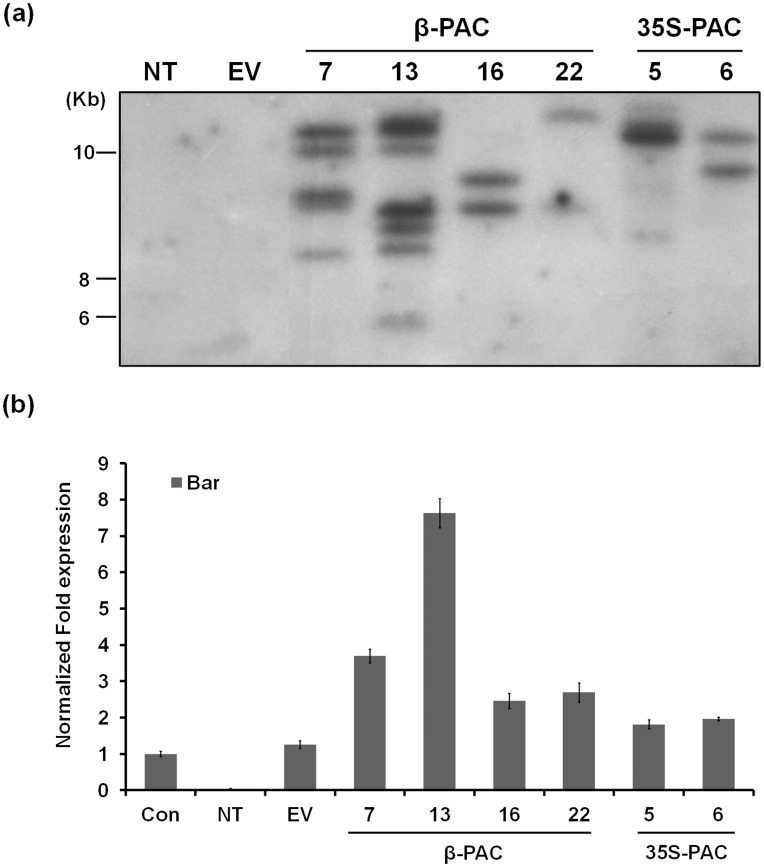
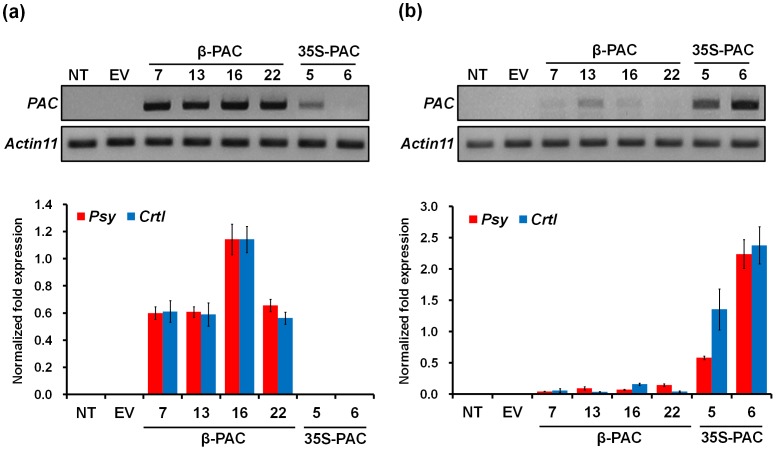
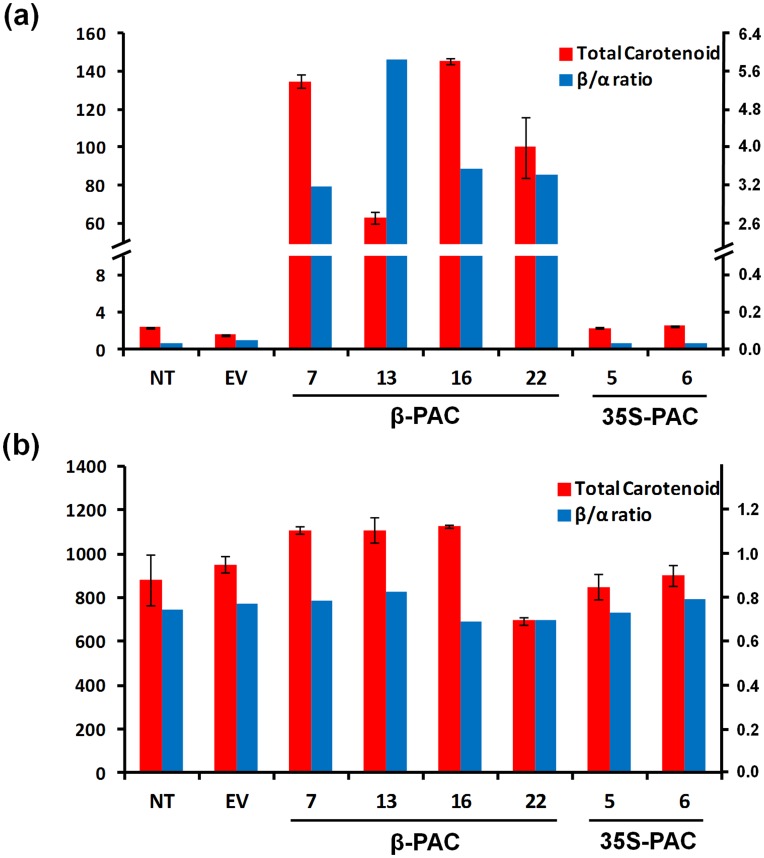
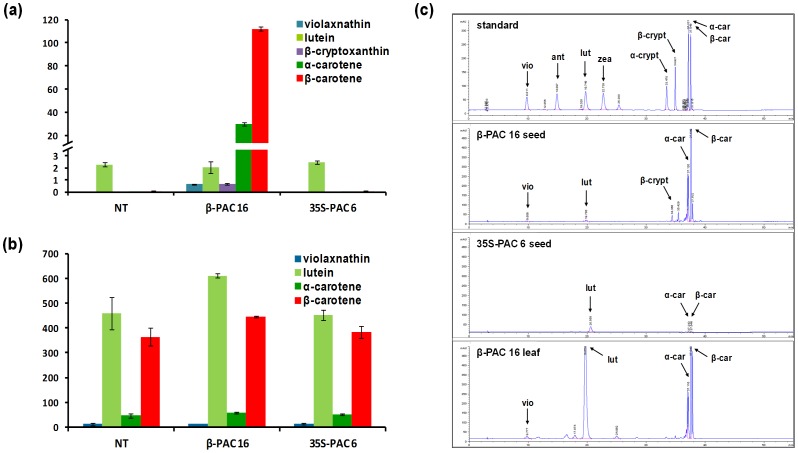
The carotenoid biosynthetic pathway was genetically manipulated using the recombinant PAC (Phytoene synthase-2A-Carotene desaturase) gene in Korean soybean (Glycine max L. cv. Kwangan). The PAC gene was linked to either the β-conglycinin (β) or CaMV-35S (35S) promoter to generate β-PAC and 35S-PAC constructs, respectively. A total of 37 transgenic lines (19 for β-PAC and 18 for 35S-PAC) were obtained through Agrobacterium-mediated transformation using the modified half-seed method. The multi-copy insertion of the transgene was determined by genomic Southern blot analysis. Four lines for β-PAC were selected by visual inspection to confirm an orange endosperm, which was not found in the seeds of the 35S-PAC lines. The strong expression of PAC gene was detected in the seeds of the β-PAC lines and in the leaves of the 35S-PAC lines by RT-PCR and qRT-PCR analyses, suggesting that these two different promoters function distinctively. HPLC analysis of the seeds and leaves of the T(2) generation plants revealed that the best line among the β-PAC transgenic seeds accumulated 146 µg/g of total carotenoids (approximately 62-fold higher than non-transgenic seeds), of which 112 µg/g (77%) was β-carotene. In contrast, the level and composition of the leaf carotenoids showed little difference between transgenic and non-transgenic soybean plants. We have therefore demonstrated the production of a high β-carotene soybean through the seed-specific overexpression of two carotenoid biosynthetic genes, Capsicum phytoene synthase and Pantoea carotene desaturase. This nutritional enhancement of soybean seeds through the elevation of the provitamin A content to produce biofortified food may have practical health benefits in the future in both humans and livestock.
利用重组 PAC(phytoene synthase-2A-Carotene desaturase)基因,对韩国大豆(Glycine max L. cv. Kwangan)中的类胡萝卜素生物合成途径进行了遗传操作。将 PAC 基因与β-伴大豆球蛋白(β)或 CaMV-35S(35S)启动子连接,分别生成β-PAC 和 35S-PAC 构建体。通过使用改良的半种子法,利用农杆菌介导的转化共获得了 37 条转基因株系(19 条β-PAC 和 18 条 35S-PAC)。通过基因组 Southern blot 分析确定了转基因的多拷贝插入。通过目视检查选择了 4 条β-PAC 株系来确认橙色胚乳,而在 35S-PAC 株系的种子中未发现。通过 RT-PCR 和 qRT-PCR 分析检测到β-PAC 株系种子和 35S-PAC 株系叶片中 PAC 基因的强表达,表明这两个不同的启动子具有不同的功能。对 T2 代植物种子和叶片的 HPLC 分析表明,在β-PAC 转基因种子中,最佳株系积累的总类胡萝卜素含量为 146 µg/g(约比非转基因种子高 62 倍),其中 112 µg/g(77%)为β-胡萝卜素。相比之下,转基因和非转基因大豆植株叶片中的类胡萝卜素水平和组成差异不大。因此,我们通过两个类胡萝卜素生物合成基因,辣椒phytoene synthase 和 Pantoea carotene desaturase 的种子特异性过表达,展示了高β-胡萝卜素大豆的生产。通过提高维生素 A 前体含量来生产生物强化食品,从而增强大豆种子的营养,可以在未来为人类和家畜带来实际的健康益处。