Laboratory of Virus Control, Institute for Virus Research, Kyoto University, Kyoto, Japan.
PLoS Pathog. 2013 Sep;9(9):e1003630. doi: 10.1371/journal.ppat.1003630. Epub 2013 Sep 19.
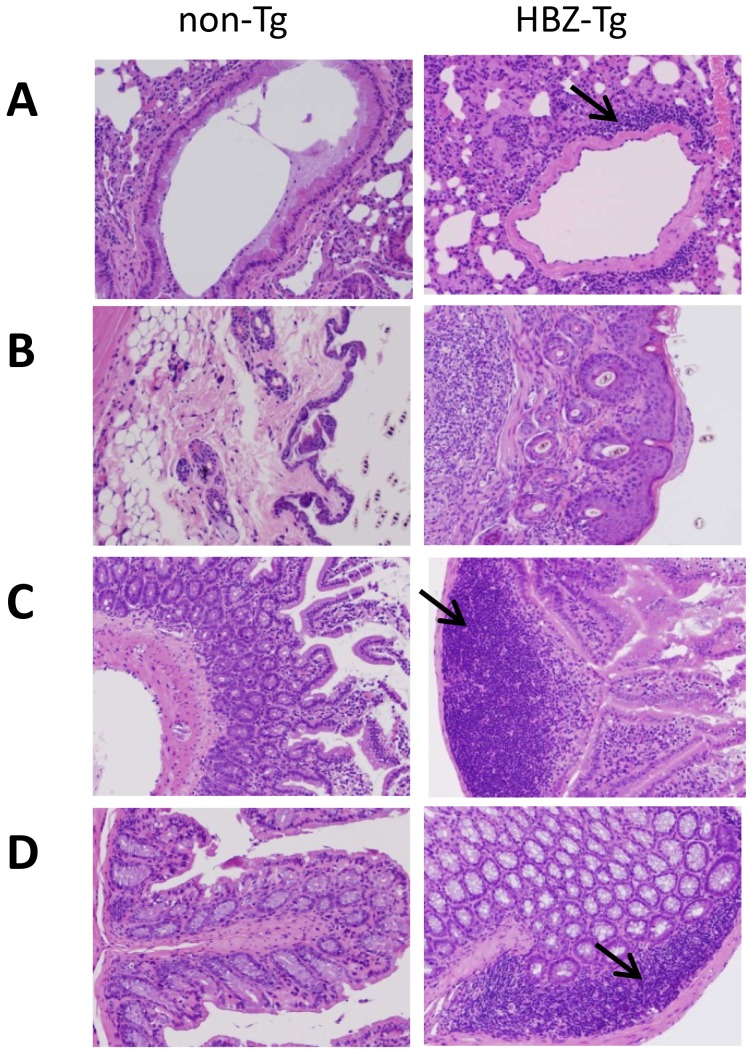
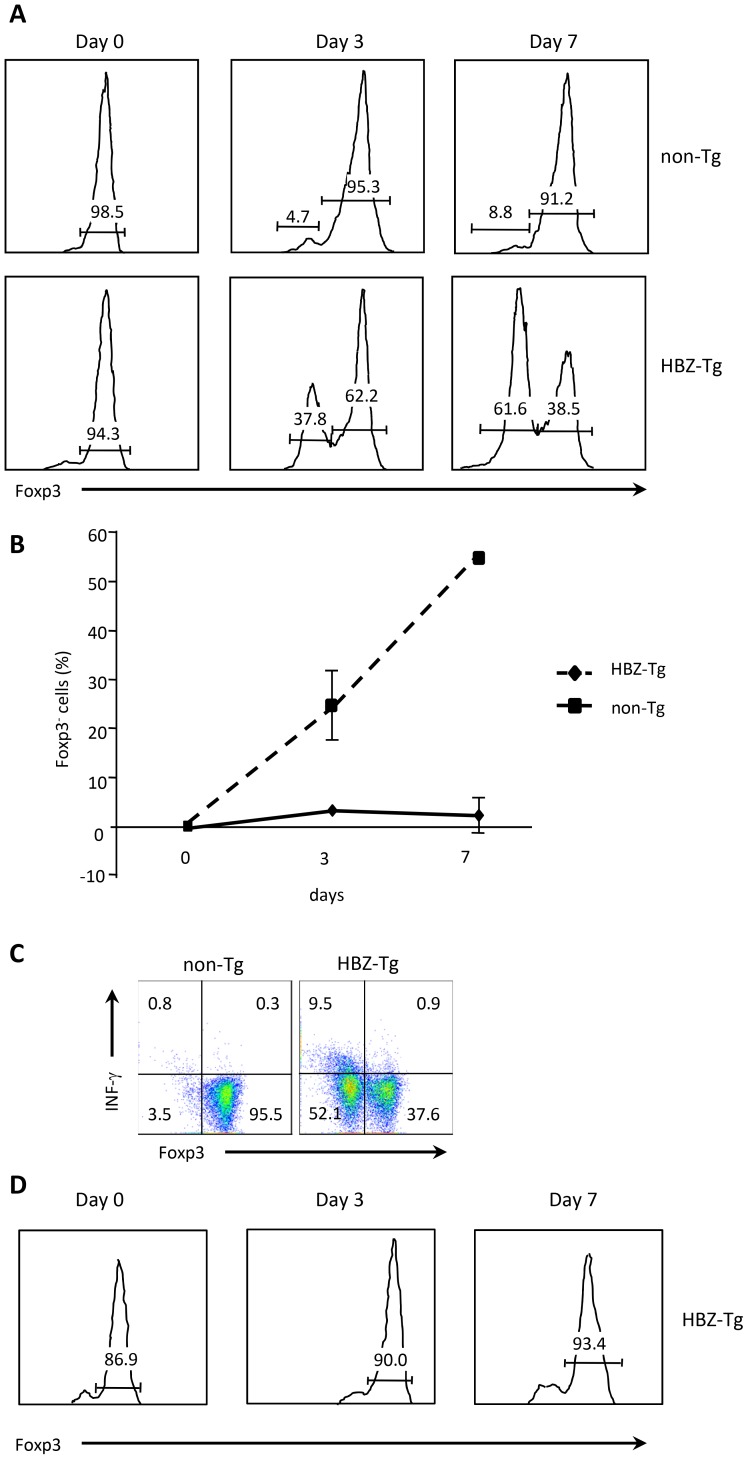
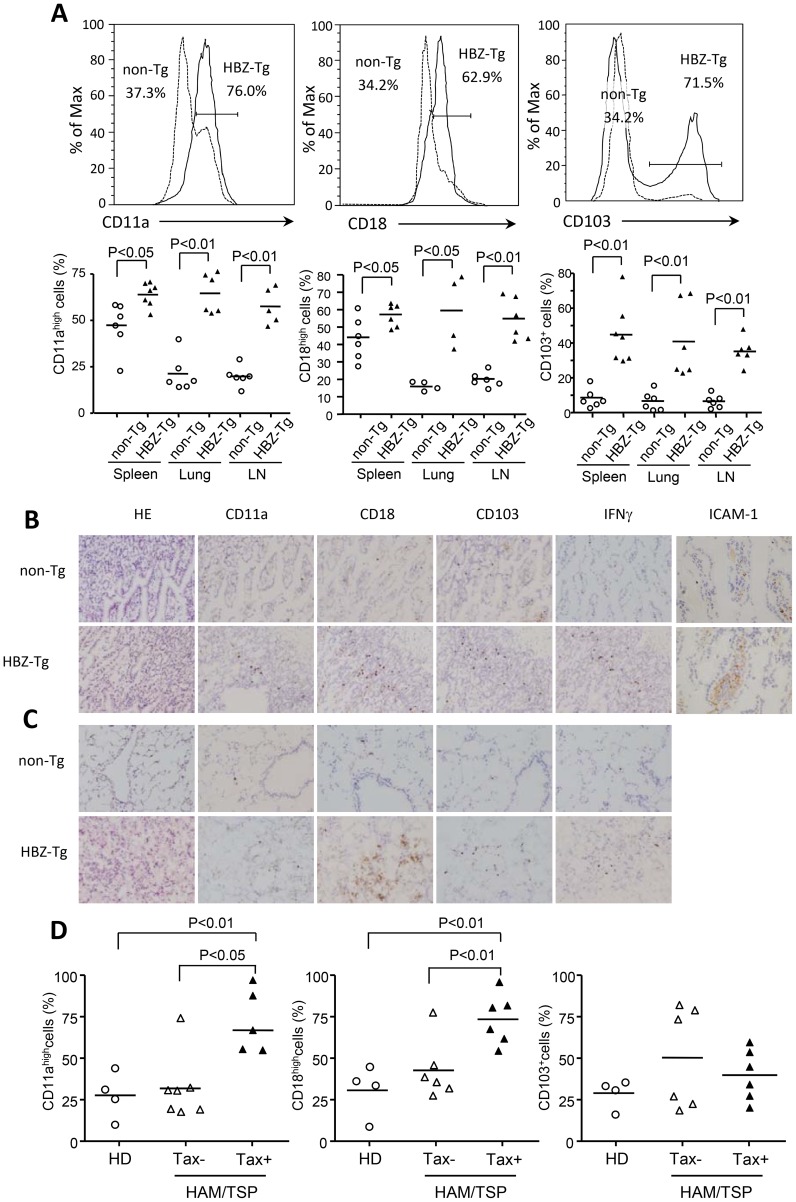
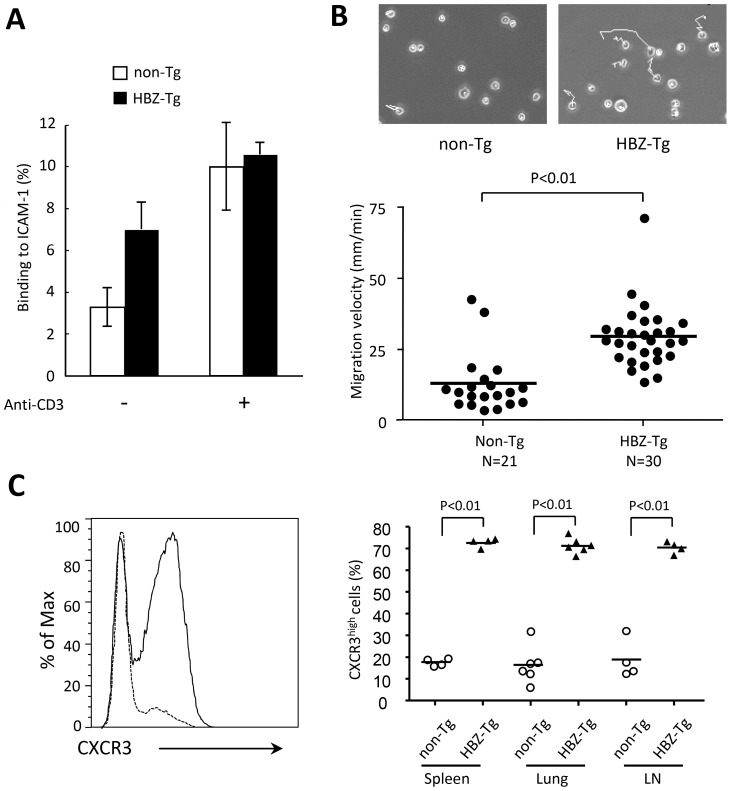
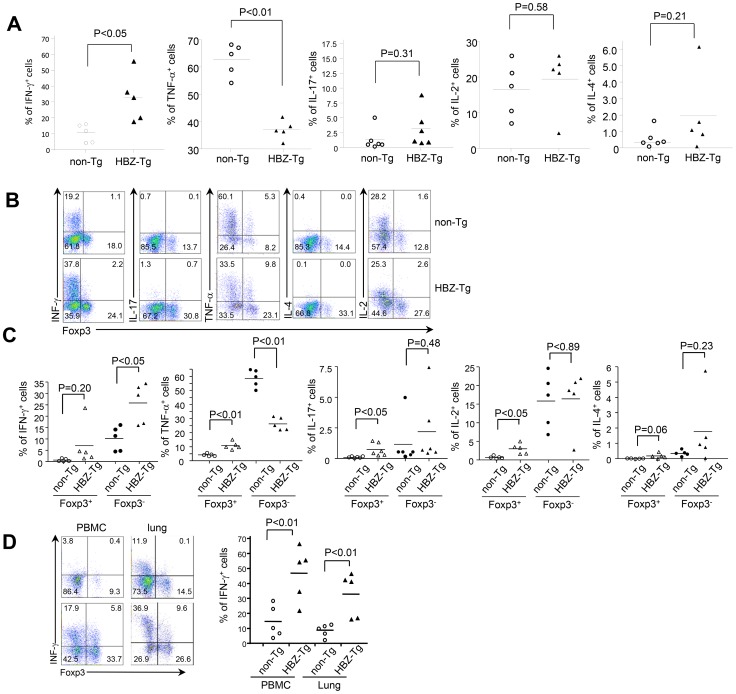
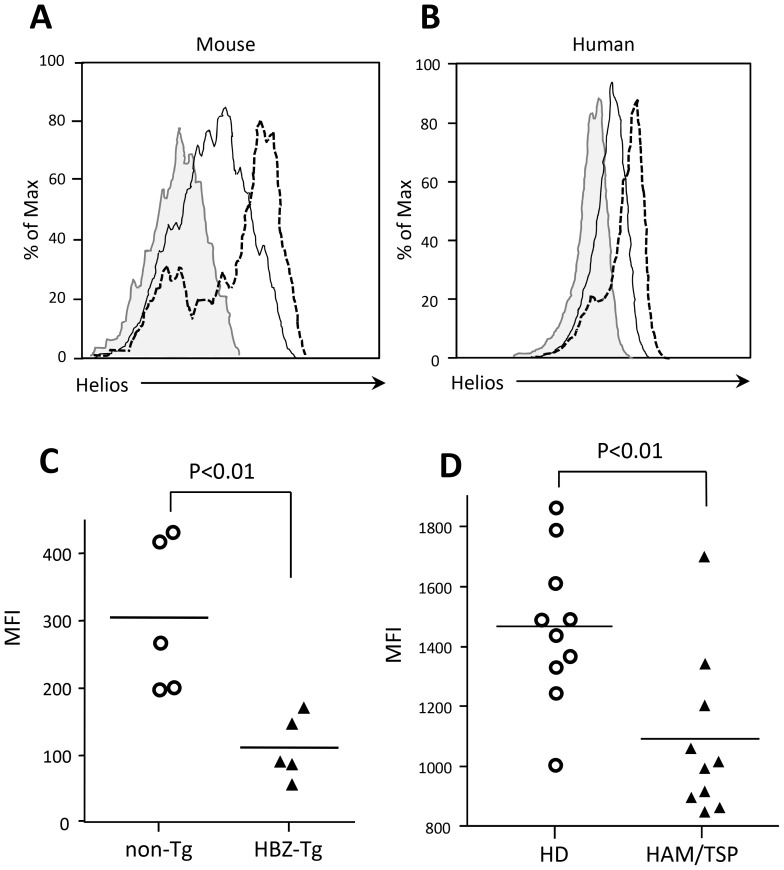
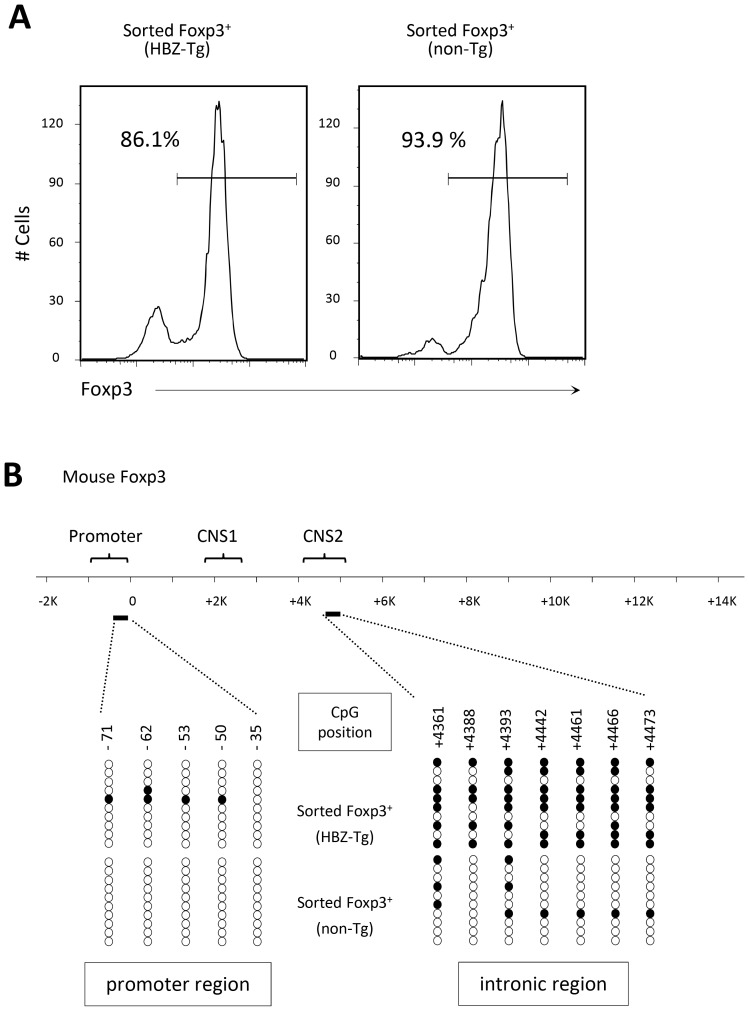
Human T-cell leukemia virus type 1 (HTLV-1) causes both a neoplastic disease and inflammatory diseases, including HTLV-1-associated myelopathy/tropical spastic paraparesis (HAM/TSP). The HTLV-1 basic leucine zipper factor (HBZ) gene is encoded in the minus strand of the proviral DNA and is constitutively expressed in infected cells and ATL cells. HBZ increases the number of regulatory T (Treg) cells by inducing the Foxp3 gene transcription. Recent studies have revealed that some CD4⁺Foxp3⁺ T cells are not terminally differentiated but have a plasticity to convert to other T-cell subsets. Induced Treg (iTreg) cells tend to lose Foxp3 expression, and may acquire an effector phenotype accompanied by the production of inflammatory cytokines, such as interferon-γ (IFN-γ). In this study, we analyzed a pathogenic mechanism of chronic inflammation related with HTLV-1 infection via focusing on HBZ and Foxp3. Infiltration of lymphocytes was observed in the skin, lung and intestine of HBZ-Tg mice. As mechanisms, adhesion and migration of HBZ-expressing CD4⁺ T cells were enhanced in these mice. Foxp3⁻CD4⁺ T cells produced higher amounts of IFN-γ compared to those from non-Tg mice. Expression of Helios was reduced in Treg cells from HBZ-Tg mice and HAM/TSP patients, indicating that iTreg cells are predominant. Consistent with this finding, the conserved non-coding sequence 2 region of the Foxp3 gene was hypermethylated in Treg cells of HBZ-Tg mice, which is a characteristic of iTreg cells. Furthermore, Treg cells in the spleen of HBZ-transgenic mice tended to lose Foxp3 expression and produced an excessive amount of IFN-γ, while Foxp3 expression was stable in natural Treg cells of the thymus. HBZ enhances the generation of iTreg cells, which likely convert to Foxp3⁻T cells producing IFN-γ. The HBZ-mediated proinflammatory phenotype of CD4⁺ T cells is implicated in the pathogenesis of HTLV-1-associated inflammation.
人 T 细胞白血病病毒 1 型(HTLV-1)可引起肿瘤性疾病和炎症性疾病,包括 HTLV-1 相关脊髓病/热带痉挛性截瘫(HAM/TSP)。HTLV-1 碱性亮氨酸拉链因子(HBZ)基因编码在原病毒 DNA 的负链上,并在受感染的细胞和 ATL 细胞中持续表达。HBZ 通过诱导 Foxp3 基因转录增加调节性 T(Treg)细胞的数量。最近的研究表明,一些 CD4+Foxp3+T 细胞不是终末分化的,但具有转化为其他 T 细胞亚群的可塑性。诱导性 Treg(iTreg)细胞往往会失去 Foxp3 的表达,并可能获得效应表型,同时伴有炎症细胞因子的产生,如干扰素-γ(IFN-γ)。在这项研究中,我们通过关注 HBZ 和 Foxp3 来分析与 HTLV-1 感染相关的慢性炎症的发病机制。在 HBZ-Tg 小鼠的皮肤、肺和肠道中观察到淋巴细胞浸润。作为机制,HBZ 表达的 CD4+T 细胞的黏附和迁移能力增强。与非-Tg 小鼠相比,Foxp3-CD4+T 细胞产生更高水平的 IFN-γ。HBZ-Tg 小鼠和 HAM/TSP 患者的 Treg 细胞中 Helios 的表达减少,表明 iTreg 细胞占优势。与这一发现一致的是,HBZ-Tg 小鼠的 Treg 细胞中 Foxp3 基因的保守非编码序列 2 区发生了过度甲基化,这是 iTreg 细胞的特征。此外,HBZ 转基因小鼠脾脏中的 Treg 细胞倾向于失去 Foxp3 的表达并产生过量的 IFN-γ,而胸腺中的天然 Treg 细胞的 Foxp3 表达则保持稳定。HBZ 增强了 iTreg 细胞的生成,这些细胞可能转化为产生 IFN-γ的 Foxp3-T 细胞。CD4+T 细胞的 HBZ 介导的促炎表型与 HTLV-1 相关炎症的发病机制有关。