Department of Human Molecular Genetics and Biochemistry, Sackler Faculty of Medicine and Sagol School of Neuroscience, Tel Aviv University, Tel Aviv, Israel.
PLoS One. 2013 Sep 20;8(9):e76489. doi: 10.1371/journal.pone.0076489. eCollection 2013.
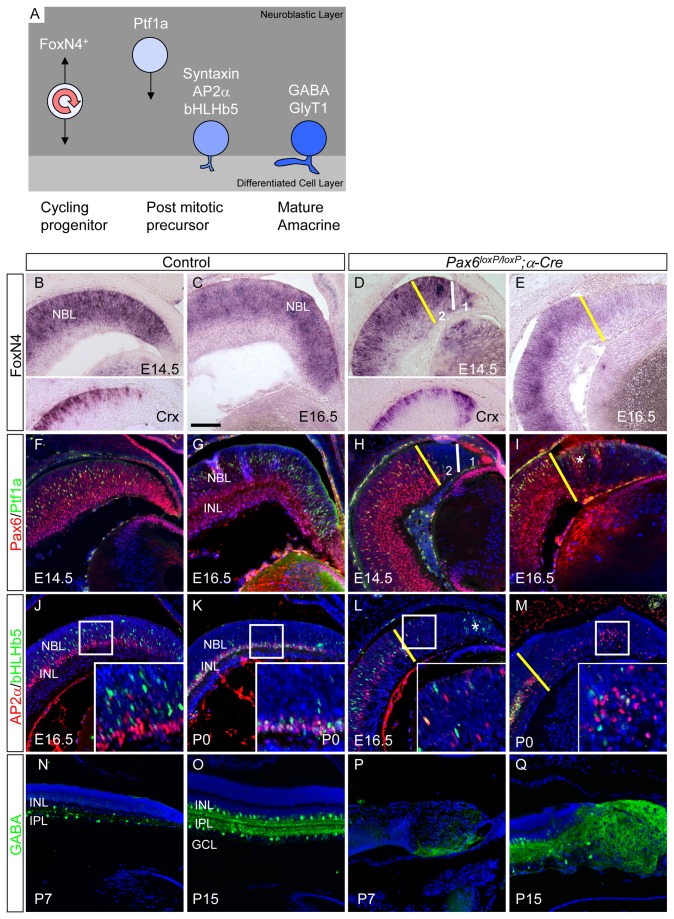
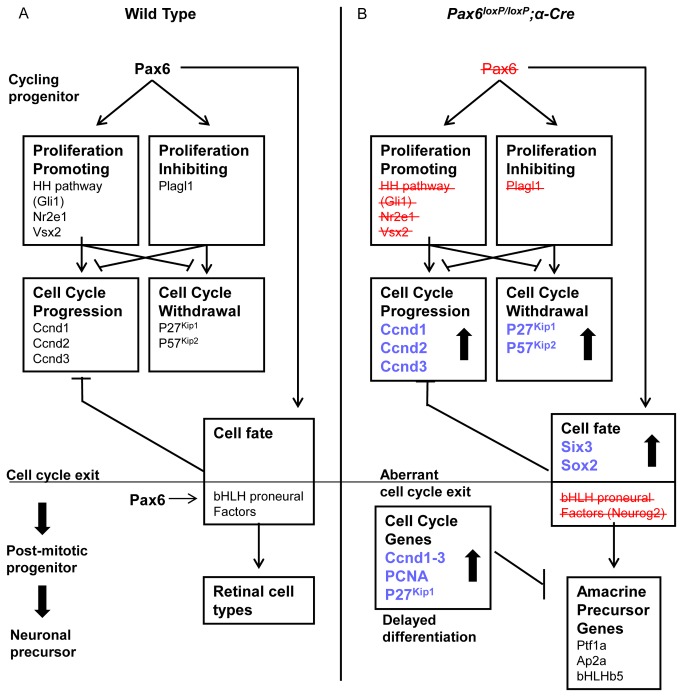
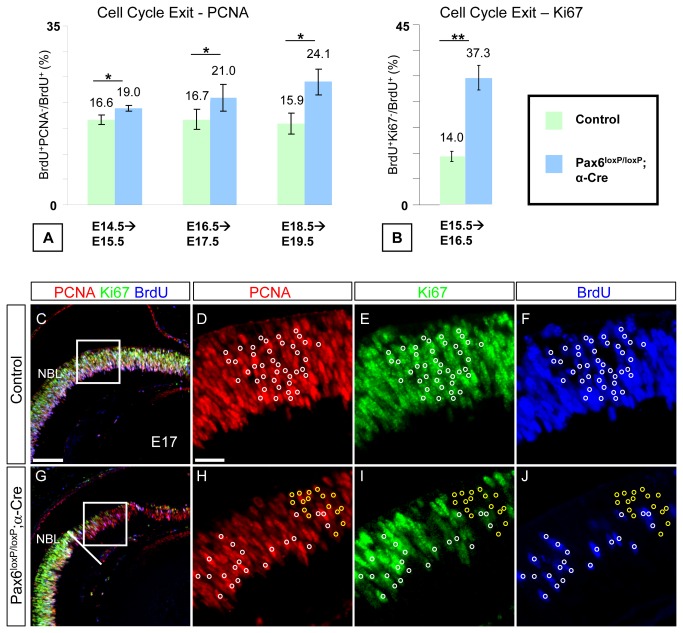
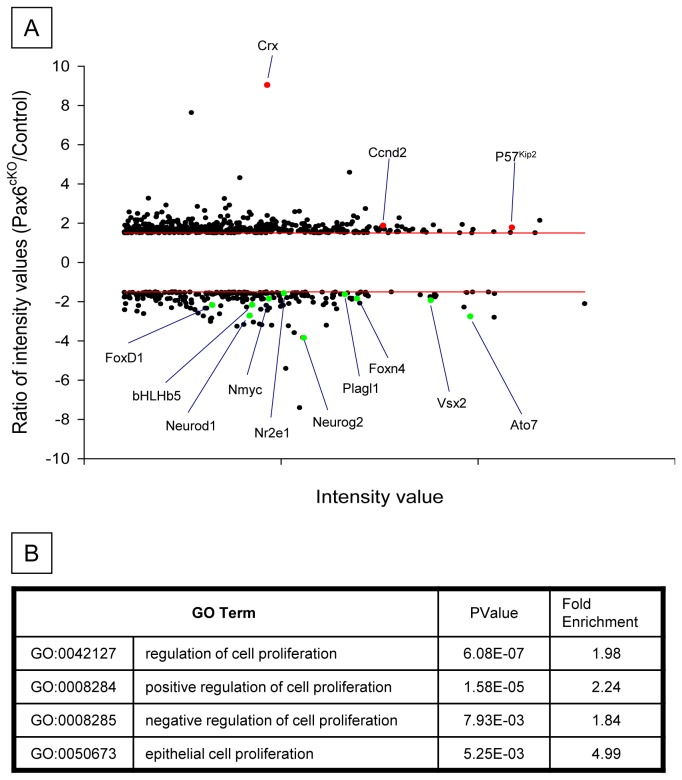
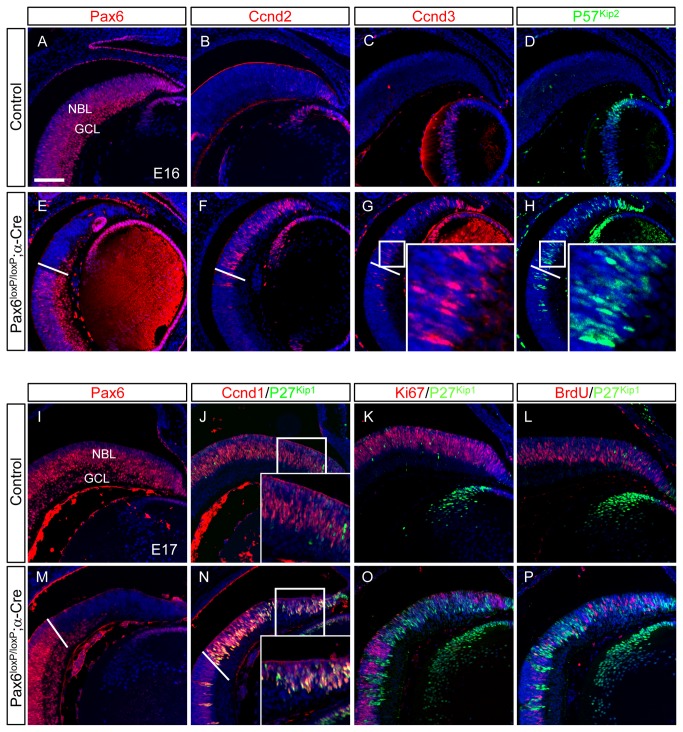
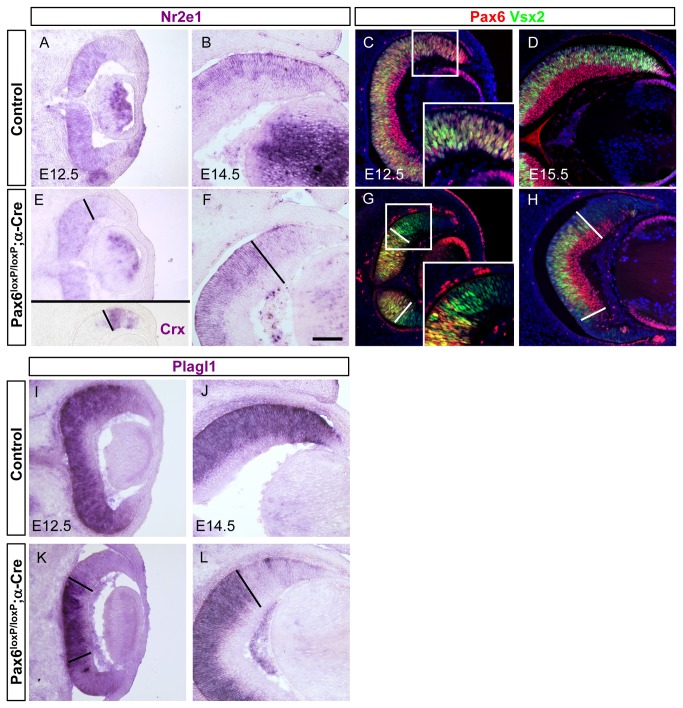
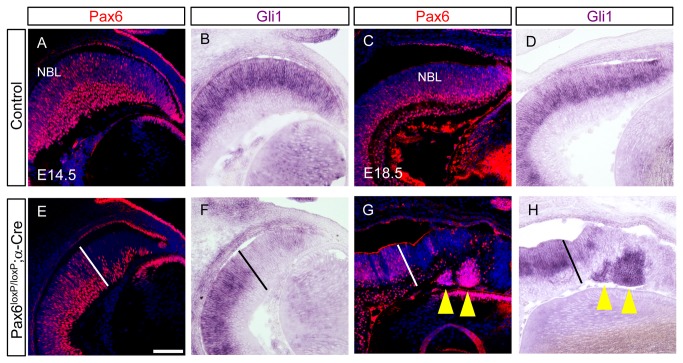
The coupling between cell-cycle exit and onset of differentiation is a common feature throughout the developing nervous system, but the mechanisms that link these processes are mostly unknown. Although the transcription factor Pax6 has been implicated in both proliferation and differentiation of multiple regions within the central nervous system (CNS), its contribution to the transition between these successive states remains elusive. To gain insight into the role of Pax6 during the transition from proliferating progenitors to differentiating precursors, we investigated cell-cycle and transcriptomic changes occurring in Pax6 (-) retinal progenitor cells (RPCs). Our analyses revealed a unique cell-cycle phenotype of the Pax6-deficient RPCs, which included a reduced number of cells in the S phase, an increased number of cells exiting the cell cycle, and delayed differentiation kinetics of Pax6 (-) precursors. These alterations were accompanied by coexpression of factors that promote (Ccnd1, Ccnd2, Ccnd3) and inhibit (P27 (kip1) and P27 (kip2) ) the cell cycle. Further characterization of the changes in transcription profile of the Pax6-deficient RPCs revealed abrogated expression of multiple factors which are known to be involved in regulating proliferation of RPCs, including the transcription factors Vsx2, Nr2e1, Plagl1 and Hedgehog signaling. These findings provide novel insight into the molecular mechanism mediating the pleiotropic activity of Pax6 in RPCs. The results further suggest that rather than conveying a linear effect on RPCs, such as promoting their proliferation and inhibiting their differentiation, Pax6 regulates multiple transcriptional networks that function simultaneously, thereby conferring the capacity to proliferate, assume multiple cell fates and execute the differentiation program into retinal lineages.
细胞周期退出与分化起始之间的偶联是整个发育中神经系统的共同特征,但将这些过程联系起来的机制在很大程度上尚不清楚。尽管转录因子 Pax6 已被牵涉到中枢神经系统 (CNS) 多个区域的增殖和分化中,但它在这些连续状态之间的转变中的贡献仍然难以捉摸。为了深入了解 Pax6 在从增殖祖细胞向分化前体细胞过渡过程中的作用,我们研究了 Pax6(-)视网膜祖细胞 (RPC) 中发生的细胞周期和转录组变化。我们的分析揭示了 Pax6 缺陷 RPC 的独特细胞周期表型,其中包括 S 期细胞数量减少、退出细胞周期的细胞数量增加以及 Pax6(-)前体细胞分化动力学延迟。这些变化伴随着促进 (Ccnd1、Ccnd2、Ccnd3) 和抑制 (P27(kip1) 和 P27(kip2)) 细胞周期的因子的共表达。对 Pax6 缺陷 RPC 转录谱变化的进一步表征揭示了多个已知参与调节 RPC 增殖的因子的表达被阻断,包括转录因子 Vsx2、Nr2e1、Plagl1 和 Hedgehog 信号。这些发现为 Pax6 在 RPC 中发挥多效性作用的分子机制提供了新的见解。研究结果进一步表明,Pax6 不是通过促进其增殖和抑制其分化对 RPC 施加线性影响,而是调节多个同时起作用的转录网络,从而赋予其增殖、获得多种细胞命运并执行向视网膜谱系分化的能力。