Department of Infectious Diseases, The First Affiliated Hospital with Nanjing Medical University, Nanjing Medical University, Jiangsu, China.
Department of Infectious Diseases, The First Affiliated Hospital with Nanjing Medical University, Nanjing Medical University, Jiangsu, China.
Braz J Infect Dis. 2014 Jan-Feb;18(1):88-91. doi: 10.1016/j.bjid.2013.05.011. Epub 2013 Sep 25.
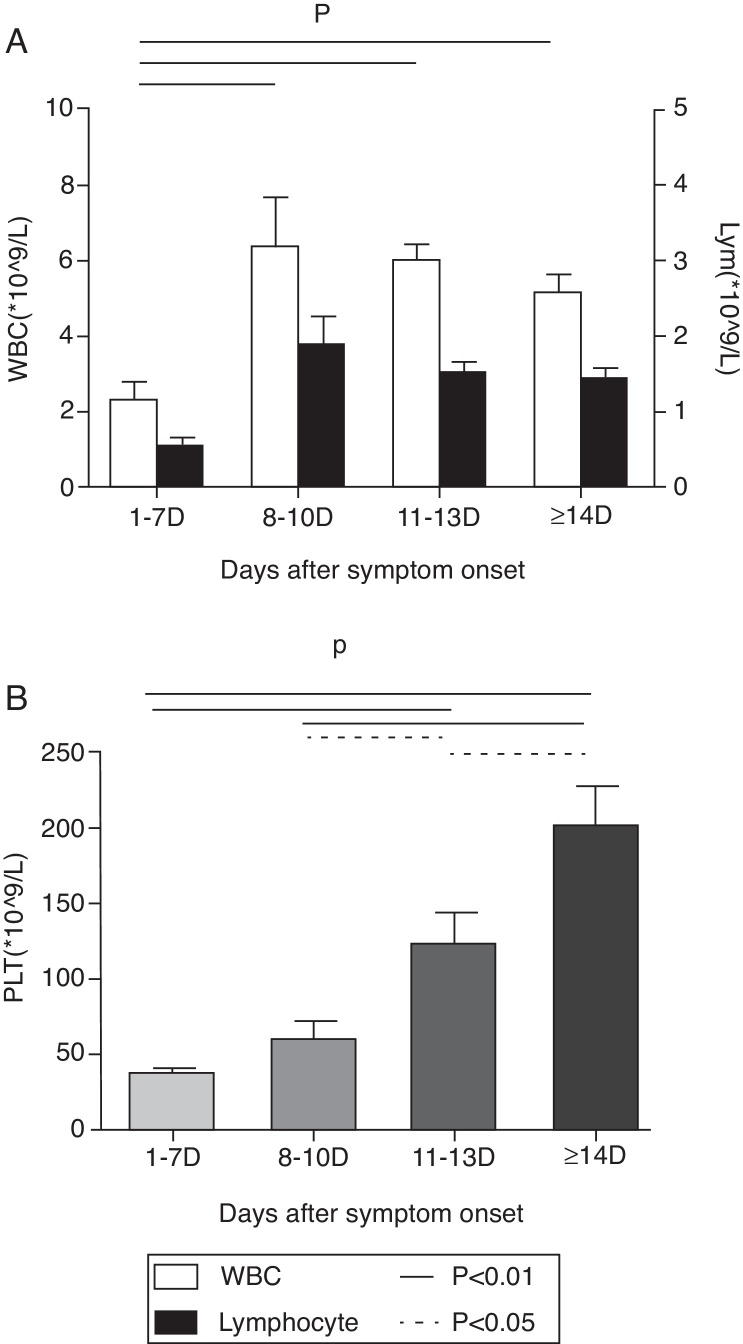
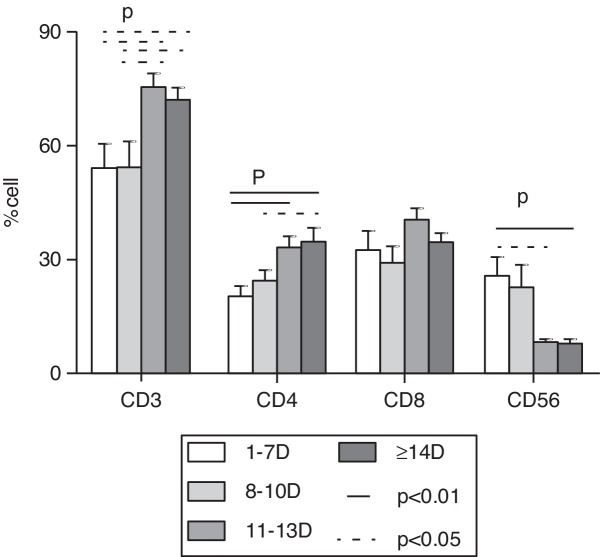
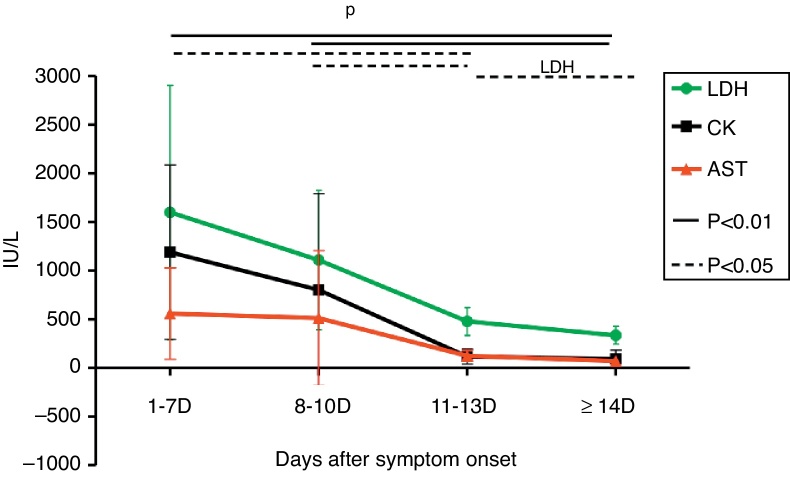
Severe fever with thrombocytopenia syndrome (SFTS) associated with severe fever with thrombocytopenia syndrome virus (SFTSV) is an emerging infectious disease. 12 patients with severe fever with thrombocytopenia syndrome in our study were presented mainly with fever and severe malaise. The clinical manifestations typically became worse on the 6th or 7th day. The average fever time is 9.11 ± 1.54 days. Most of them had multiorgan dysfunction, and part of them had hemophagocytic lymphohistiocytosis histiocytosis (HLH). The characteristic laboratory findings in the early stage were the drop of white blood cells (WBC), platelets (PLT) and serum Ca++, while increase of aspartate amino transferase (AST), creatine kinase (CK), and lactate dehydrogenase (LDH). CD3+CD4+ were significantly decreased, while CD3-CD56+ were significantly increased, whereas CD3+CD8+ were constantly elevated throughout the disease course. Ten to 14 days after illness onset, symptoms were improved, accompanied by resolution of laboratory abnormalities. These results indicate that severe fever with thrombocytopenia syndrome has an acute onset and self-limited course. It is a systemic infection. The host immune response caused tissues and organs injury. The improvement of symptoms and laboratory tests is consistent with the elimination of the virus and recover of immune response. Further investigation should be done in order to better understand this disease and guide the clinical treatment.
严重发热伴血小板减少综合征(SFTS)与严重发热伴血小板减少综合征病毒(SFTSV)有关,是一种新发传染病。本研究中 12 例严重发热伴血小板减少综合征患者主要表现为发热和严重乏力。临床表现通常在第 6 或 7 天恶化。平均发热时间为 9.11±1.54 天。大多数患者有多个器官功能障碍,部分患者有噬血细胞性淋巴组织细胞增生症(HLH)。早期特征性实验室检查结果为白细胞(WBC)、血小板(PLT)和血清 Ca++下降,而天门冬氨酸氨基转移酶(AST)、肌酸激酶(CK)和乳酸脱氢酶(LDH)升高。CD3+CD4+显著减少,而 CD3-CD56+显著增加,而 CD3+CD8+在整个病程中持续升高。发病后 10-14 天,症状改善,同时实验室异常得到缓解。这些结果表明,严重发热伴血小板减少综合征具有急性起病和自限性病程。它是一种全身性感染。宿主免疫反应引起组织和器官损伤。症状和实验室检查的改善与病毒的清除和免疫反应的恢复一致。为了更好地了解这种疾病并指导临床治疗,应进一步研究。