a State Key Laboratory of Virology and National Virus Resource Center, Wuhan Institute of Virology, Chinese Academy of Sciences , Wuhan , People's Republic of China.
b University of Chinese Academy of Sciences , Beijing , People's Republic of China.
Emerg Microbes Infect. 2019;8(1):1122-1125. doi: 10.1080/22221751.2019.1645573.
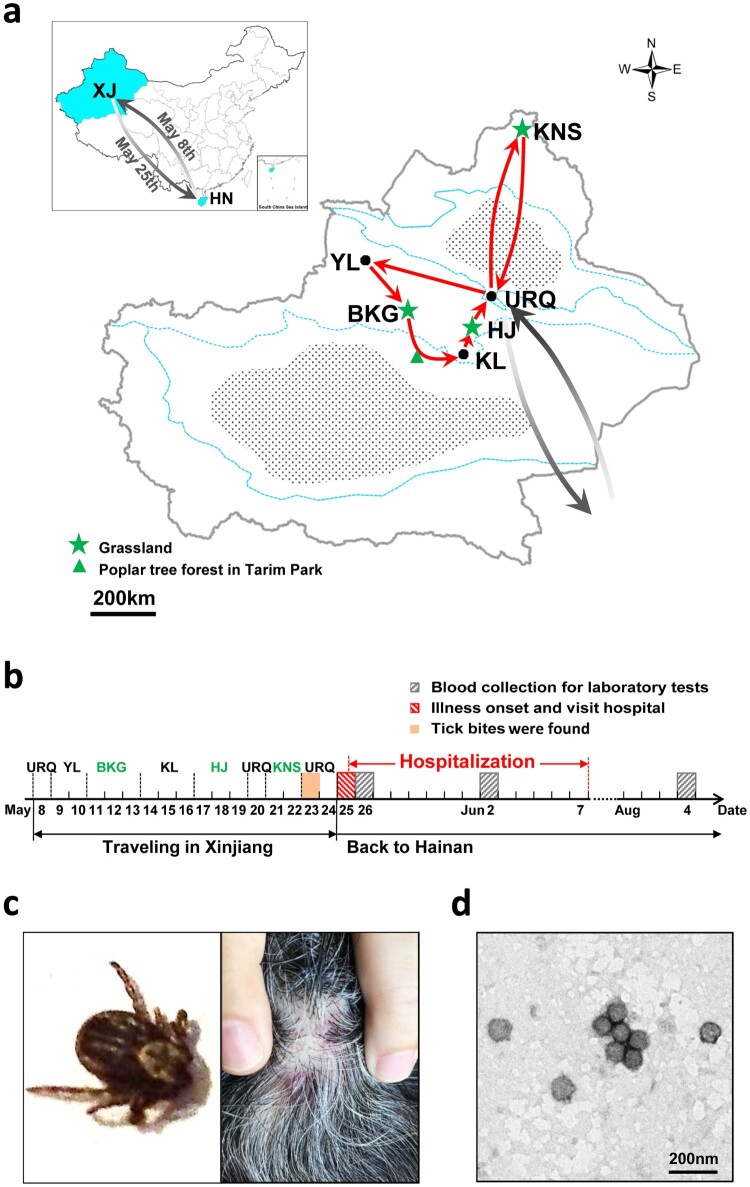
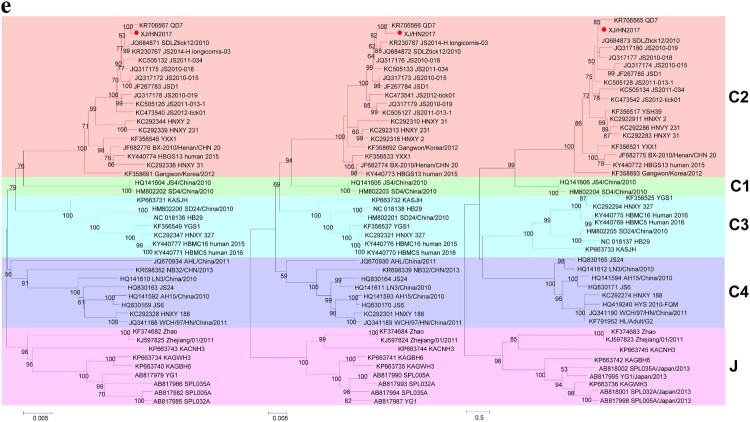
The Xinjiang Uygur Autonomous Region locating in Northwest of China was not considered the epidemic area of severe fever with thrombocytopenia syndrome (SFTS). Here we report the first laboratory-confirmed SFTS case that a female patient had tick bite in Xinjiang and illness onset after returning to Hainan Province. Laboratory tests identified SFTS virus (SFTSV) infection, and the virus was isolated from the patient's serum sample. Furthermore, SFTSV prevalence among tick groups was identified, and IgM response to SFTSV from febrile patients was identified. The findings suggested that there have been risks of SFTSV infection due to exposure to ticks in Xinjiang.
中国西北部的新疆维吾尔自治区不被认为是发热伴血小板减少综合征(SFTS)的疫区。在这里,我们报告了首例经实验室确诊的 SFTS 病例,一名女性患者在新疆被蜱虫叮咬,返回海南省后发病。实验室检测鉴定为 SFTS 病毒(SFTSV)感染,且该病毒从患者血清样本中分离得到。此外,还确定了蜱虫群体中的 SFTSV 流行情况,以及发热患者对 SFTSV 的 IgM 反应。这些发现表明,由于在新疆接触蜱虫,存在 SFTSV 感染的风险。