National Laboratory of Solid State Microstructures and Department of Physics, Nanjing University, Nanjing 210093, China.
Sci Rep. 2013 Sep 30;3:2804. doi: 10.1038/srep02804.
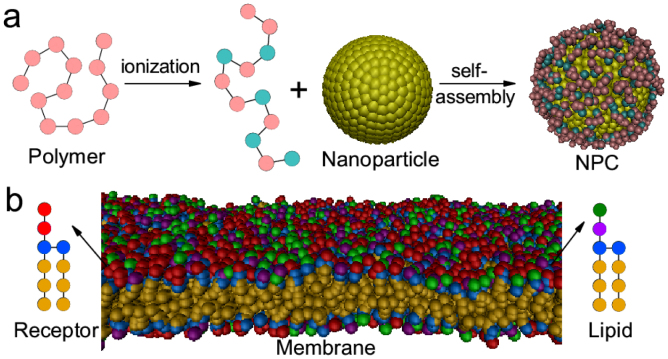
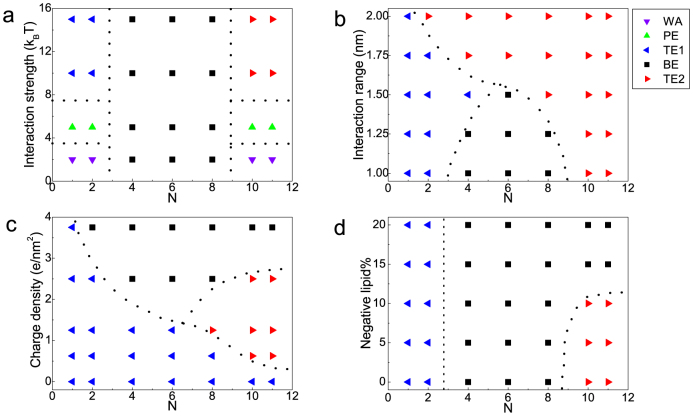
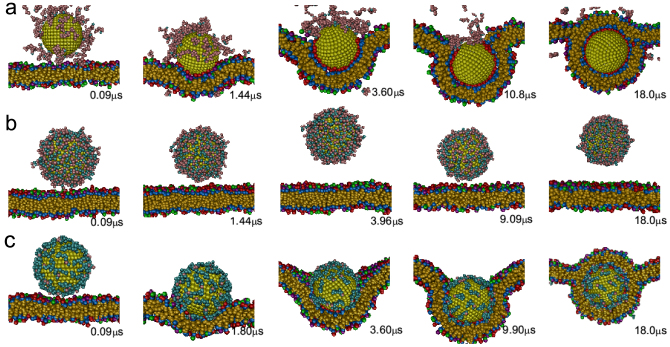
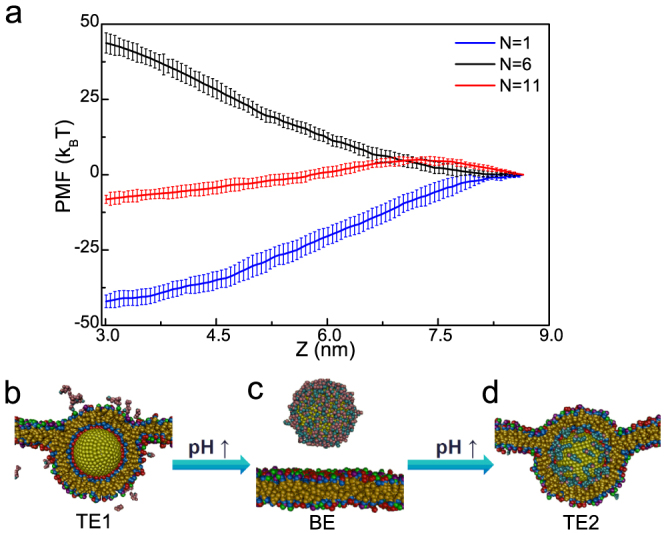
The major challenge in cancer therapy is to efficiently translocate drug molecules into cancer tumors without doing any damage to healthy tissues. Since there exist pH gradients between tumor and normal tissues, pH-sensitive materials may have great potential to overcome such challenge. Here, we report one new type of pH-responsive drug delivery system where pH-sensitive polymers are introduced to control the cellular uptake of nanoparticles under different pH environments through dissipative particle dynamics simulations. Interestingly, the behavior of cellular uptake of nanoparticles here exhibits "smart" pH-responsive properties: for lower and higher pH, the nanoparticles can be taken up by cell membranes, while for pH in middle range, the endocytosis is blocked. Further, it is found that receptor-ligand interactions as well as surface charge property of nanoparticles and membranes can also have important impacts on the endocytosis. The present study may give some significant insights into future stimulus-responsive medical materials design.
癌症治疗的主要挑战是有效地将药物分子递送到肿瘤中,而不会对健康组织造成任何损害。由于肿瘤和正常组织之间存在 pH 梯度,因此 pH 敏感材料可能具有克服这一挑战的巨大潜力。在这里,我们报告了一种新型的 pH 响应药物传递系统,其中引入 pH 敏感聚合物通过耗散粒子动力学模拟来控制纳米颗粒在不同 pH 环境下的细胞摄取。有趣的是,纳米颗粒的细胞摄取行为表现出“智能”的 pH 响应特性:对于较低和较高的 pH,纳米颗粒可以被细胞膜摄取,而对于中间范围的 pH,内吞作用被阻断。此外,还发现纳米颗粒和细胞膜的受体-配体相互作用以及表面电荷特性也对细胞内吞作用有重要影响。本研究可能为未来刺激响应型医用材料的设计提供一些重要的见解。