Diabetologia. 2014 Jan;57(1):192-203. doi: 10.1007/s00125-013-3070-2.
AIMS/HYPOTHESIS: Diabetic retinopathy is a major complication of type 2 diabetes and the leading cause of blindness in adults of working age. Neuronal defects are known to occur early in disease, but the source of this dysfunction is unknown. The aim of this study was to examine differences in the retinal membrane proteome among non-diabetic mice and mouse models of diabetes either with or without metformin treatment.
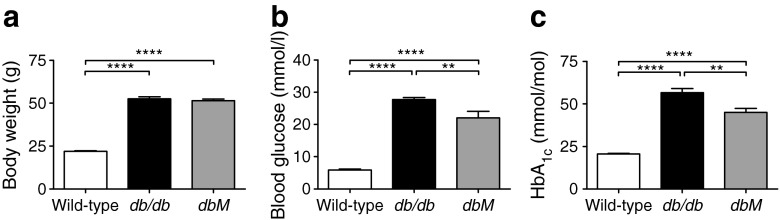
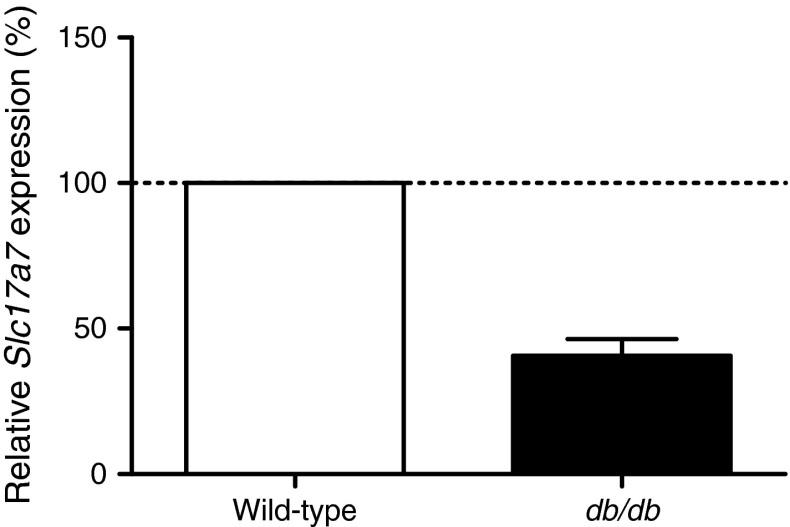
Alterations in the retinal membrane proteome of 10-week-old diabetic db/db mice, diabetic db/db mice orally treated with the anti-hyperglycaemic metformin, and congenic wild-type littermates were examined using label-free mass spectrometry. Pathway enrichment analysis was completed with Genomatix and Ingenuity. Alterations in Slc17a7 mRNA and vesicular glutamate transporter 1 (VGLUT1) protein expression were evaluated using real-time quantitative PCR and IMMUNOFLUORESCENCE.
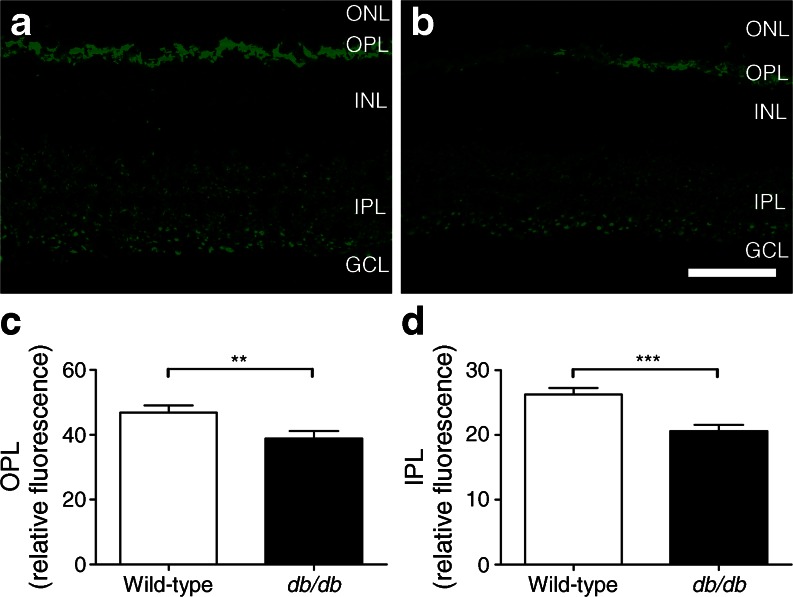
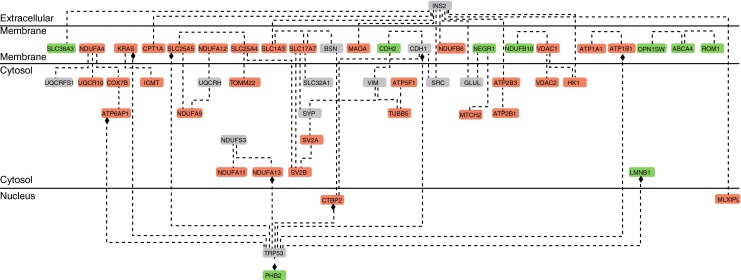
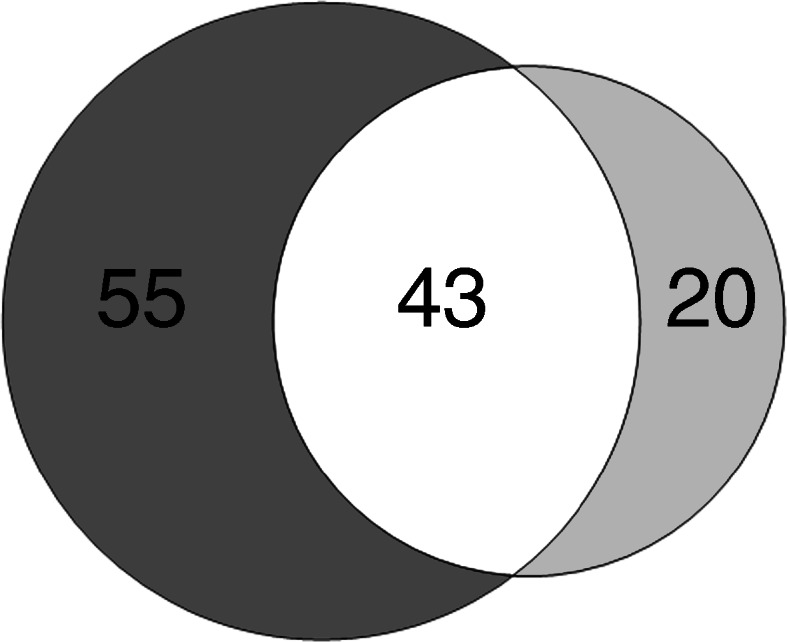
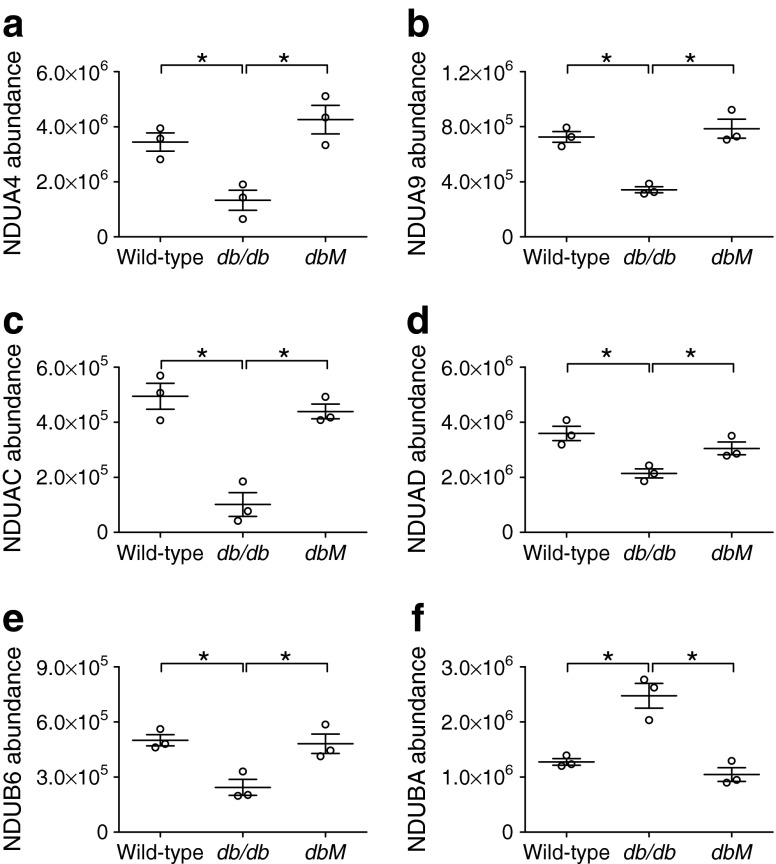
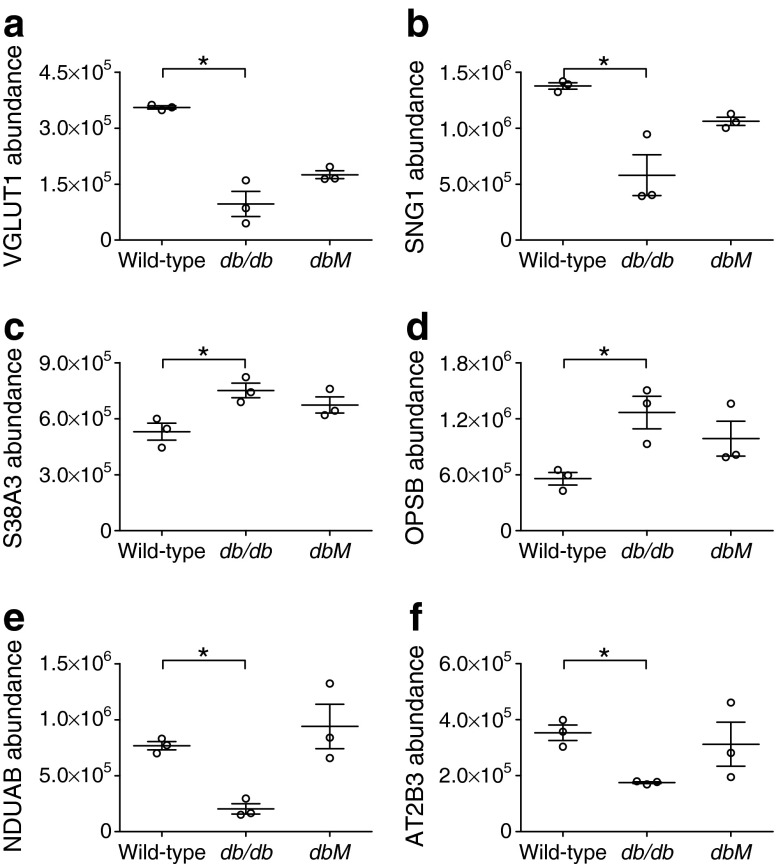
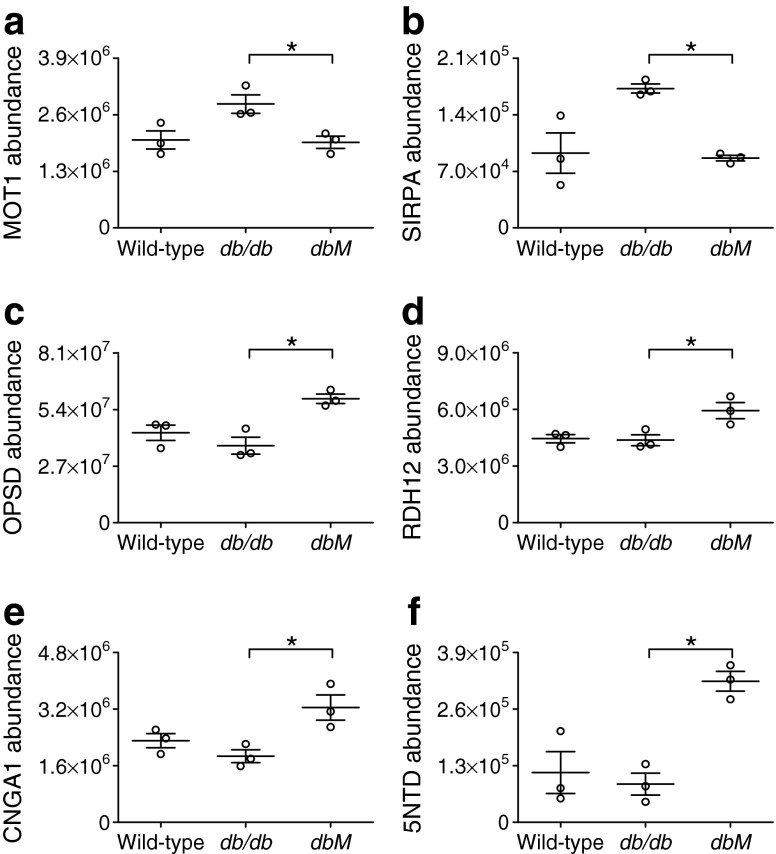
A total of 98 proteins were significantly differentially abundant between db/db and wild-type animals. Pathway enrichment analysis indicated decreases in levels of proteins related to synaptic transmission and cell signalling. Metformin treatment produced 63 differentially abundant proteins compared with untreated db/db mice, of which only 43 proteins were found to occur in both datasets, suggesting that treatment only partially normalises the alterations induced by diabetes. VGLUT1, which is responsible for loading glutamate into synaptic vesicles, was found to be differentially abundant in db/db mice and was not normalised by metformin. The decrease in Slc17a7/VGLUT1 was confirmed by transcriptomic and immunocytochemical analysis.
CONCLUSIONS/INTERPRETATION: These findings expand the knowledge of the protein changes in diabetic retinopathy and suggest that membrane-associated signalling proteins are susceptible to changes that are partially ameliorated by treatment
目的/假设:糖尿病视网膜病变是 2 型糖尿病的主要并发症,也是成年工作人群失明的主要原因。已知在疾病早期就会出现神经元缺陷,但这种功能障碍的来源尚不清楚。本研究旨在检查非糖尿病小鼠和糖尿病模型(无论是否用二甲双胍治疗)的视网膜膜蛋白质组之间的差异。
使用无标记质谱法检查 10 周龄糖尿病 db/db 小鼠、口服抗高血糖二甲双胍治疗的糖尿病 db/db 小鼠和同基因野生型同窝小鼠的视网膜膜蛋白质组的变化。使用 Genomatix 和 Ingenuity 完成途径富集分析。使用实时定量 PCR 和免疫荧光法评估 Slc17a7 mRNA 和囊泡谷氨酸转运体 1(VGLUT1)蛋白表达的变化。
总共 98 种蛋白质在 db/db 和野生型动物之间存在显著差异。途径富集分析表明,与突触传递和细胞信号相关的蛋白质水平降低。与未治疗的 db/db 小鼠相比,二甲双胍治疗产生了 63 种差异丰富的蛋白质,其中只有 43 种蛋白质在两个数据集都存在,这表明治疗仅部分纠正了糖尿病引起的改变。负责将谷氨酸装入突触小泡的 VGLUT1 在 db/db 小鼠中被发现差异丰富,并且不受二甲双胍的调节。Slc17a7/VGLUT1 的减少通过转录组和免疫细胞化学分析得到证实。
结论/解释:这些发现扩展了糖尿病视网膜病变中蛋白质变化的知识,并表明膜相关信号蛋白容易发生变化,这些变化部分可以通过治疗得到改善。