Kaur Sukhjot, Dogra Alka
Department of Dermatology and Venereology, Dayanand Medical College and Hospital, Ludhiana, Punjab, India.
Indian J Dermatol. 2013 Sep;58(5):406. doi: 10.4103/0019-5154.117319.
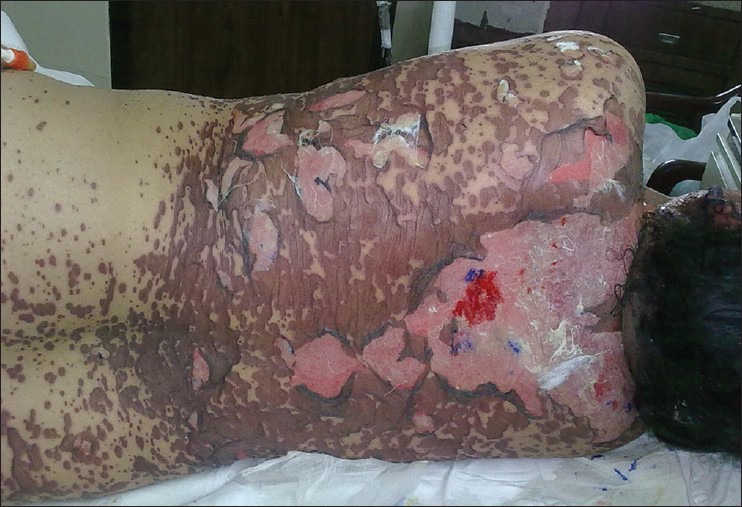
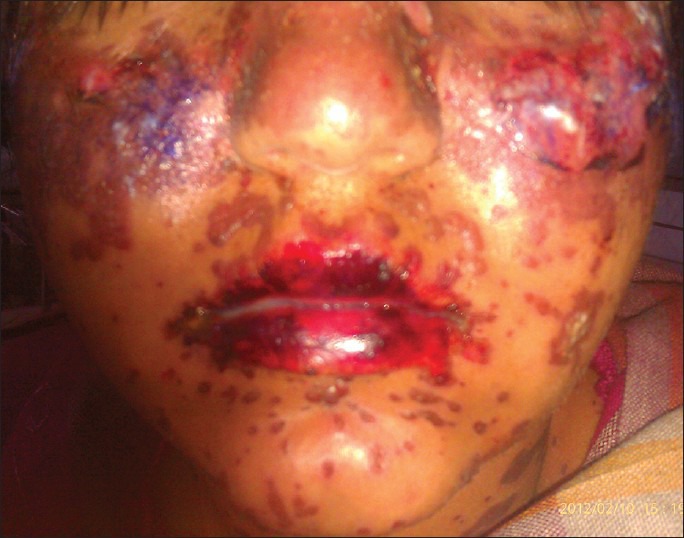
Anti-epileptic drugs can be associated with a wide spectrum of cutaneous adverse reactions ranging from simple maculopapular rashes to more severe and life threatening reactions like Stevens-Johnson syndrome and toxic epidermal necrolysis. These rashes are well documented with older antiepileptic drugs like phenytoin, phenobarbitone and carbamazapine. Lamotrigine is a newer, unrelated antiepileptic drug that causes skin rashes in 3-10% of new users. Higher starting dose or rapid escalation, concurrent treatment with valproic acid, and a previous history of a rash with other antiepileptic drugs are well recognized risk factors for lamotrigine related serious rashes. We report two patients with toxic epidermal necrolysis, resulting from concomitant use of lamotrigine and valproic acid. It is emphasized that clinicians adhere to the recommended dosage guidelines and adopt a slow dose titration when initiating treatment with lamotrigine.
抗癫痫药物可引发广泛的皮肤不良反应,从简单的斑丘疹到更严重甚至危及生命的反应,如史蒂文斯-约翰逊综合征和中毒性表皮坏死松解症。苯妥英钠、苯巴比妥和卡马西平等较老的抗癫痫药物引发这些皮疹的情况已有充分记录。拉莫三嗪是一种较新的、无关联的抗癫痫药物,3%至10%的新使用者会出现皮疹。起始剂量较高或快速增量、与丙戊酸同时治疗以及既往使用其他抗癫痫药物时有皮疹病史是公认的与拉莫三嗪相关严重皮疹的危险因素。我们报告了两名因同时使用拉莫三嗪和丙戊酸而导致中毒性表皮坏死松解症的患者。强调临床医生在开始使用拉莫三嗪治疗时应遵循推荐的剂量指南并采用缓慢的剂量滴定法。