Mabrouk Amr Abdel Wahab, Helal Hesham Aly, Al Mekkawy Soha Fathy, Mahmoud Nada Abdel Sattar, Abdel-Salam Ahmed Mohamed
Plastic and Reconstructive Surgery Department, Ain Shams University, Cairo, Egypt.
Arch Plast Surg. 2013 Sep;40(5):621-6. doi: 10.5999/aps.2013.40.5.621. Epub 2013 Sep 13.
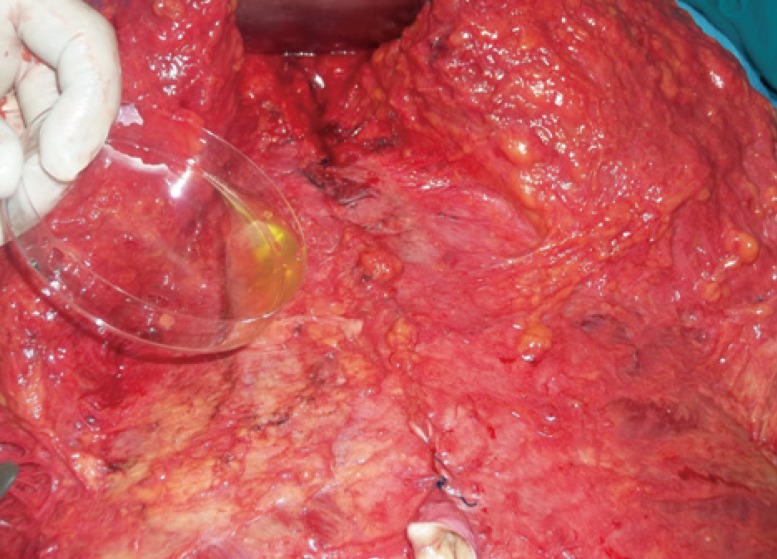
Ever since lipoabdominoplasty was first developed to achieve better aesthetic outcomes and less morbidity, the rate of seroma formation, especially in obese patients, has disturbed plastic surgeons. The aim of this study was to evaluate the effect of fibrin sealant in the prevention of seroma formation after lipoabdominoplasty in obese patients.
Sixty patients with a body mass index (BMI) between 30 and 39.9 were assigned randomly to 1 of 2 groups (30 patients each). Group A underwent lipoabdominoplasty with fibrin glue, while group B underwent traditional lipoabdominoplasty; both had closed suction drainage applied to the abdomen. The patients' demographics and postoperative complications were recorded. Seroma was detected using abdominal ultrasound examinations at two postoperative periods: between postoperative days 10 and 12 and, between postoperative days 18 and 21.
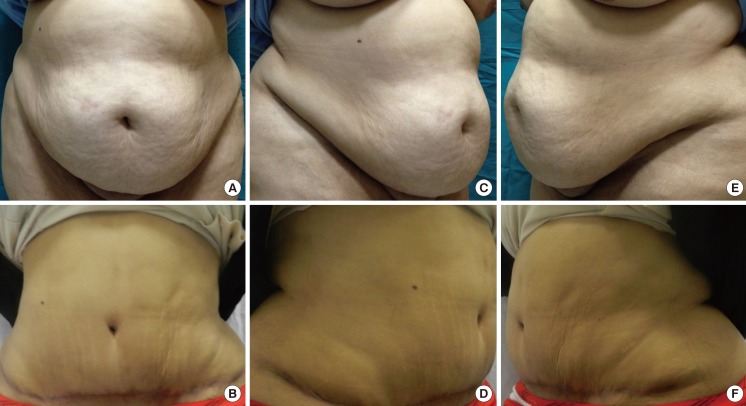
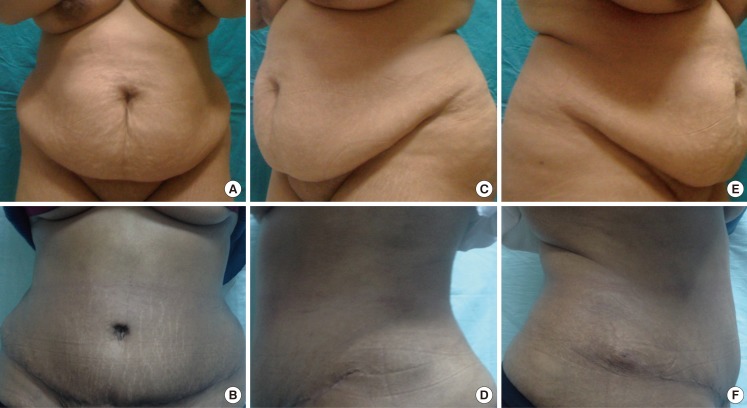
The age range was 31 to 55 years (38.5±9.5 years) in group A and 25 to 58 years (37.8±9.1 years) in group B, while the mean BMI was 31.4 to 39.9 kg/m(2) (32.6 kg/m(2)) in group A and 32.7 to 37.4 kg/m(2) (31.5 kg/m(2)) in group B. In group A, the patients had a complication rate of 10% in group A versus 43% in group B (P<0.05). The incidence of seroma formation was 3% in the fibrin glue group but 37% in the lipoabdominoplasty-alone group (P<0.05).
Lipoabdominoplasty with the use of autologous fibrin sealant is a very effective method that significantly reduces the rate of postoperative seroma.
自从首次开展腹壁成形术以获得更好的美学效果和更低的发病率以来,血清肿形成率,尤其是肥胖患者中的血清肿形成率,一直困扰着整形外科医生。本研究的目的是评估纤维蛋白封闭剂在预防肥胖患者腹壁成形术后血清肿形成中的作用。
将60例体重指数(BMI)在30至39.9之间的患者随机分为2组,每组30例。A组接受使用纤维蛋白胶的腹壁成形术,而B组接受传统腹壁成形术;两组均在腹部应用封闭式负压引流。记录患者的人口统计学资料和术后并发症。在术后两个时间段通过腹部超声检查检测血清肿:术后第10至12天之间以及术后第18至21天之间。
A组年龄范围为31至55岁(38.5±9.5岁),B组为25至58岁(37.8±9.1岁),而A组平均BMI为31.4至39.9 kg/m²(32.6 kg/m²),B组为32.7至37.4 kg/m²(31.5 kg/m²)。A组患者的并发症发生率为10%,而B组为43%(P<0.05)。纤维蛋白胶组血清肿形成的发生率为3%,而单纯腹壁成形术组为37%(P<0.05)。
使用自体纤维蛋白封闭剂的腹壁成形术是一种非常有效的方法,可显著降低术后血清肿的发生率。