Department of Molecular Science and Technology, Ajou University, Suwon, Korea.
FEBS J. 2013 Dec;280(23):6196-212. doi: 10.1111/febs.12541. Epub 2013 Oct 16.
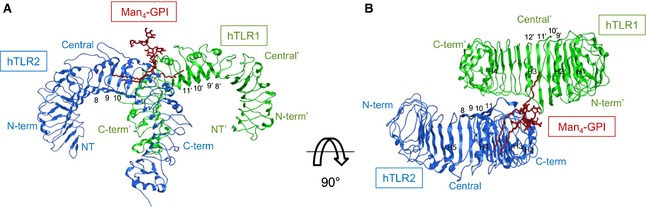
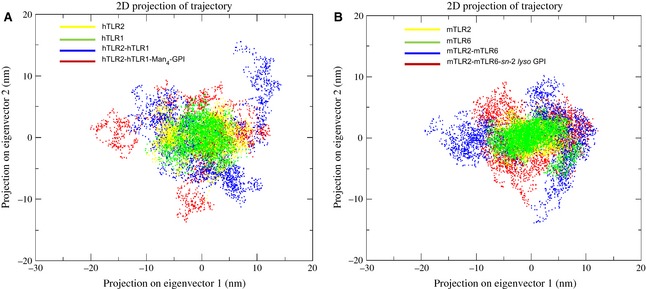
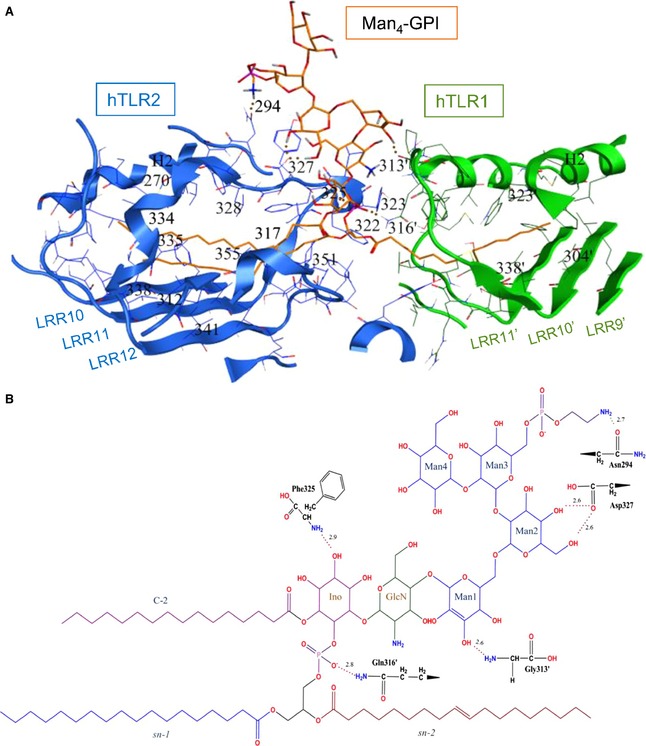
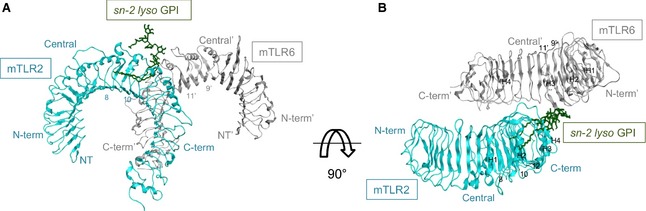
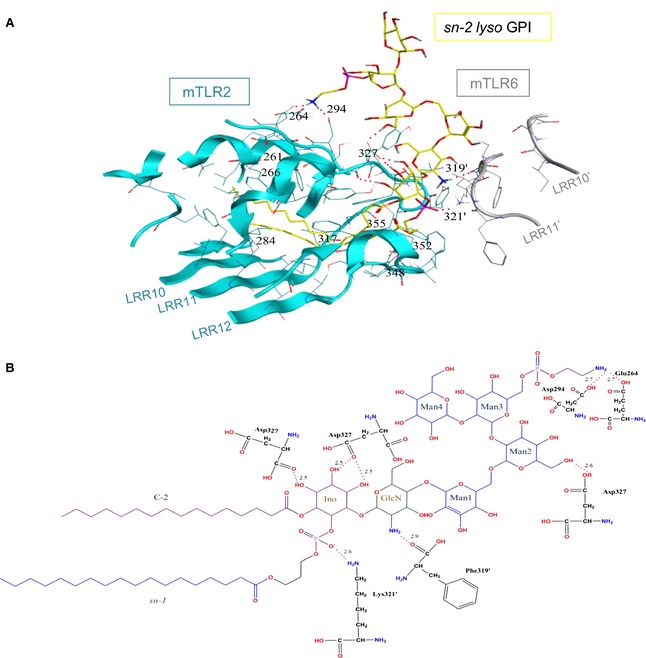
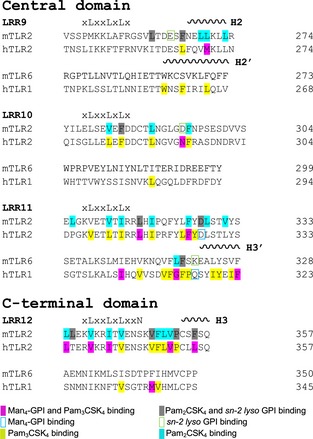
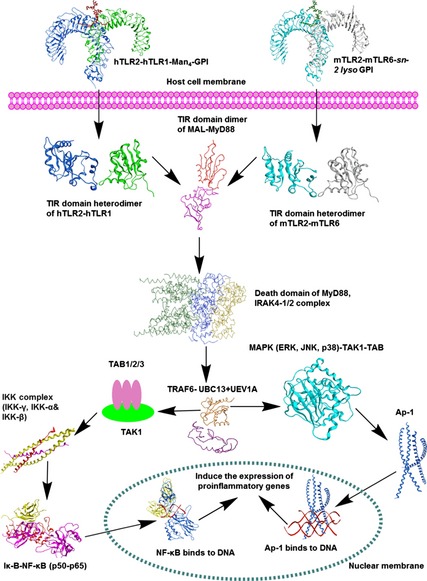
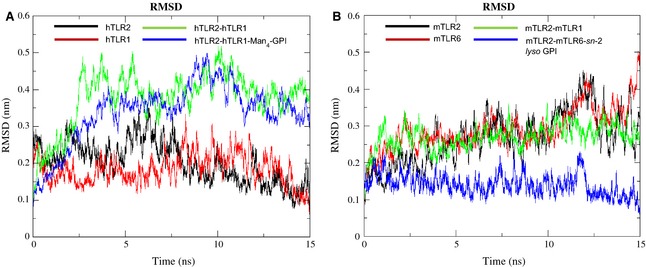
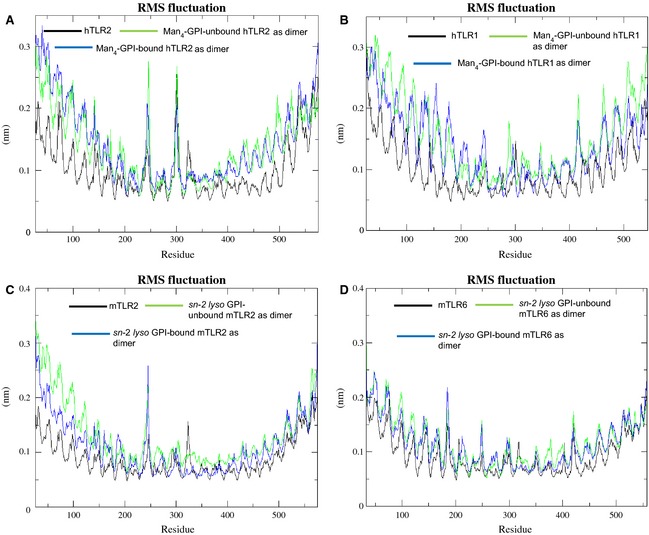
Proinflammatory responses by Toll-like receptors (TLRs) to malaria infection are considered to be a significant factor in suppressing pathogen growth and in disease control. The key protozoan parasite Plasmodium falciparum causes malaria through glycosylphosphatidylinositols (GPIs), which induce the host immune response mainly via TLR2 signalling. Experimental studies have suggested that malarial GPIs from P. falciparum are recognized by the TLR2 subfamily. However, the interaction site and their involvement in the activation mechanism are still unknown. A better understanding of the detailed structure of the TLR-GPI interaction is important for the design of more effective anti-malarial therapeutics. We used a molecular docking method to predict the binding regions of malarial GPIs with the TLR2 subfamily members. We also employed molecular dynamics simulations and principal component analysis to understand ligand-induced conformational changes of the TLR2 subfamily. We observed the expected structural changes upon ligand binding, and significant movements were found in loop regions located in the ligand-binding site of the TLR2 subfamily. We further propose that the binding modes of malarial GPIs are similar to lipopeptides, and that the lipid portions of the ligands could play an essential role in selective dimerization of the TLR2 subfamily.
疟原虫感染引发的 Toll 样受体(TLRs)炎症反应被认为是抑制病原体生长和控制疾病的重要因素。疟原虫属的主要原生动物寄生虫通过糖基磷脂酰肌醇(GPIs)引起疟疾,主要通过 TLR2 信号诱导宿主免疫反应。实验研究表明,来自疟原虫属的疟原虫 GPIs 被 TLR2 亚家族识别。然而,其相互作用的位点和参与激活机制仍然未知。更好地了解 TLR-GPI 相互作用的详细结构对于设计更有效的抗疟治疗方法非常重要。我们使用分子对接方法来预测疟原虫 GPIs 与 TLR2 亚家族成员的结合区域。我们还进行了分子动力学模拟和主成分分析,以了解配体诱导的 TLR2 亚家族的构象变化。我们观察到配体结合时预期的结构变化,并且在 TLR2 亚家族的配体结合位点的环区中发现了明显的运动。我们进一步提出,疟原虫 GPIs 的结合模式类似于脂肽,配体的脂质部分可能在 TLR2 亚家族的选择性二聚化中起关键作用。