Life Sciences Division, Lawrence Berkeley National Laboratory, Berkeley, California.
J Nucl Med. 2013 Nov;54(11):1938-45. doi: 10.2967/jnumed.113.120105. Epub 2013 Oct 3.
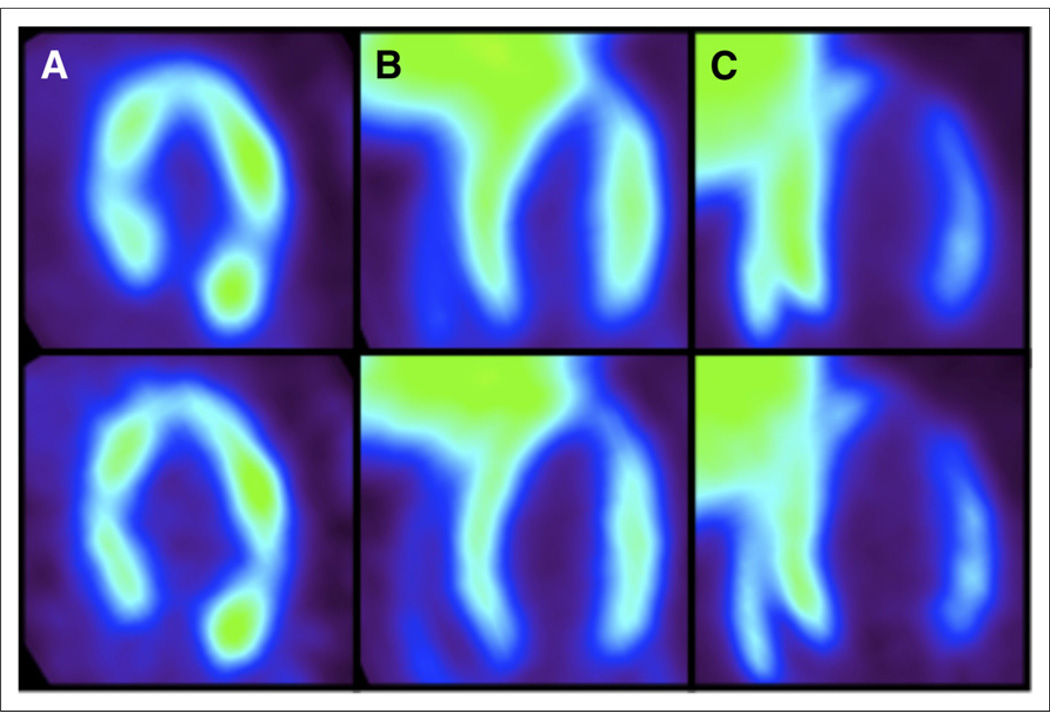
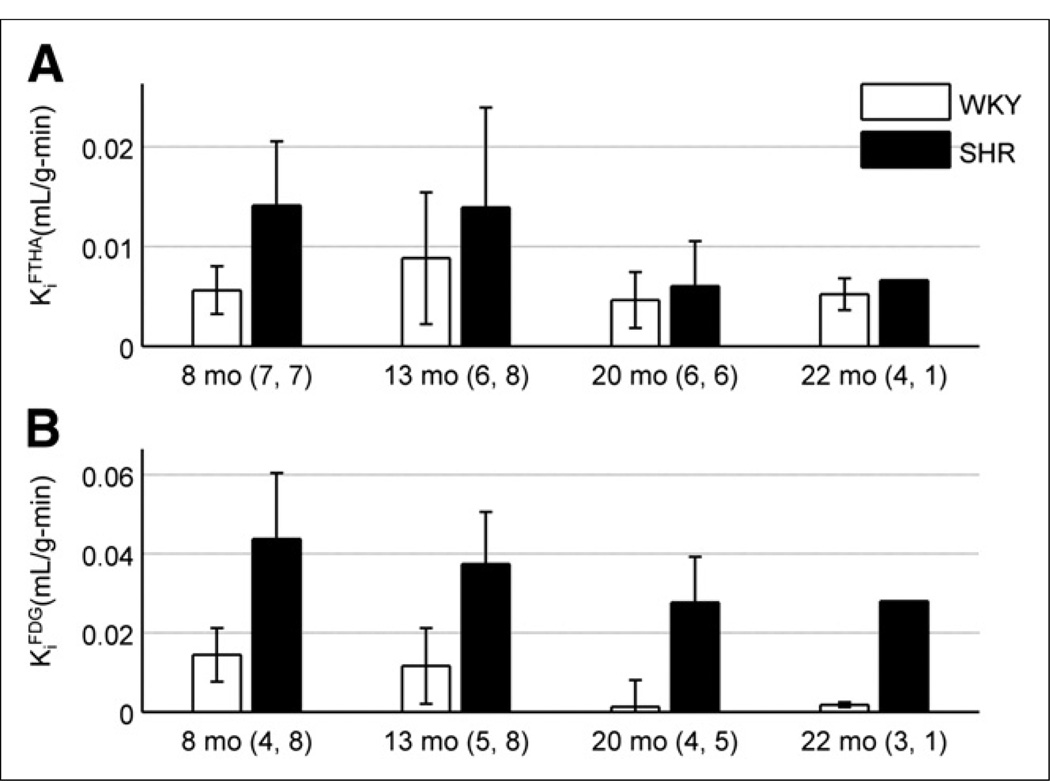
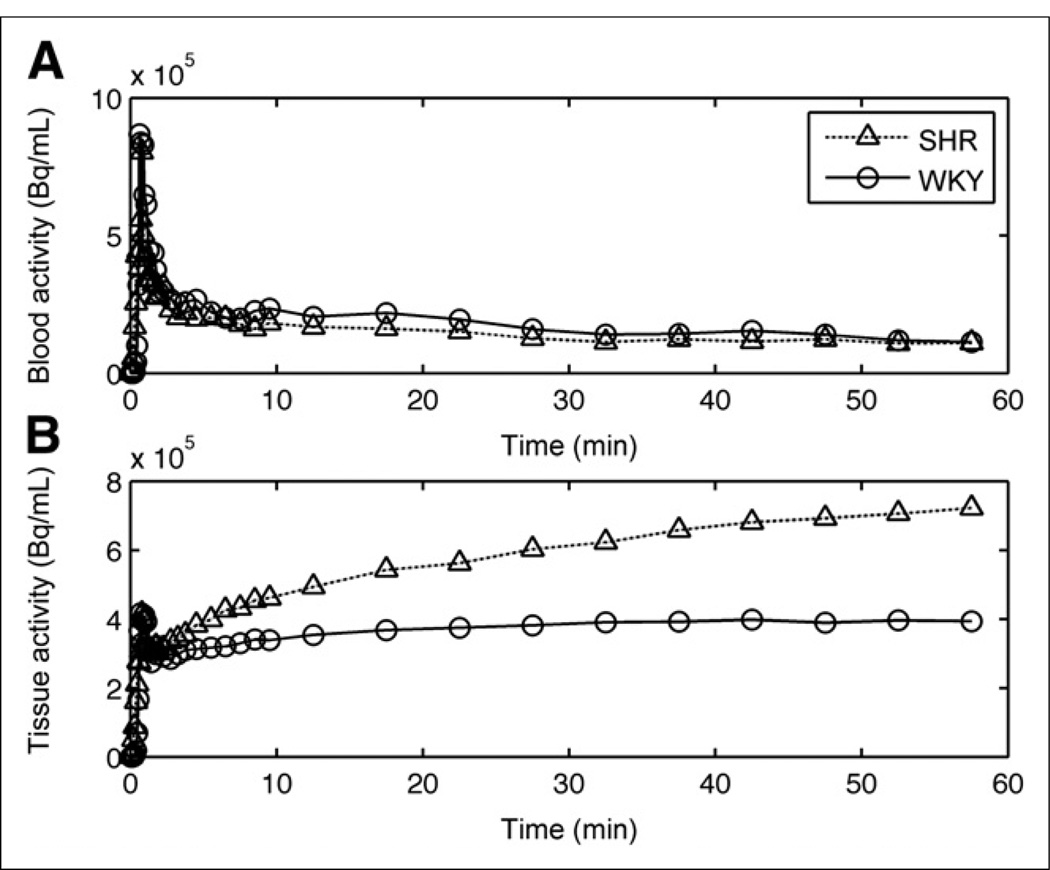
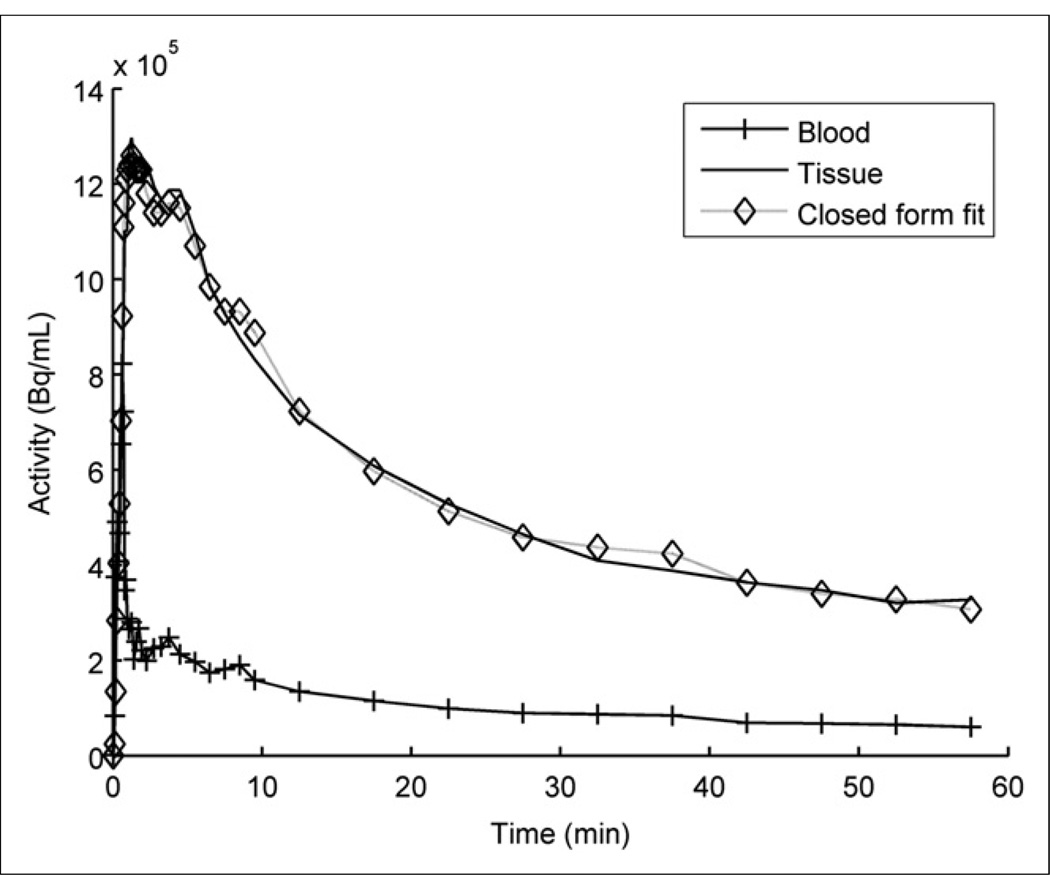
Myocardial metabolic and perfusion imaging is a vital tool for understanding the physiologic consequences of heart failure. We used PET imaging to examine the longitudinal kinetics of (18)F-FDG and 14(R,S)-(18)F-fluoro-6-thia-heptadecanoic acid ((18)F-FTHA) as analogs of glucose and fatty acid (FA) to quantify metabolic substrate shifts with the spontaneously hypertensive rat (SHR) as a model of left ventricular hypertrophy (LVH) and failure. Myocardial perfusion and left ventricular function were also investigated using a newly developed radiotracer (18)F-fluorodihydrorotenol ((18)F-FDHROL).
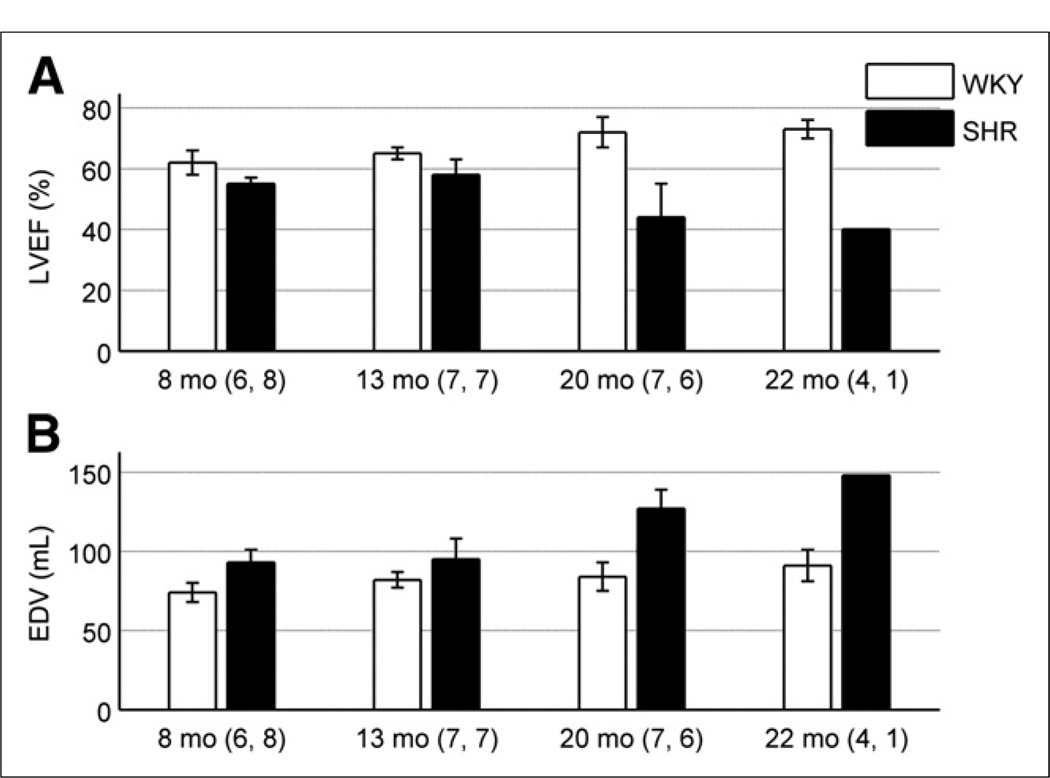
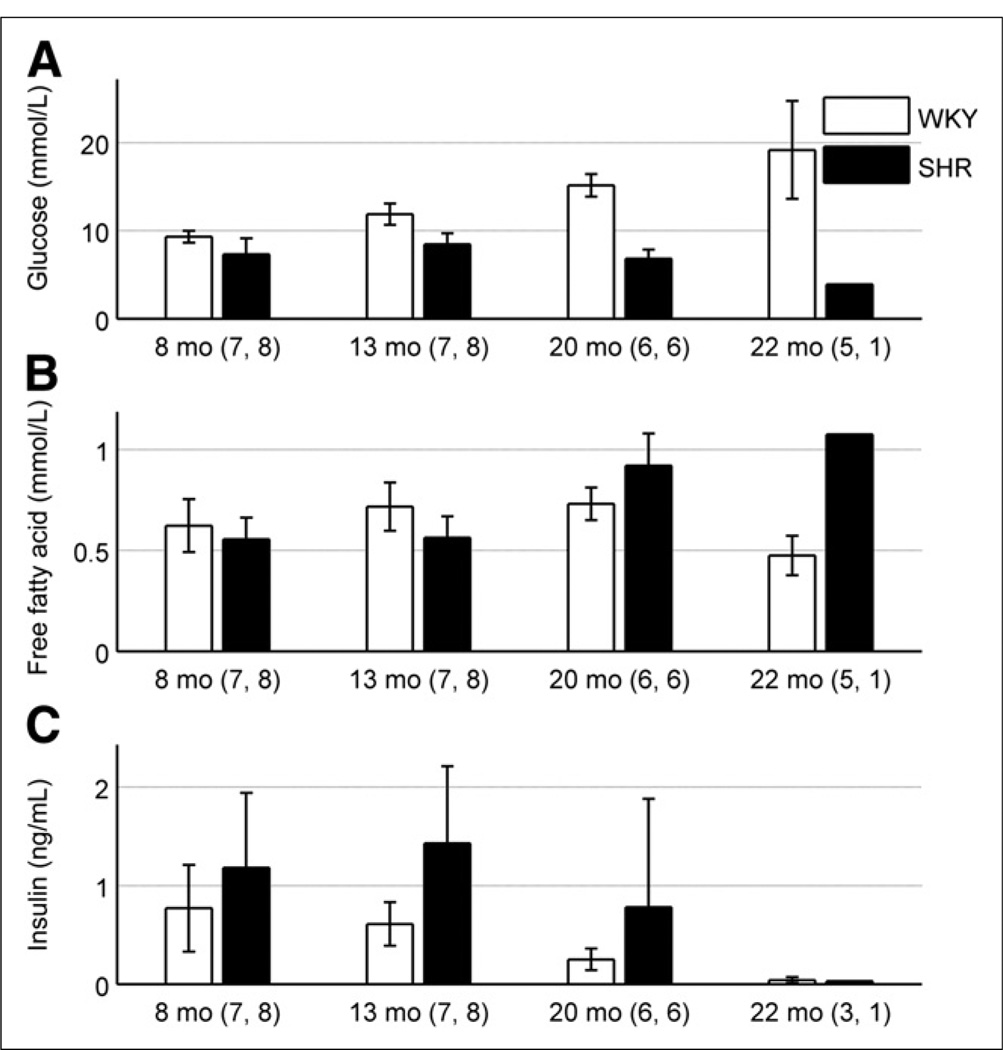
Longitudinal dynamic electrocardiogram-gated small-animal PET/CT studies were performed with 8 SHR and 8 normotensive Wistar-Kyoto (WKY) rats over their life cycle. We determined the myocardial influx rate constant for (18)F-FDG and (18)F-FTHA (Ki(FDG) and Ki(FTHA), respectively) and the wash-in rate constant for (18)F-FDHROL (K1(FDHROL)). (18)F-FDHROL data were also used to quantify left ventricular ejection fraction (LVEF) and end-diastolic volume (EDV). Blood samples were drawn to independently measure plasma concentrations of glucose, insulin, and free fatty acids (FFAs).
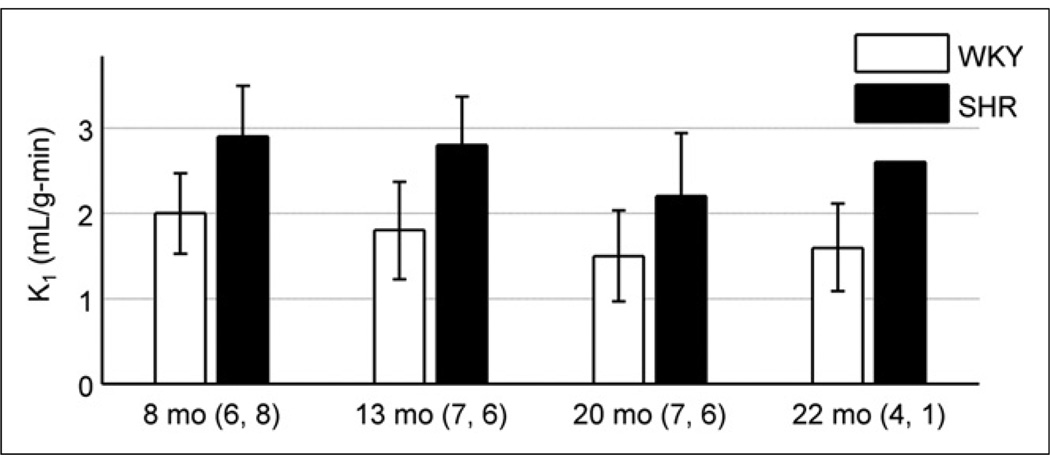
Ki(FDG) and Ki(FTHA) were higher in SHRs than WKY rats (P < 3 × 10(-8) and 0.005, respectively) independent of age. A decrease in Ki(FDG) with age was evident when models were combined (P = 0.034). The SHR exhibited higher K1(FDHROL) (P < 5 × 10(-6)) than the control, with no age-dependent trends in either model (P = 0.058). Glucose plasma concentrations were lower in SHRs than controls (P < 6 × 10(-12)), with an age-dependent rise for WKY rats (P < 2 × 10(-5)). Insulin plasma concentrations were higher in SHRs than controls (P < 3 × 10(-3)), with an age-dependent decrease when models were combined (P = 0.046). FFA levels were similar between models (P = 0.374), but an increase with age was evident only in SHR (P < 7 × 10(-6)).
The SHR exhibited alterations in myocardial substrate use at 8 mo characterized by increased glucose and FA utilizations. At 20 mo, the SHR had LVH characterized by decreased LVEF and increased EDV, while simultaneously sustaining higher glucose and similar FA utilizations (compared with WKY rats), which indicates maladaptation of energy substrates in the failing heart. Elevated K1(FDHROL) in the SHR may reflect elevated oxygen consumption and decreased capillary density in the hypertrophied heart. From our findings, metabolic changes appear to precede mechanical changes of LVH progression in the SHR model.
使用 PET 成像技术,研究作为葡萄糖和脂肪酸(FA)类似物的 18F-FDG 和 14(R,S)-18F-氟-6-硫庚酸(18F-FTHA)的纵向动力学,以量化自发性高血压大鼠(SHR)的代谢底物转移,该大鼠是左心室肥厚(LVH)和衰竭的模型。还使用新开发的示踪剂 18F-氟二氢咯醇(18F-FDHROL)研究了心肌灌注和左心室功能。
对 8 只 SHR 和 8 只正常血压的 Wistar-Kyoto(WKY)大鼠进行了长达其生命周期的纵向动态心电图门控小动物 PET/CT 研究。我们确定了 18F-FDG 和 18F-FTHA 的心肌摄取率常数(Ki(FDG)和 Ki(FTHA))以及 18F-FDHROL 的灌洗率常数(K1(FDHROL))。还使用 18F-FDHROL 数据来定量左心室射血分数(LVEF)和舒张末期容积(EDV)。抽取血样以独立测量血浆葡萄糖、胰岛素和游离脂肪酸(FFA)的浓度。
SHR 的 Ki(FDG)和 Ki(FTHA)均高于 WKY 大鼠(P < 3 × 10(-8)和 0.005,分别),与年龄无关。当合并模型时,Ki(FDG)随年龄的变化是明显的(P = 0.034)。SHR 的 K1(FDHROL)较高(P < 5 × 10(-6)),与对照组相比,两种模型均无年龄依赖性趋势(P = 0.058)。SHR 的血浆葡萄糖浓度低于对照组(P < 6 × 10(-12)),WKY 大鼠的血浆葡萄糖浓度随年龄的增加而增加(P < 2 × 10(-5))。SHR 的胰岛素血浆浓度高于对照组(P < 3 × 10(-3)),当合并模型时,胰岛素血浆浓度随年龄的降低而降低(P = 0.046)。两种模型的 FFA 水平相似(P = 0.374),但仅在 SHR 中可见随年龄的增加而增加(P < 7 × 10(-6))。
SHR 在 8 个月时表现出心肌底物利用的改变,其特征是葡萄糖和 FA 的利用率增加。在 20 个月时,SHR 发生 LVH,表现为 LVEF 降低和 EDV 增加,同时维持较高的葡萄糖和相似的 FA 利用率(与 WKY 大鼠相比),这表明能量底物在衰竭心脏中的适应性不良。SHR 中 K1(FDHROL)的升高可能反映了肥厚心脏中耗氧量增加和毛细血管密度降低。根据我们的发现,代谢变化似乎先于 SHR 模型中 LVH 进展的机械变化。