State Key Laboratory of Urban Water Resource and Environment, Harbin Institute of Technology, Harbin 150090, China.
Biotechnol Biofuels. 2013 Oct 6;6(1):143. doi: 10.1186/1754-6834-6-143.
Biodiesel production from oleaginous microalgae shows great potential as a promising alternative to conventional fossil fuels. Currently, most research focus on algal biomass production with autotrophic cultivation, but this cultivation strategy induces low biomass concentration and it is difficult to be used in large-scale algal biomass production. By contrast, heterotrophic algae allows higher growth rate and can accumulate higher lipid. However, the fast-growing and lipid-rich microalgae that can be cultivated in heterotrophic system for the industrial application of biodiesel production are still few. Traditional solvent extraction and gravimetric determination to detect the microalgal total lipid content is time-consuming and laborious, which has become a major limiting factor for selecting large number of algae specimens. Thus, it is critical to develop a rapid and efficient procedure for the screening of lipid-rich microalgae.
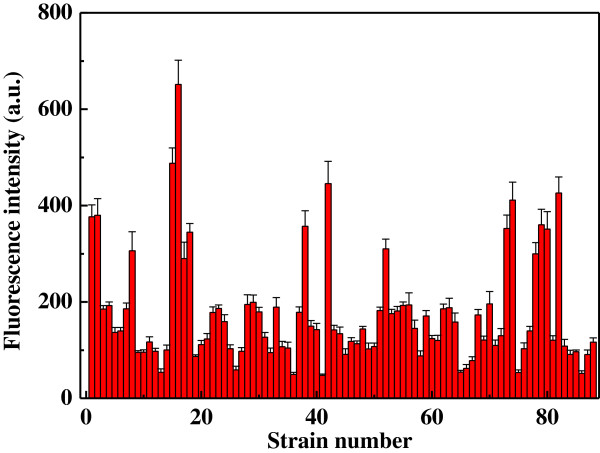
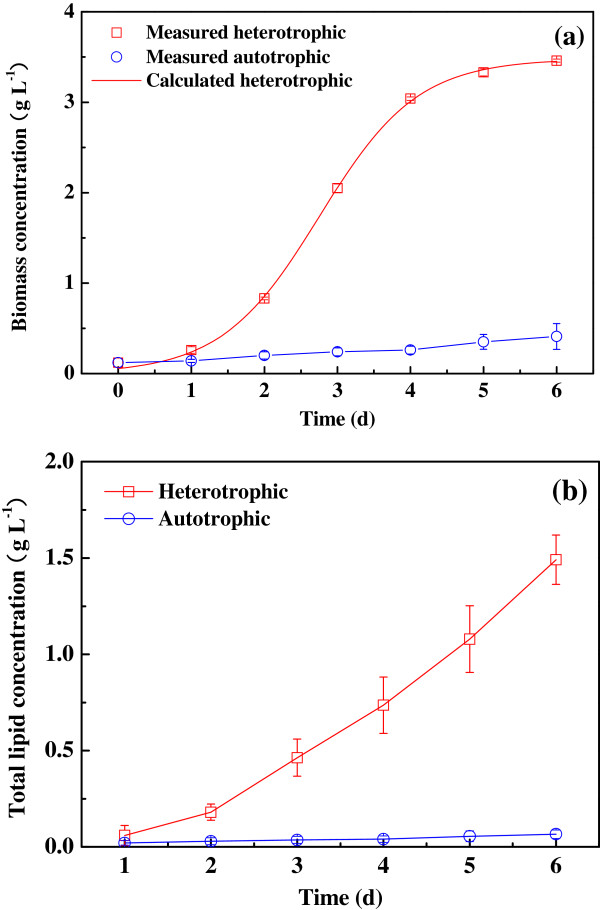
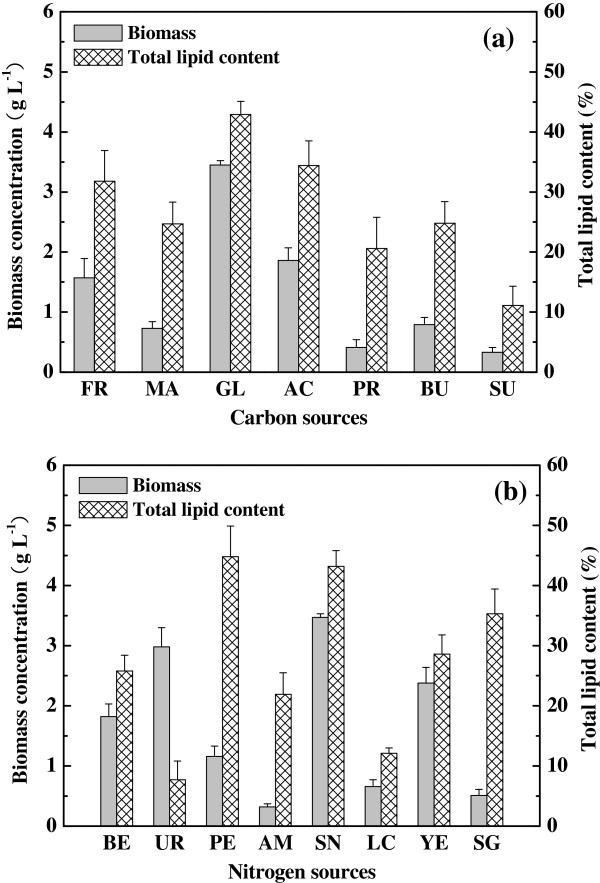
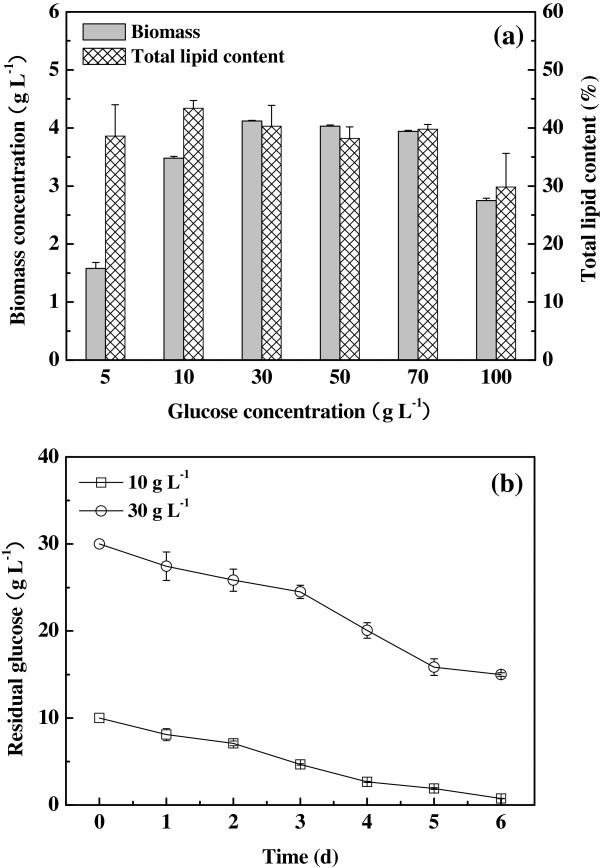
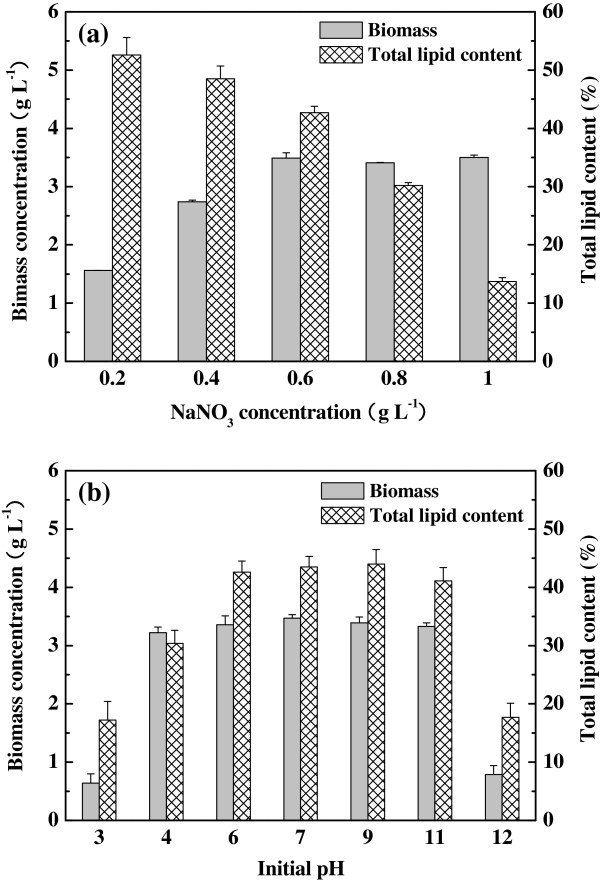
A novel green microalga Scenedesmus sp. strain R-16 with high total lipid content was selected using the Nile red staining from eighty-eight isolates. Various carbon sources (fructose, glucose and acetate) and nitrogen sources (nitrate, urea, peptone and yeast extract) can be utilized for microalgal growth and lipid production, and the optimal carbon and nitrogen sources were glucose (10 g L-1) and nitrate (0.6 g L-1), respectively. Compared to autotrophic situation, the strain R-16 can grow well heterotrophically without light and the accumulated total lipid content and biomass reached 43.4% and 3.46 g L-1, respectively. In addition, nitrogen deficiency led to an accumulation of lipid and the total lipid content was as high as 52.6%, and it was worth noting that strain R-16 exhibited strong tolerance to high glucose (up to 100 g L-1) and a wide range of pH (4.0-11.0).
The newly developed ultrasonic-assisted Nile red method proved to be an efficient isolation procedure and was successfully used in the selection of oleaginous microalgae. The isolated novel green microalgal strain R-16 was rich in lipid and can live in varied and contrasting conditions. The algae appeared to have great potential for application in microalgae-based biodiesel production.
从油脂微藻生产生物柴油显示出巨大的潜力,作为一种有前途的传统化石燃料的替代品。目前,大部分研究集中在藻类生物量生产与自养培养,但这种培养策略诱导低生物量浓度,很难用于大规模藻类生物量生产。相比之下,异养藻类允许更高的生长速度,可以积累更高的脂质。然而,快速生长和富含油脂的微藻,可以在异养系统中培养用于生物柴油生产的工业应用仍然很少。传统的溶剂萃取和重量法测定微藻总脂含量是费时费力的,这已成为选择大量藻类标本的主要限制因素。因此,开发一种快速高效的筛选富含油脂的微藻的方法是至关重要的。
采用尼罗红染色法从 88 株菌中筛选出一株总脂含量较高的新型绿色微藻小球藻 R-16。各种碳源(果糖、葡萄糖和醋酸盐)和氮源(硝酸盐、尿素、蛋白胨和酵母提取物)可用于微藻生长和产脂,最佳碳源和氮源分别为葡萄糖(10 g/L)和硝酸盐(0.6 g/L)。与自养相比,R-16 株在没有光照的情况下也能很好地异养生长,积累的总脂含量和生物量分别达到 43.4%和 3.46 g/L。此外,氮缺乏导致脂类的积累,总脂含量高达 52.6%,值得注意的是,R-16 株对高葡萄糖(高达 100 g/L)和宽 pH 值范围(4.0-11.0)具有很强的耐受性。
新开发的超声辅助尼罗红法被证明是一种有效的分离方法,并成功地用于筛选油脂微藻。所分离的新型绿色微藻 R-16 株富含油脂,能在不同和相反的条件下生存。该藻类在基于微藻的生物柴油生产中具有很大的应用潜力。