Lv Zhengjian, Roychaudhuri Robin, Condron Margaret M, Teplow David B, Lyubchenko Yuri L
Department of Pharmaceutical Sciences, University of Nebraska Medical Center, 986025 Nebraska Medical Center, Omaha, NE 68198, United States.
Sci Rep. 2013 Oct 7;3:2880. doi: 10.1038/srep02880.
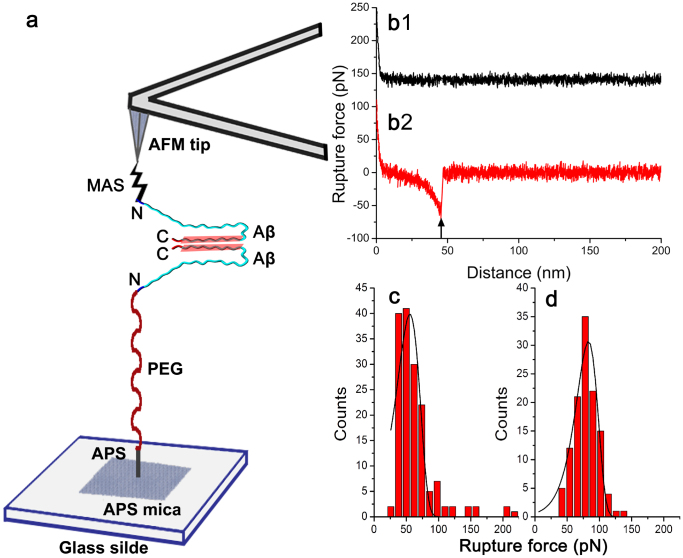
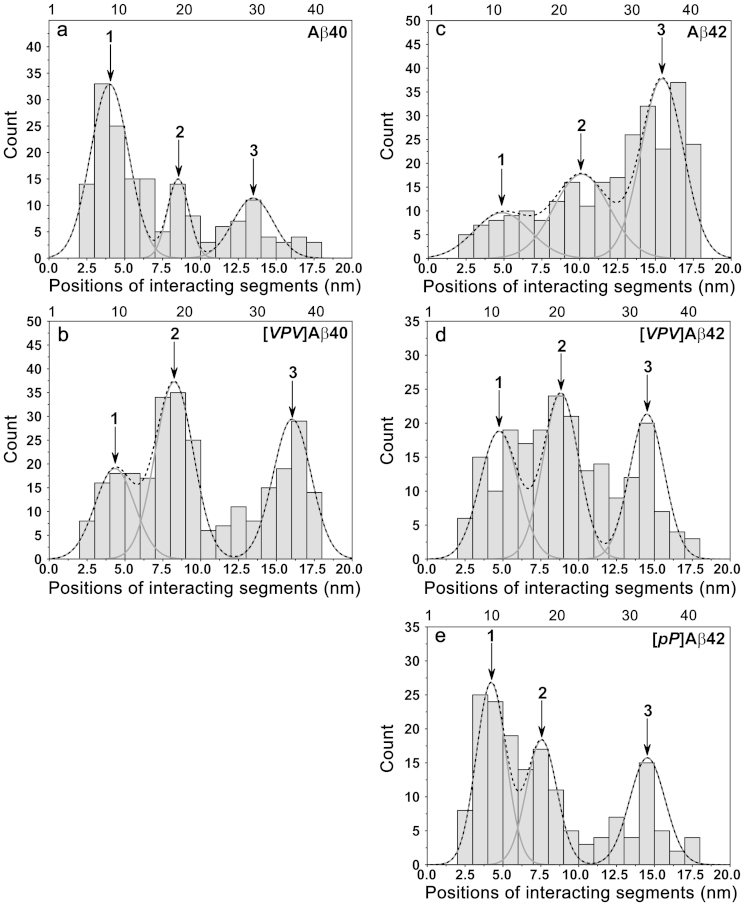
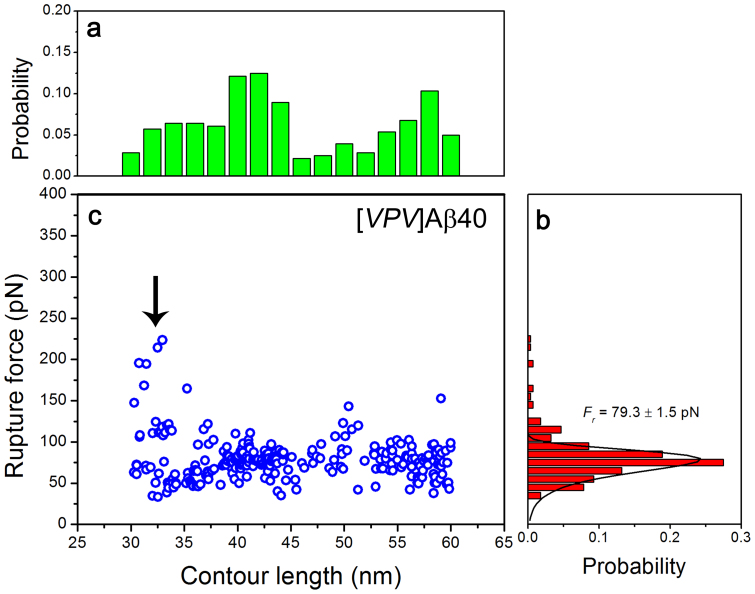
Aβ42 and Aβ40 are the two primary alloforms of human amyloid β-protein (Aβ). The two additional C-terminal residues of Aβ42 result in elevated neurotoxicity compared with Aβ40, but the molecular mechanism underlying this effect remains unclear. Here, we used single-molecule force microscopy to characterize interpeptide interactions for Aβ42 and Aβ40 and corresponding mutants. We discovered a dramatic difference in the interaction patterns of Aβ42 and Aβ40 monomers within dimers. Although the sequence difference between the two peptides is at the C-termini, the N-terminal segment plays a key role in the peptide interaction in the dimers. This is an unexpected finding as N-terminal was considered as disordered segment with no effect on the Aβ peptide aggregation. These novel properties of Aβ proteins suggests that the stabilization of N-terminal interactions is a switch in redirecting of amyloids form the neurotoxic aggregation pathway, opening a novel avenue for the disease preventions and treatments.
Aβ42和Aβ40是人类淀粉样β蛋白(Aβ)的两种主要异构体。与Aβ40相比,Aβ42额外的两个C末端残基导致神经毒性升高,但其潜在分子机制仍不清楚。在此,我们使用单分子力显微镜来表征Aβ42、Aβ40及其相应突变体的肽间相互作用。我们发现二聚体中Aβ42和Aβ40单体的相互作用模式存在显著差异。尽管这两种肽之间的序列差异位于C末端,但N末端片段在二聚体中的肽相互作用中起关键作用。这是一个意想不到的发现,因为N末端被认为是无序片段,对Aβ肽聚集没有影响。Aβ蛋白的这些新特性表明,N末端相互作用的稳定是淀粉样蛋白从神经毒性聚集途径重定向的一个开关,为疾病的预防和治疗开辟了一条新途径。