International Institute of Molecular and Cell Biology in Warsaw, Warsaw, Poland ; Laboratory of Physical Chemistry of Polymers and Membranes, École Polytechnique Fédérale de Lausanne, SB ISIC LCPPM, Lausanne, Switzerland ; Nencki Institute of Experimental Biology, Polish Academy of Sciences, Warsaw, Poland.
PLoS Comput Biol. 2013;9(10):e1003261. doi: 10.1371/journal.pcbi.1003261. Epub 2013 Oct 3.
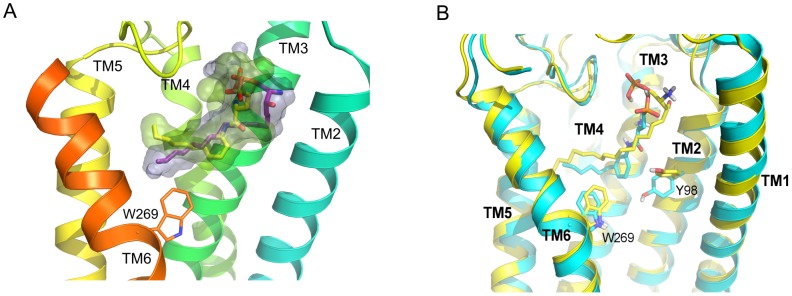
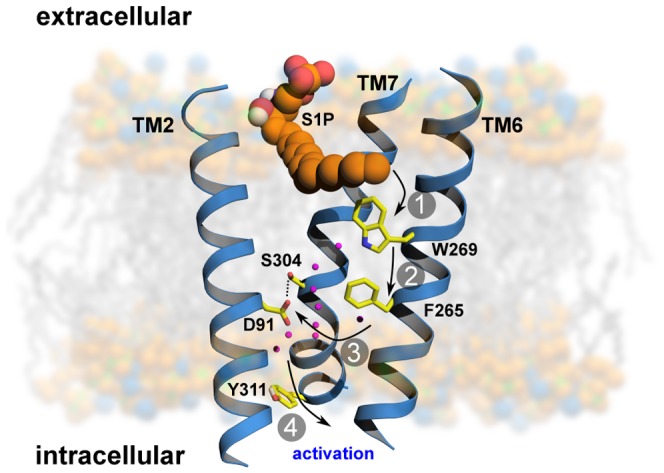
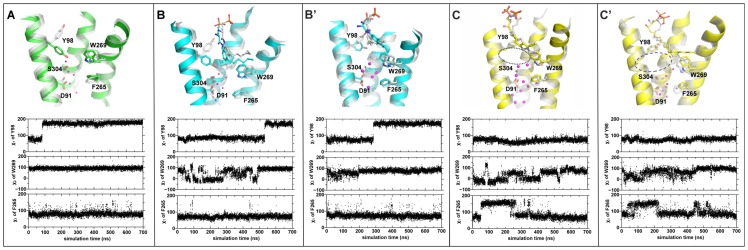
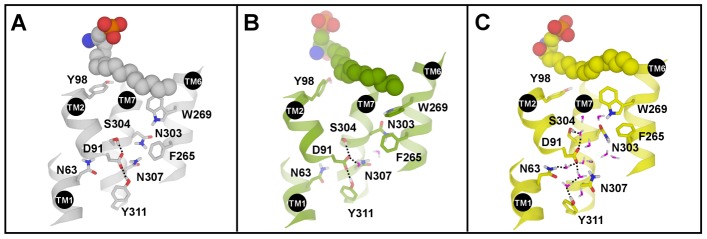
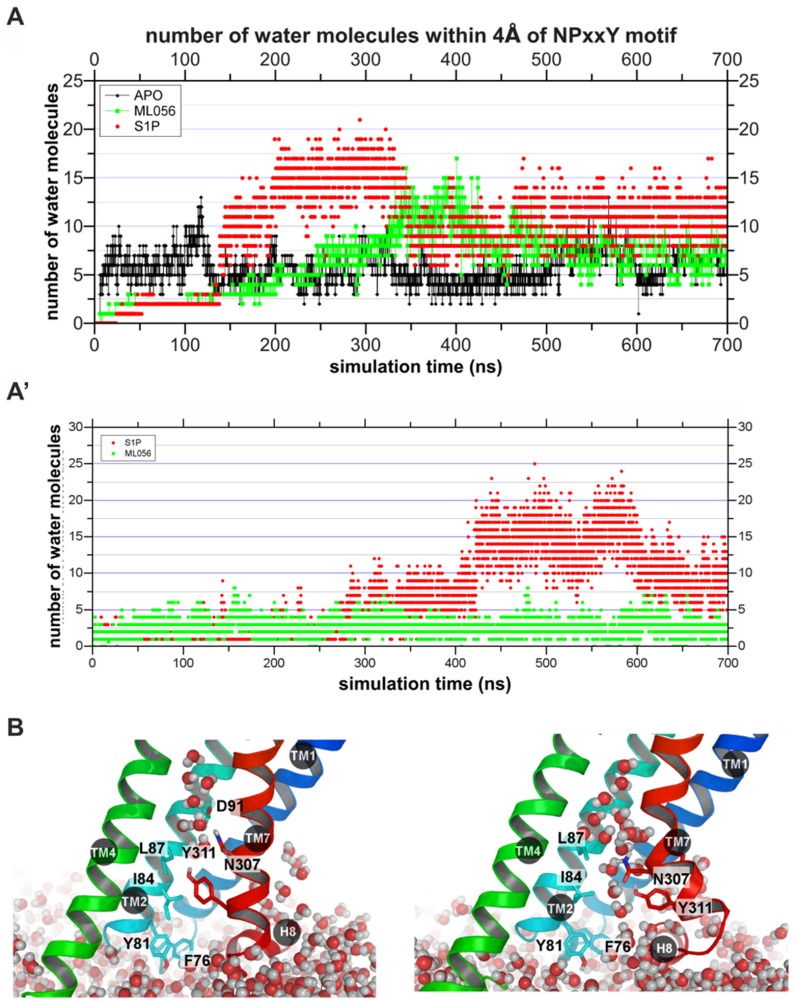
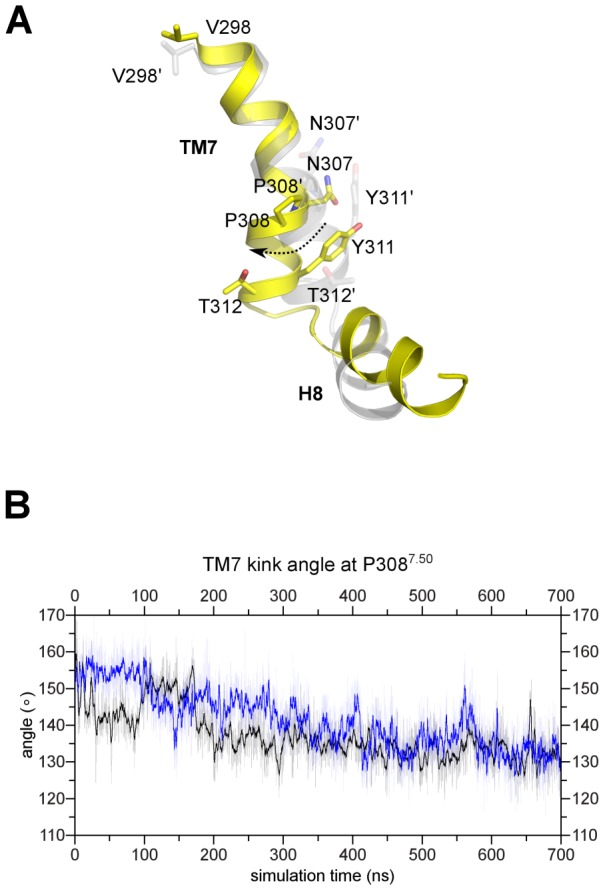
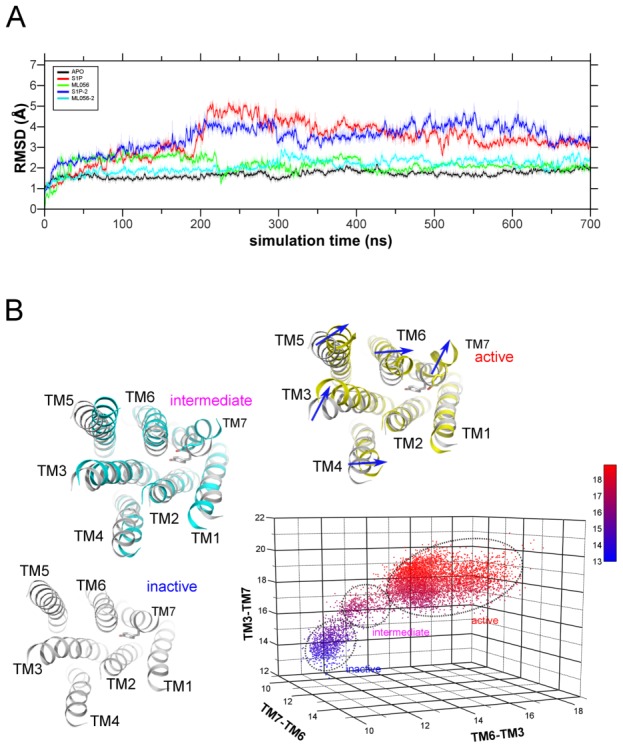
Sphingosine 1-phosphate (S1P) is a lysophospholipid mediator which activates G protein-coupled sphingosine 1-phosphate receptors and thus evokes a variety of cell and tissue responses including lymphocyte trafficking, endothelial development, integrity, and maturation. We performed five all-atom 700 ns molecular dynamics simulations of the sphingosine 1-phosphate receptor 1 (S1P₁) based on recently released crystal structure of that receptor with an antagonist. We found that the initial movements of amino acid residues occurred in the area of highly conserved W269⁶·⁴⁸ in TM6 which is close to the ligand binding location. Those residues located in the central part of the receptor and adjacent to kinks of TM helices comprise of a transmission switch. Side chains movements of those residues were coupled to the movements of water molecules inside the receptor which helped in the gradual opening of intracellular part of the receptor. The most stable parts of the protein were helices TM1 and TM2, while the largest movement was observed for TM7, possibly due to the short intracellular part starting with a helix kink at P⁷·⁵⁰, which might be the first helix to move at the intracellular side. We show for the first time the detailed view of the concerted action of the transmission switch and Trp (W⁶·⁴⁸) rotamer toggle switch leading to redirection of water molecules flow in the central part of the receptor. That event is a prerequisite for subsequent changes in intracellular part of the receptor involving water influx and opening of the receptor structure.
鞘氨醇 1-磷酸(S1P)是一种溶血磷脂介质,可激活 G 蛋白偶联鞘氨醇 1-磷酸受体,从而引发多种细胞和组织反应,包括淋巴细胞迁移、内皮细胞发育、完整性和成熟。我们对基于最近发布的该受体与拮抗剂的晶体结构的 1 型鞘氨醇 1-磷酸受体(S1P₁)进行了五次全原子 700 ns 分子动力学模拟。我们发现,氨基酸残基的初始运动发生在 TM6 中高度保守的 W269⁶·⁴⁸区域,该区域靠近配体结合位置。这些位于受体中央部分且靠近 TM 螺旋拐点的残基构成了一个传递开关。这些残基的侧链运动与受体内部水分子的运动耦合在一起,有助于受体细胞内部分的逐渐打开。蛋白质最稳定的部分是 TM1 和 TM2 螺旋,而 TM7 发生的运动最大,这可能是由于起始于 P⁷·⁵⁰处螺旋拐点的短细胞内部分,这可能是第一个在细胞内侧移动的螺旋。我们首次展示了传递开关和色氨酸(W⁶·⁴⁸)旋转体切换协同作用的详细视图,导致水分子在受体中央部分的流向发生重定向。该事件是受体细胞内部分随后变化的先决条件,涉及水分子内流和受体结构的打开。