Laboratoire de Structure et Fonction des Membranes Biologiques, Université Libre de Bruxelles, Brussels, Belgium.
Laboratori de Medicina Computacional, Unitat de Bioestadística, Facultat de Medicina, Universitat Autònoma de Barcelona, 08193, Bellaterra, Barcelona, Spain.
Sci Rep. 2017 May 17;7(1):2020. doi: 10.1038/s41598-017-02104-5.
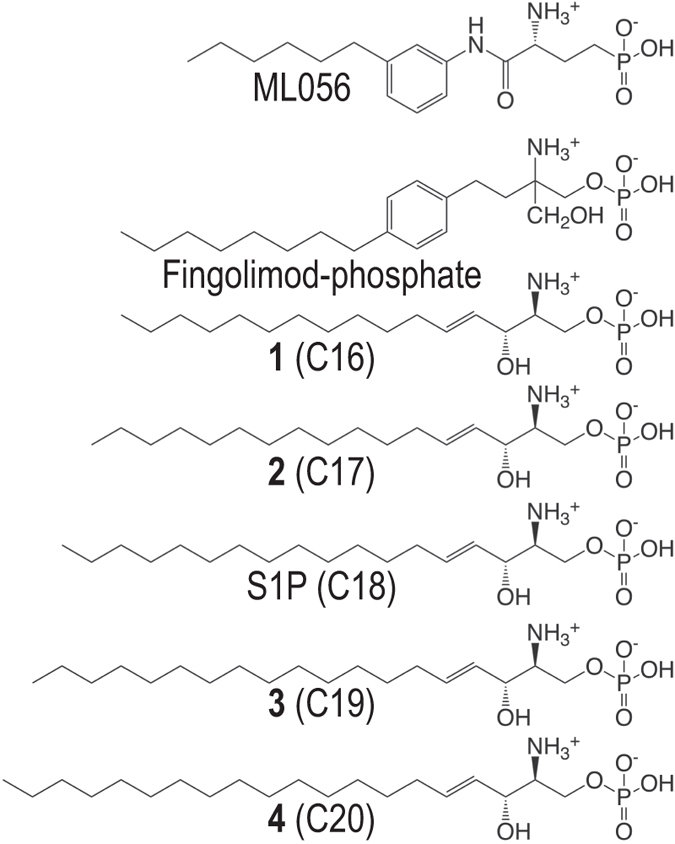
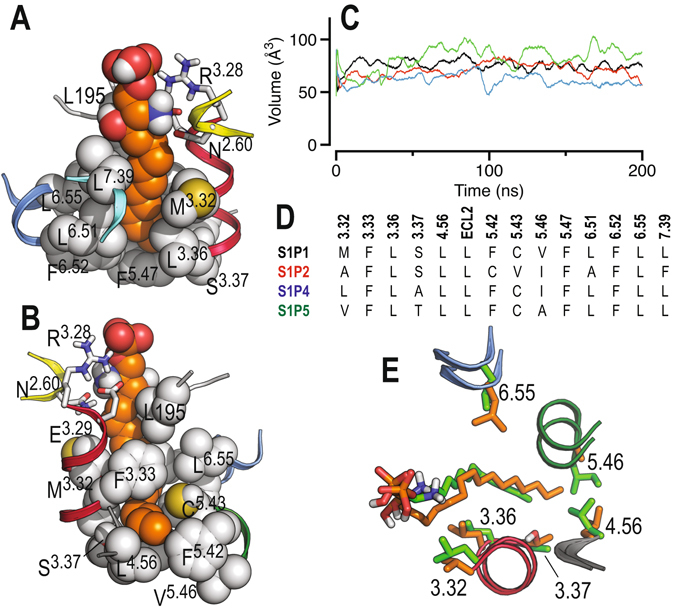
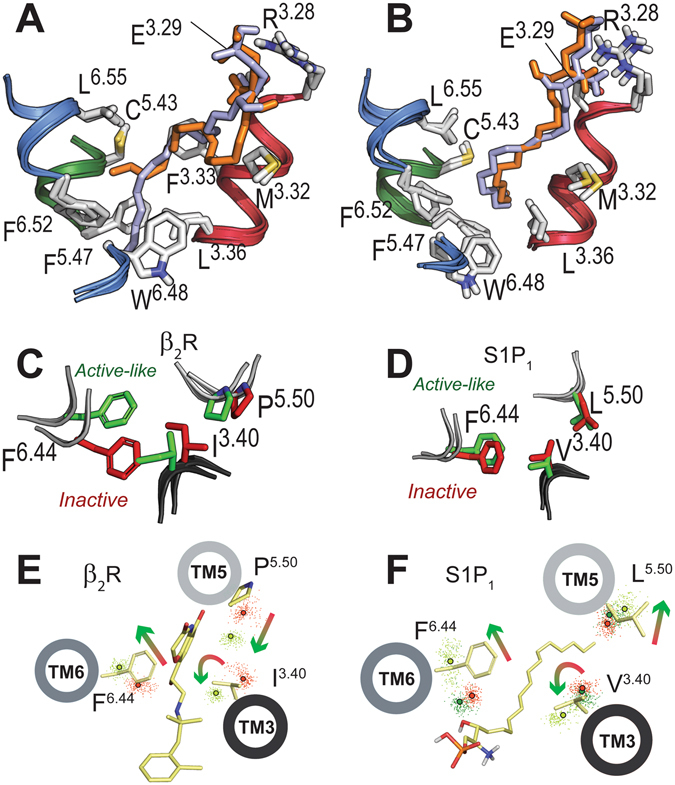
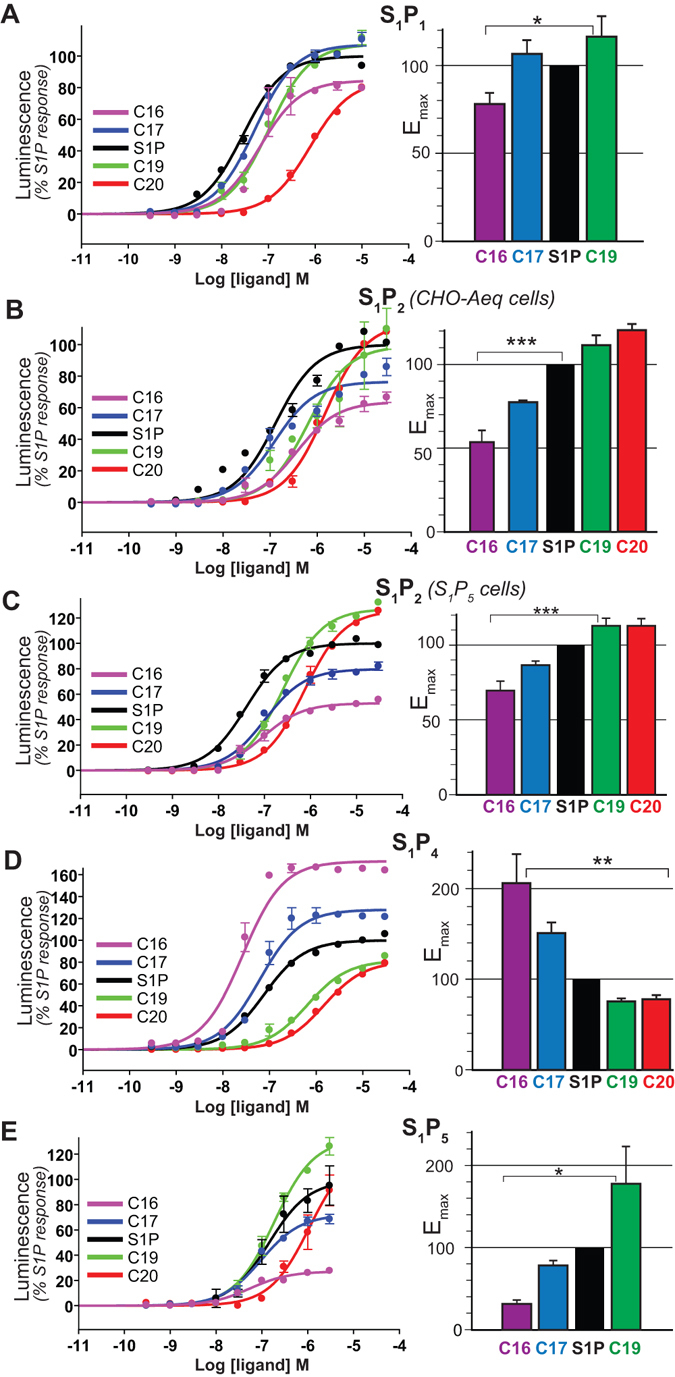
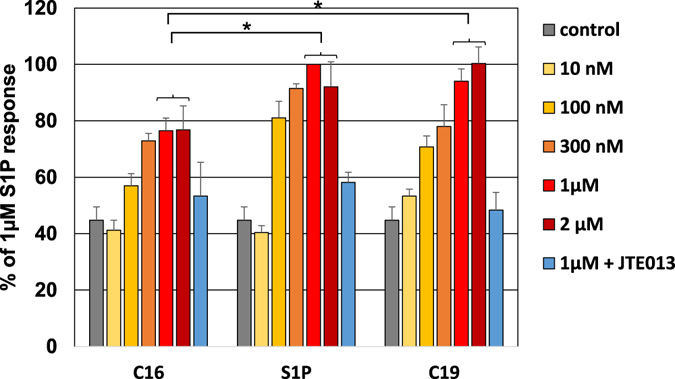
Sphingosine-1-phosphate (S1P) is a lipid mediator that can activate five cell membrane G protein-coupled receptors (GPCRs) which carry a variety of essential functions and are promising drug targets. S1P is composed of a polar zwitterionic head-group and a hydrophobic alkyl chain. This implies an activation mechanism of its cognate receptor that must be significantly different from what is known for prototypical GPCRs (ie receptor to small hydrophilic ligands). Here we aim to identify the structural features responsible for S1P agonism by combining molecular dynamics simulations and functional assays using S1P analogs of different alkyl chain lengths. We propose that high affinity binding involves polar interactions between the lipid head-group and receptor side chains while activation is due to hydrophobic interactions between the lipid tail and residues in a distinct binding site. We observe that ligand efficacy is directly related to alkyl chain length but also varies with receptor subtypes in correlation with the size of this binding pocket. Integrating experimental and computational data, we propose an activation mechanism for the S1P receptors involving agonist-induced conformational events that are conserved throughout class A GPCRs.
鞘氨醇-1-磷酸(S1P)是一种脂质介质,能够激活五种细胞膜 G 蛋白偶联受体(GPCR),这些受体具有多种重要功能,是有前途的药物靶点。S1P 由一个极性两性离子头基和一个疏水烷基链组成。这意味着其同源受体的激活机制必须与典型 GPCR(即受体与小亲水性配体)的机制显著不同。在这里,我们旨在通过结合不同烷基链长度的 S1P 类似物的分子动力学模拟和功能测定来确定 S1P 激动剂的结构特征。我们提出,高亲和力结合涉及脂质头基和受体侧链之间的极性相互作用,而激活则是由于脂质尾部与特定结合位点的残基之间的疏水相互作用。我们观察到,配体效力与烷基链长度直接相关,但也与受体亚型相关,与该结合口袋的大小相关。综合实验和计算数据,我们提出了 S1P 受体的激活机制,涉及激动剂诱导的构象事件,这些事件在整个 A 类 GPCR 中是保守的。