Ke Yunbo, Lei Ming, Wang Xin, Solaro R John
Department of Physiology and Biophysics, University of Illinois at Chicago Chicago, IL, USA ; Center for Cardiovascular Research, College of Medicine, University of Illinois at Chicago Chicago, IL, USA.
Front Pharmacol. 2013 Sep 27;4:116. doi: 10.3389/fphar.2013.00116.
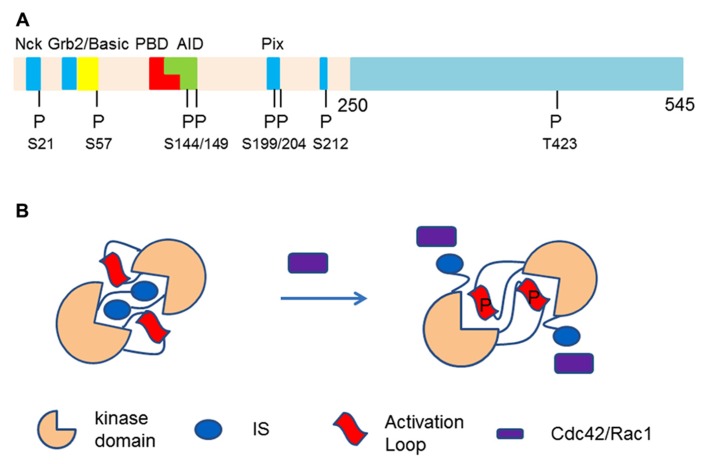
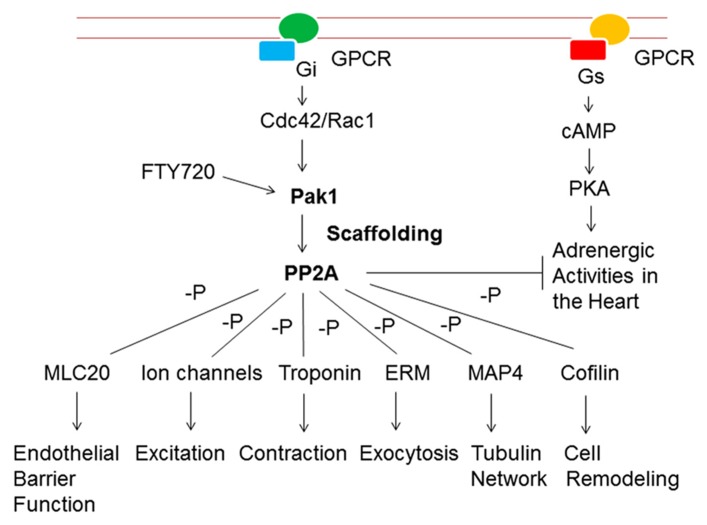
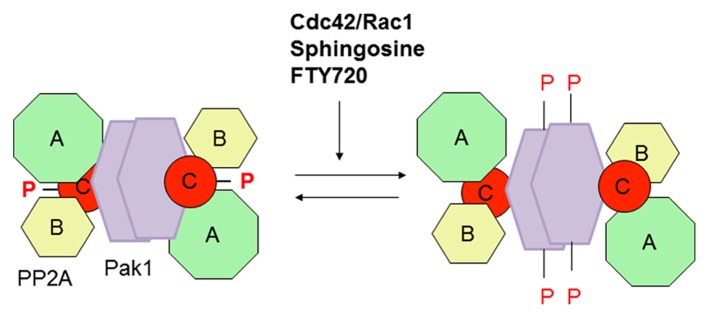
P21 activated kinase-1 (Pak1) has diverse functions in mammalian cells. Although a large number of phosphoproteins have been designated as Pak1 substrates from in vitro studies, emerging evidence has indicated that Pak1 may function as a signaling molecule through a unique molecular mechanism - scaffolding. By scaffolding, Pak1 delivers signals through an auto-phosphorylation-induced conformational change without transfer of a phosphate group to its immediate downstream effector(s). Here we review evidence for this regulatory mechanism based on structural and functional studies of Pak1 in different cell types and research models as well as in vitro biochemical assays. We also discuss the implications of Pak1 scaffolding in disease-related signaling processes and the potential in cardiovascular drug development.
p21激活激酶-1(Pak1)在哺乳动物细胞中具有多种功能。尽管体外研究已将大量磷酸化蛋白指定为Pak1底物,但新出现的证据表明,Pak1可能通过一种独特的分子机制——支架作用,作为一种信号分子发挥功能。通过支架作用,Pak1通过自身磷酸化诱导的构象变化传递信号,而不将磷酸基团转移到其直接下游效应器。在此,我们基于对不同细胞类型和研究模型中Pak1的结构和功能研究以及体外生化分析,综述这一调节机制的证据。我们还讨论了Pak1支架作用在疾病相关信号传导过程中的意义以及在心血管药物开发中的潜力。