Domingues Patrícia Henriques, Teodósio Cristina, Otero Álvaro, Sousa Pablo, Ortiz Javier, Macias María del Carmen García, Gonçalves Jesús María, Nieto Ana Belén, Lopes María Celeste, de Oliveira Catarina, Orfao Alberto, Tabernero Maria Dolores
Centre for Neurosciences and Cell Biology and Faculty of Pharmacy, University of Coimbra, Coimbra, Portugal ; Centre for Cancer Research (CIC-IBMCC; CSIC/USAL; IBSAL) and Department of Medicine, University of Salamanca, Salamanca, Spain.
PLoS One. 2013 Oct 1;8(10):e74798. doi: 10.1371/journal.pone.0074798. eCollection 2013.
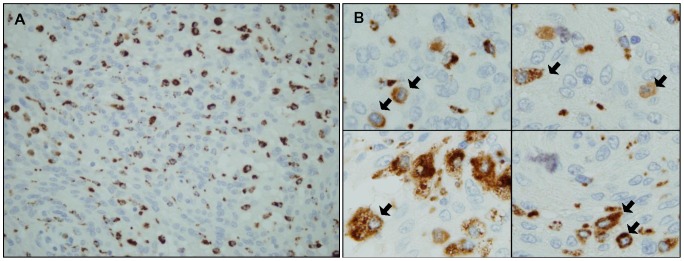
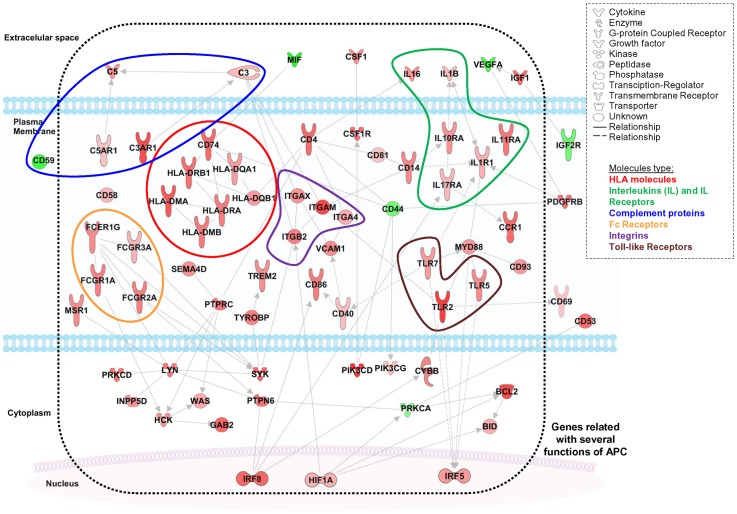
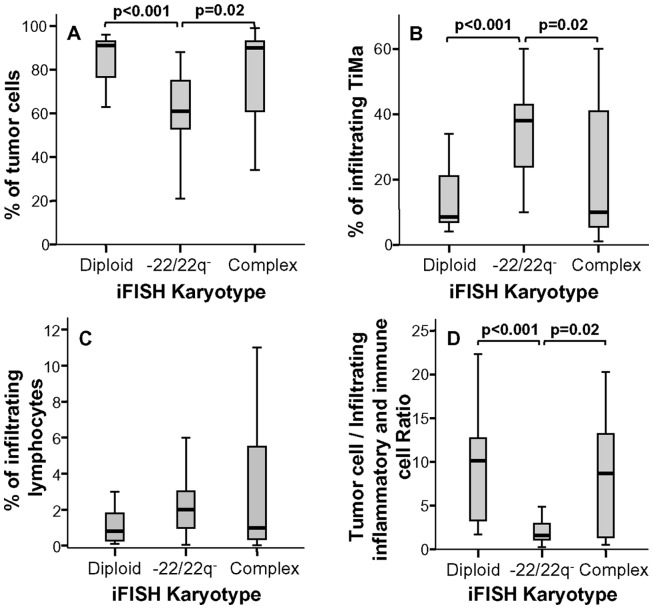
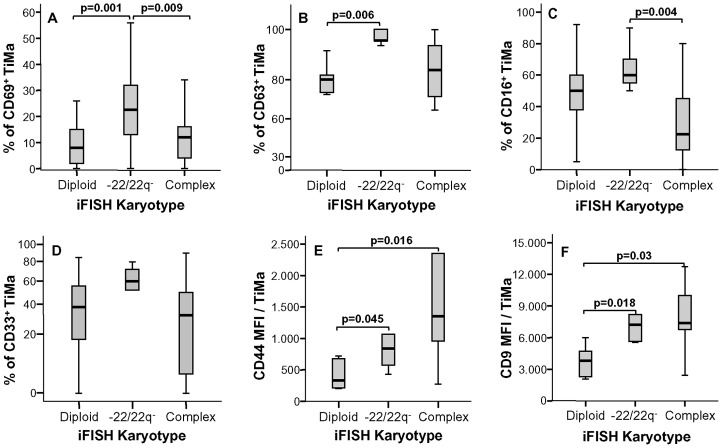
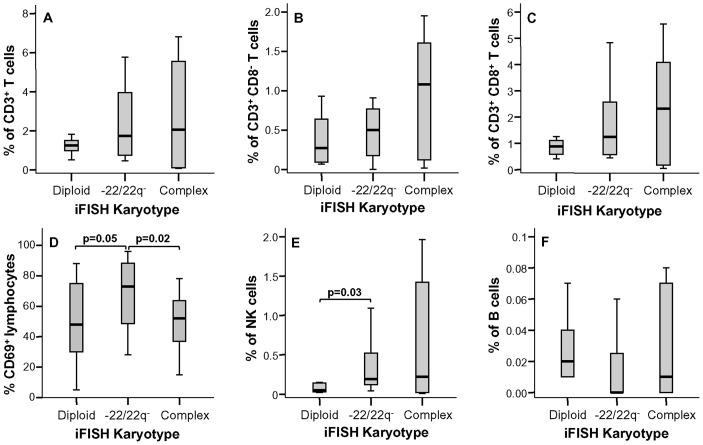
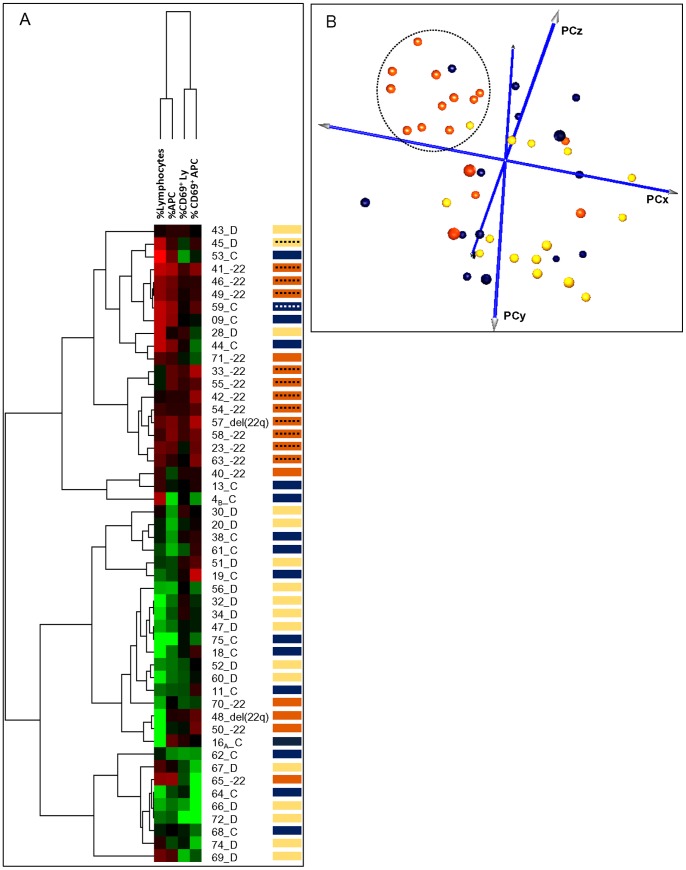
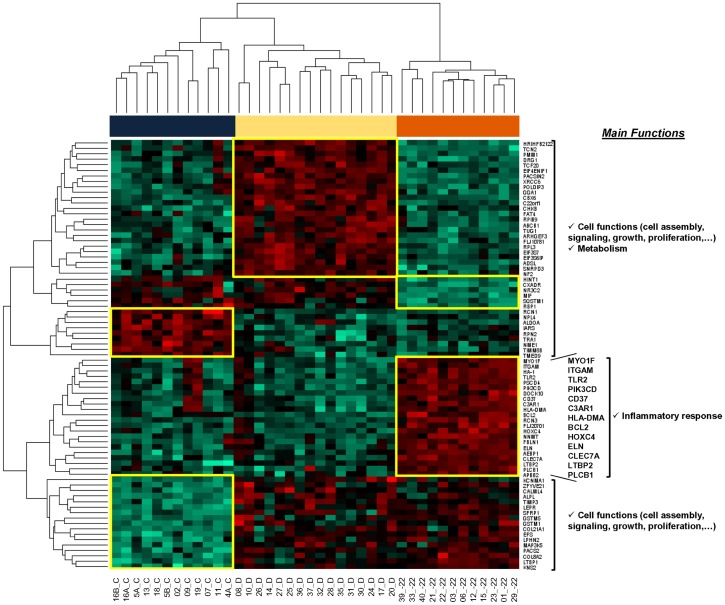
Meningiomas contain highly variable levels of infiltrating tissue macrophages (TiMa) and other immune cells. In this study we investigated the potential association between the number and immunophenotype of inflammatory and other immune cells infiltrating the tumor as evaluated by multiparameter flow cytometry, and the clinico-biological, cytogenetic and gene expression profile (GEP) of 75 meningioma patients. Overall, our results showed a close association between the amount and cellular composition of the inflammatory and other immune cell infiltrates and the cytogenetic profile of the tumors. Notably, tumors with isolated monosomy 22/del(22q) showed greater numbers of TiMa, NK cells and (recently)-activated CD69(+) lymphocytes versus meningiomas with diploid and complex karyotypes. In addition, in the former cytogenetic subgroup of meningiomas, tumor-infiltrating TiMa also showed a more activated and functionally mature phenotype, as reflected by a greater fraction of CD69(+), CD63(+), CD16(+) and CD33(+) cells. GEP at the mRNA level showed a unique GEP among meningiomas with an isolated monosomy 22/del(22q) versus all other cases, which consisted of increased expression of genes involved in inflammatory/immune response, associated with an M1 TiMa phenotype. Altogether, these results suggest that loss of expression of specific genes coded in chromosome 22 (e.g. MIF) is closely associated with an increased homing and potentially also anti-tumoral effect of TiMa, which could contribute to explain the better outcome of this specific good-prognosis cytogenetic subgroup of meningiomas.
脑膜瘤含有高度可变水平的浸润性组织巨噬细胞(TiMa)和其他免疫细胞。在本研究中,我们通过多参数流式细胞术评估了浸润肿瘤的炎性和其他免疫细胞的数量与免疫表型之间的潜在关联,以及75例脑膜瘤患者的临床生物学、细胞遗传学和基因表达谱(GEP)。总体而言,我们的结果显示炎性和其他免疫细胞浸润的数量和细胞组成与肿瘤的细胞遗传学谱密切相关。值得注意的是,与具有二倍体和复杂核型的脑膜瘤相比,孤立性22号染色体单体/del(22q)的肿瘤显示出更多的TiMa、自然杀伤(NK)细胞和(近期)活化的CD69(+)淋巴细胞。此外,在脑膜瘤的前一个细胞遗传学亚组中,肿瘤浸润性TiMa也表现出更活化和功能成熟的表型,这表现为CD69(+)、CD63(+)、CD16(+)和CD33(+)细胞的比例更高。mRNA水平的GEP显示,孤立性22号染色体单体/del(22q)的脑膜瘤与所有其他病例相比具有独特的GEP,其包括参与炎性/免疫反应的基因表达增加,与M1 TiMa表型相关。总之,这些结果表明,22号染色体上编码的特定基因(如巨噬细胞移动抑制因子)表达缺失与TiMa的归巢增加以及潜在的抗肿瘤作用密切相关,这可能有助于解释这种特定的预后良好的脑膜瘤细胞遗传学亚组的较好预后。