Department of Otolaryngology-Head & Neck Surgery, Changhai Hospital, The Second Military Medical University, Shanghai, People's Republic of China.
PLoS One. 2013 Oct 2;8(10):e77233. doi: 10.1371/journal.pone.0077233. eCollection 2013.
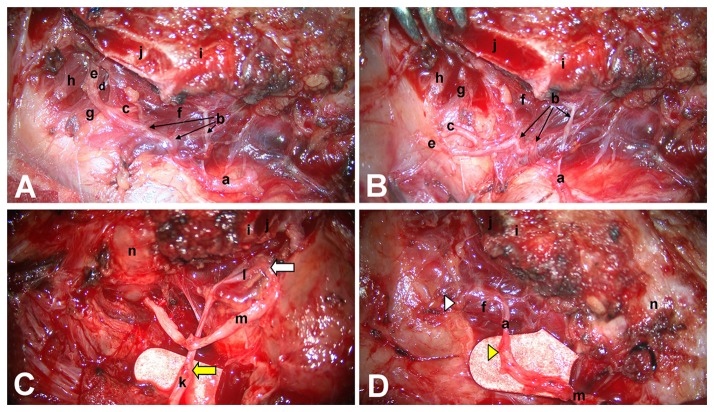
To evaluate the feasibility, effectiveness, and safety of reinnervation of the bilateral posterior cricoarytenoid (PCA) muscles using the left phrenic nerve in patients with bilateral vocal fold paralysis.
Forty-four patients with bilateral vocal fold paralysis who underwent reinnervation of the bilateral PCA muscles using the left phrenic nerve were enrolled in this study. Videostroboscopy, perceptual evaluation, acoustic analysis, maximum phonation time, pulmonary function testing, and laryngeal electromyography were performed preoperatively and postoperatively. Patients were followed-up for at least 1 year after surgery.
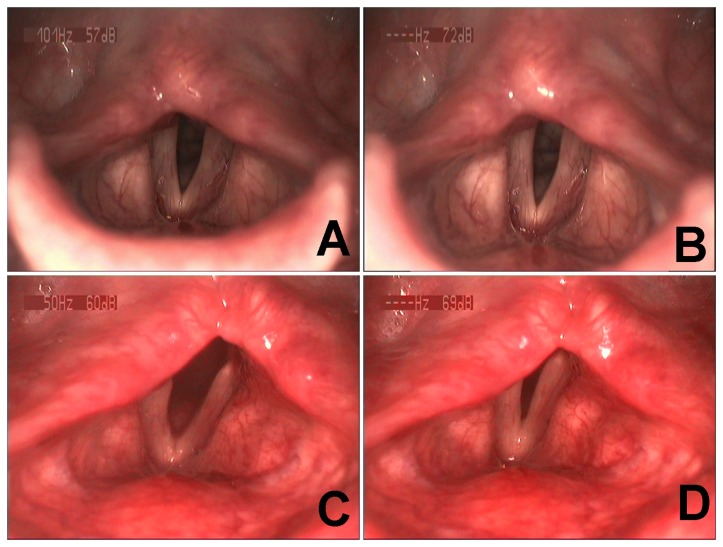
Videostroboscopy showed that within 1 year after reinnervation, abductive movement could be observed in the left vocal folds of 87% of patients and the right vocal folds of 72% of patients. Abductive excursion on the left side was significantly larger than that on the right side (P < 0.05); most of the vocal function parameters were improved postoperatively compared with the preoperative parameters, albeit without a significant difference (P > 0.05). No patients developed immediate dyspnea after surgery, and the pulmonary function parameters recovered to normal reference value levels within 1 year. Postoperative laryngeal electromyography confirmed successful reinnervation of the bilateral PCA muscles. Eighty-seven percent of patients in this series were decannulated and did not show obvious dyspnea after physical activity. Those who were decannulated after subsequent arytenoidectomy were not included in calculating the success rate of decannulation.
Reinnervation of the bilateral PCA muscles using the left phrenic nerve can restore inspiratory vocal fold abduction to a physiologically satisfactory extent while preserving phonatory function at the preoperative level without evident morbidity.
评估采用左侧膈神经对双侧环杓后肌(PCA)进行再神经支配治疗双侧声带麻痹患者的可行性、有效性和安全性。
本研究纳入了 44 例接受左侧膈神经双侧 PCA 肌再神经支配的双侧声带麻痹患者。所有患者术前和术后均进行频闪喉镜、感知评估、声学分析、最长发声时间、肺功能检查和喉肌电图检查。所有患者术后随访至少 1 年。
术后 1 年内,再神经支配后,87%的患者左侧声带和 72%的患者右侧声带可观察到外展运动。左侧声带的外展幅度明显大于右侧(P<0.05);术后多数嗓音功能参数较术前均有所改善,但差异无统计学意义(P>0.05)。所有患者术后均未立即出现呼吸困难,且肺功能参数在 1 年内恢复至正常参考值水平。术后喉肌电图证实双侧 PCA 肌再神经支配成功。87%的患者拔管,且术后体力活动后无明显呼吸困难。随后行杓状软骨切除术的患者不包括在拔管成功率的计算中。
采用左侧膈神经对双侧 PCA 肌进行再神经支配,可在不影响术前发音功能的情况下,将吸气性声带外展恢复到生理上满意的程度,且无明显发病率。