Key Laboratory of Tropical Forest Ecology, Xishuangbanna Tropical Botanical Garden, Chinese Academy of Science, Kunming, China ; Eastern Bee Research Institute, Yunnan Agricultural University, Kunming, China.
PLoS One. 2013 Sep 30;8(9):e75841. doi: 10.1371/journal.pone.0075841. eCollection 2013.
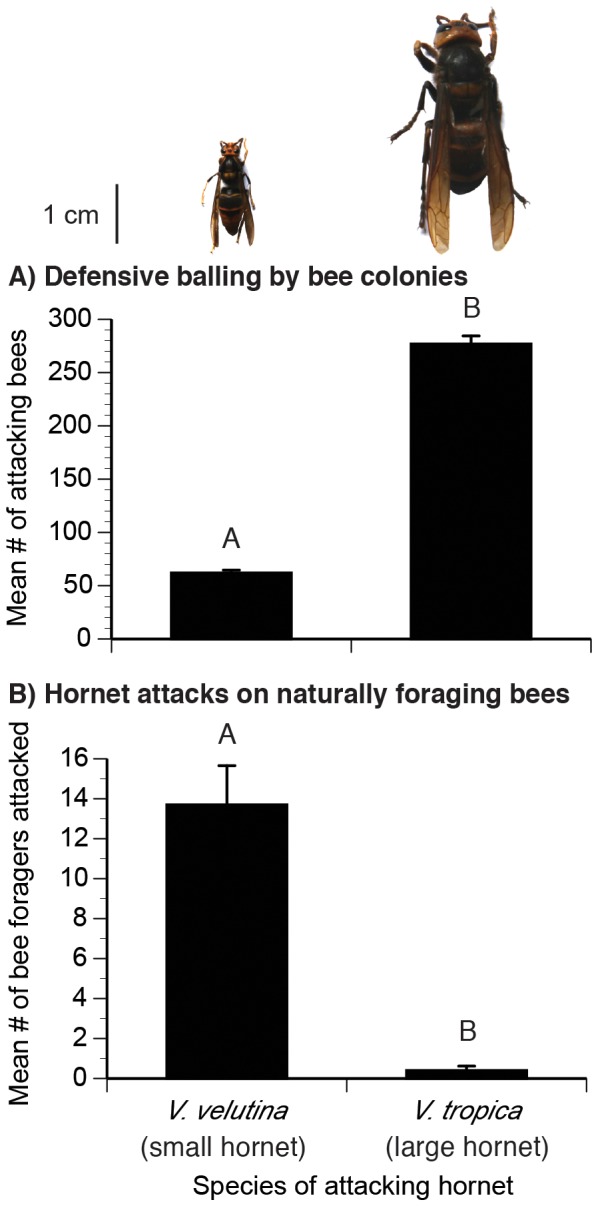
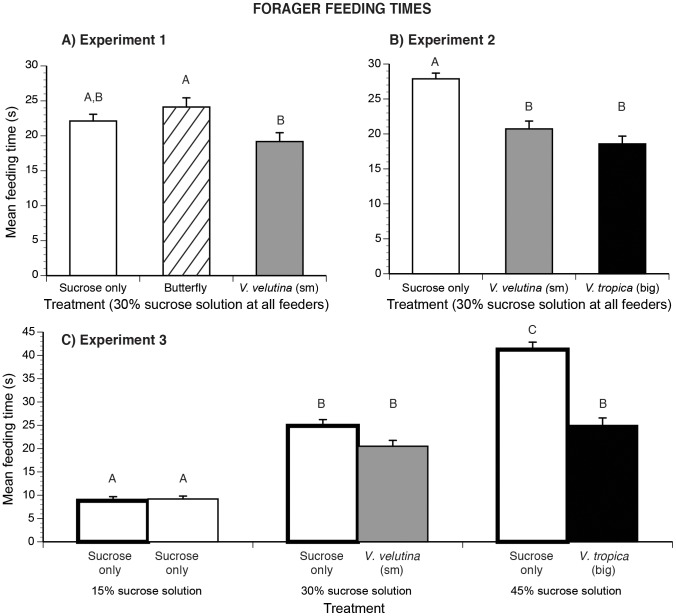
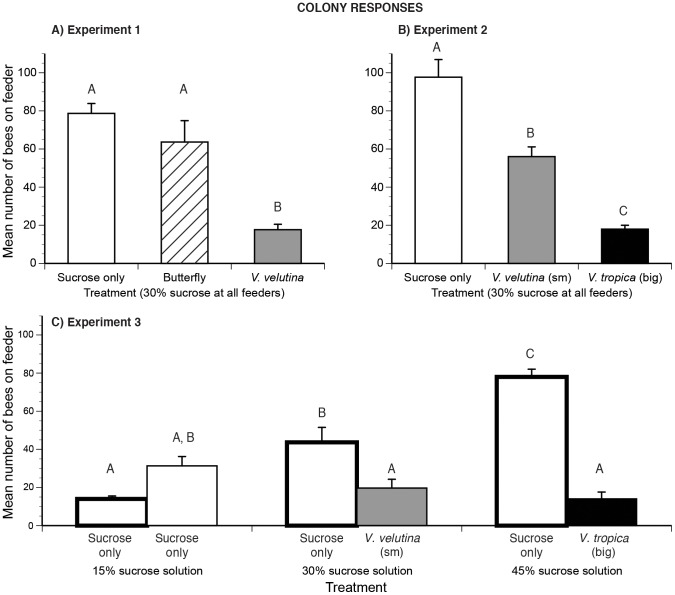
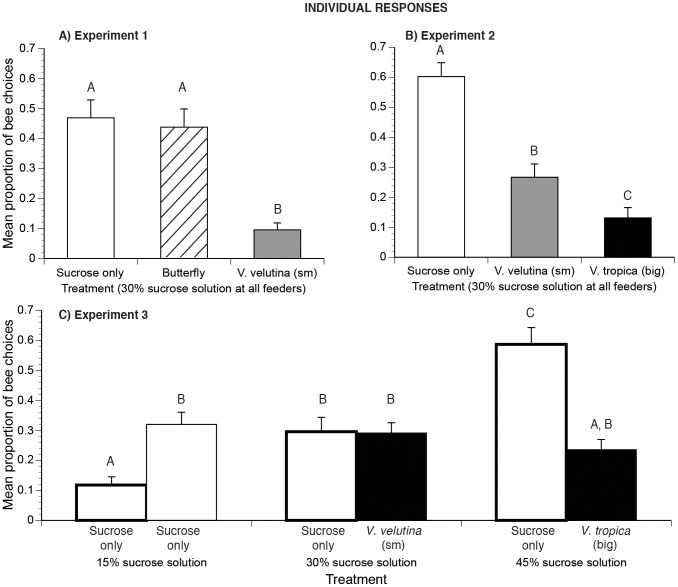
Fear can have strong ecosystem effects by giving predators a role disproportionate to their actual kill rates. In bees, fear is shown through foragers avoiding dangerous food sites, thereby reducing the fitness of pollinated plants. However, it remains unclear how fear affects pollinators in a complex natural scenario involving multiple predator species and different patch qualities. We studied hornets, Vespa velutina (smaller) and V. tropica (bigger) preying upon the Asian honey bee, Apis cerana in China. Hornets hunted bees on flowers and were attacked by bee colonies. Bees treated the bigger hornet species (which is 4 fold more massive) as more dangerous. It received 4.5 fold more attackers than the smaller hornet species. We tested bee responses to a three-feeder array with different hornet species and varying resource qualities. When all feeders offered 30% sucrose solution (w/w), colony foraging allocation, individual visits, and individual patch residence times were reduced according to the degree of danger. Predator presence reduced foraging visits by 55-79% and residence times by 17-33%. When feeders offered different reward levels (15%, 30%, or 45% sucrose), colony and individual foraging favored higher sugar concentrations. However, when balancing food quality against multiple threats (sweeter food corresponding to higher danger), colonies exhibited greater fear than individuals. Colonies decreased foraging at low and high danger patches. Individuals exhibited less fear and only decreased visits to the high danger patch. Contrasting individual with emergent colony-level effects of fear can thus illuminate how predators shape pollination by social bees.
恐惧通过赋予捕食者与其实际捕杀率不成比例的角色,对生态系统产生强烈影响。在蜜蜂中,觅食者会避开危险的食物源,从而降低授粉植物的适应性,这表明了恐惧的存在。然而,在涉及多种捕食者物种和不同斑块质量的复杂自然场景中,恐惧如何影响传粉者仍不清楚。我们在中国研究了胡蜂(Vespa velutina,体型较小)和 V. tropica(体型较大)捕食亚洲蜜蜂(Apis cerana)的情况。胡蜂在花朵上捕食蜜蜂,并受到蜜蜂群体的攻击。蜜蜂认为体型较大的胡蜂物种(比体型较小的物种大 4 倍)更危险。体型较大的胡蜂物种收到的攻击是体型较小的胡蜂物种的 4.5 倍。我们在一个有三种喂食器的阵列中测试了蜜蜂的反应,其中包括不同的胡蜂物种和不同的资源质量。当所有喂食器都提供 30%(w/w)蔗糖溶液时,根据危险程度,蜂群觅食分配、个体访问和个体斑块停留时间减少。捕食者的存在使觅食访问减少了 55-79%,停留时间减少了 17-33%。当喂食器提供不同的奖励水平(15%、30%或 45%的蔗糖)时,蜂群和个体觅食都倾向于更高的糖浓度。然而,当权衡食物质量和多种威胁(更甜的食物对应更高的危险)时,蜂群表现出比个体更大的恐惧。蜂群减少了在低危险和高危险斑块上的觅食。个体表现出较少的恐惧,仅减少了对高危险斑块的访问。因此,对比个体和群体层面的恐惧效应可以阐明捕食者如何影响社会性蜜蜂的授粉。