Wang Zhengwei, Qu Yufeng, Dong Shihao, Wen Ping, Li Jianjun, Tan Ken, Menzel Randolf
Key Laboratory of Tropical Forest Ecology, Xishuangbanna Tropical Botanical Garden, Chinese Academy of Sciences, Kunming, China.
Eastern Bee Research Institute, Yunnan Agricultural University, Kunming, China.
PLoS One. 2016 Feb 26;11(2):e0150399. doi: 10.1371/journal.pone.0150399. eCollection 2016.
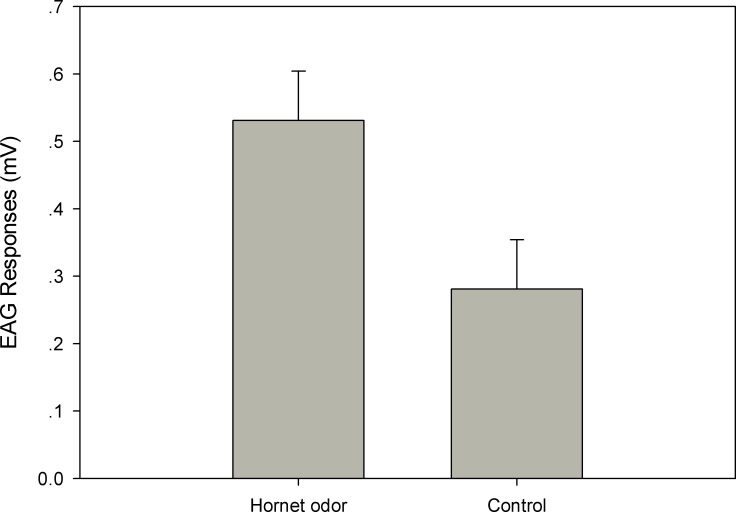
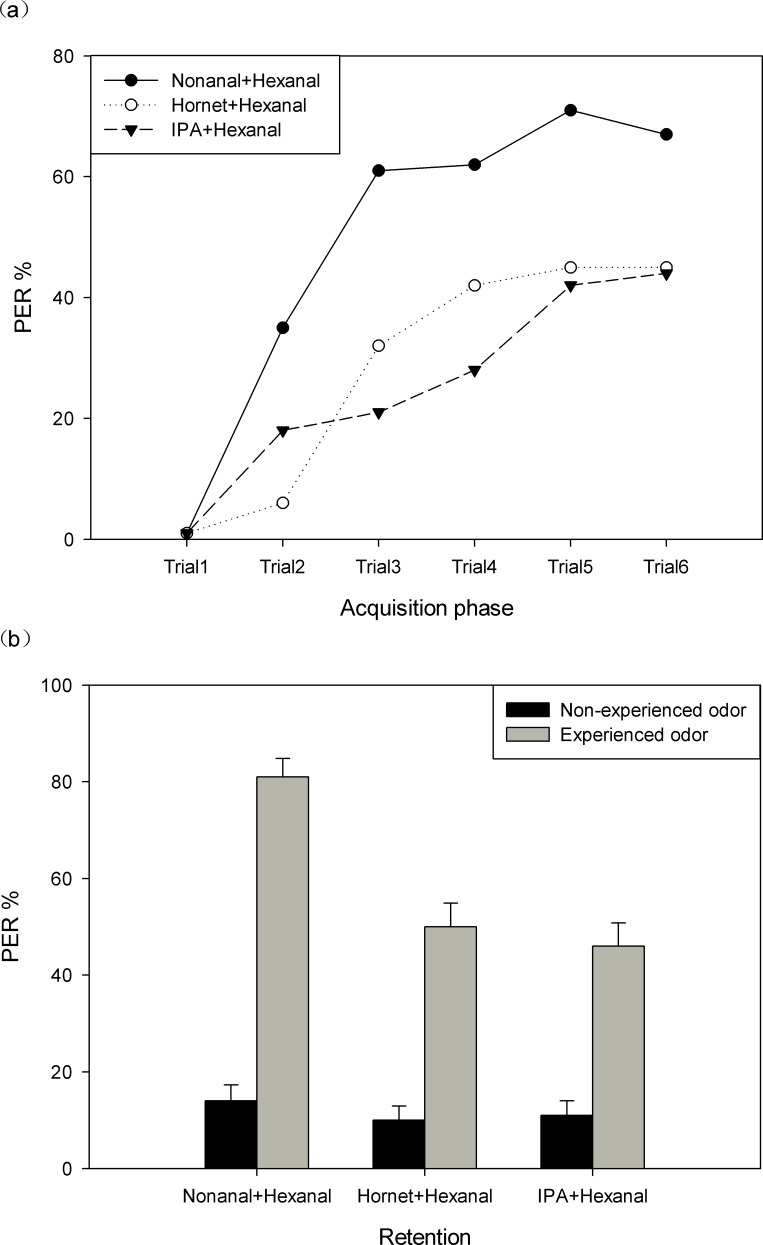
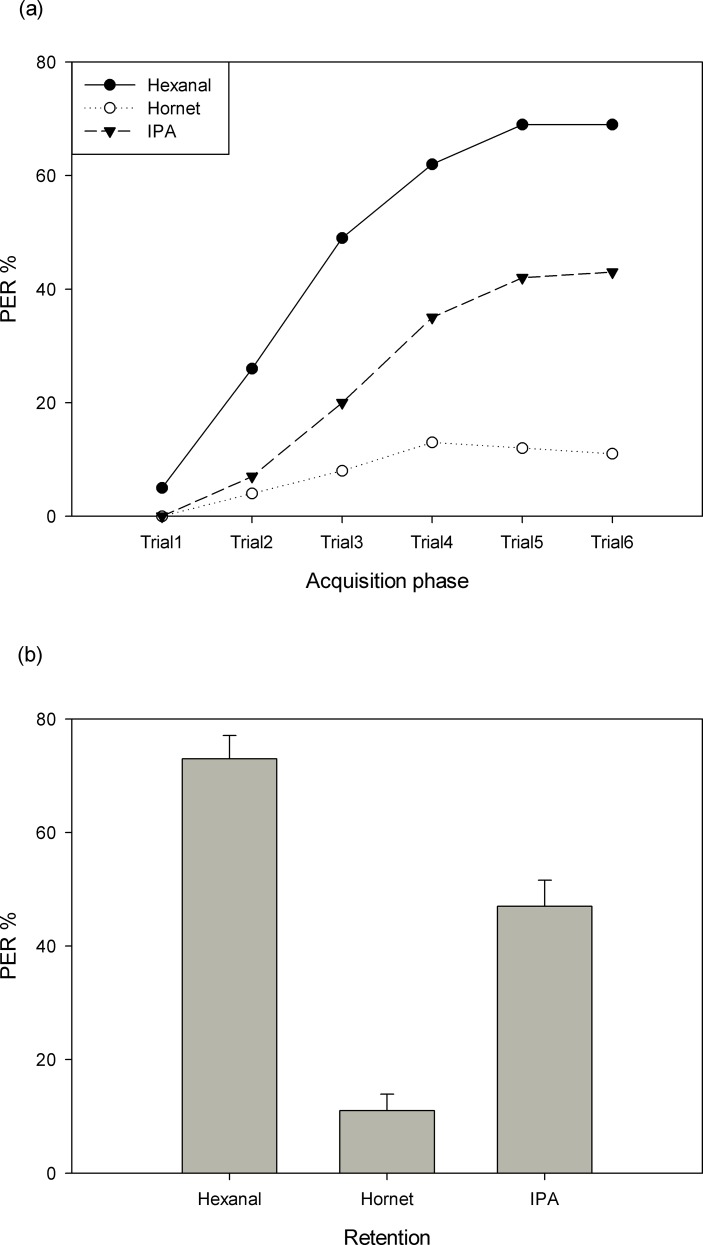
In Southeast Asia the native honey bee species Apis cerana is often attacked by hornets (Vespa velutina), mainly in the period from April to November. During the co-evolution of these two species honey bees have developed several strategies to defend themselves such as learning the odors of hornets and releasing alarm components to inform other mates. However, so far little is known about whether and how honey bees modulate their olfactory learning in the presence of the hornet predator and alarm components of honey bee itself. In the present study, we test for associative olfactory learning of A. cerana in the presence of predator odors, the alarm pheromone component isopentyl acetate (IPA), or a floral odor (hexanal) as a control. The results show that bees can detect live hornet odors, that there is almost no association between the innately aversive hornet odor and the appetitive stimulus sucrose, and that IPA is less well associated with an appetitive stimulus when compared with a floral odor. In order to imitate natural conditions, e.g. when bees are foraging on flowers and a predator shows up, or alarm pheromone is released by a captured mate, we tested combinations of the hornet odor and floral odor, or IPA and floral odor. Both of these combinations led to reduced learning scores. This study aims to contribute to a better understanding of the prey-predator system between A. cerana and V. velutina.
在东南亚,本地蜜蜂物种中华蜜蜂(Apis cerana)经常受到黄蜂(金环胡蜂,Vespa velutina)的攻击,主要发生在4月至11月期间。在这两个物种的共同进化过程中,蜜蜂已经发展出了几种自我防御策略,比如识别黄蜂的气味并释放警报成分以通知其他同伴。然而,到目前为止,对于蜜蜂在黄蜂捕食者以及蜜蜂自身警报成分存在的情况下是否以及如何调节其嗅觉学习,人们了解得还很少。在本研究中,我们测试了中华蜜蜂在捕食者气味、警报信息素成分醋酸异戊酯(IPA)或作为对照的花香气味(己醛)存在时的联想性嗅觉学习。结果表明,蜜蜂能够检测到活黄蜂的气味,天生厌恶的黄蜂气味与刺激性食物蔗糖之间几乎没有关联,并且与花香气味相比,IPA与刺激性食物的关联度更低。为了模拟自然条件,例如当蜜蜂在花朵上觅食而捕食者出现时,或者被捕食的同伴释放警报信息素时,我们测试了黄蜂气味与花香气味的组合,或者IPA与花香气味的组合。这两种组合都导致学习分数降低。本研究旨在有助于更好地理解中华蜜蜂和金环胡蜂之间的猎物 - 捕食者系统。