Cross-Knorr Sam, Lu Shaolei, Perez Kimberly, Guevara Sara, Brilliant Kate, Pisano Claudio, Quesenberry Peter J, Resnick Murray B, Chatterjee Devasis
Department of Medicine, Rhode Island Hospital and The Alpert Medical School of Brown University, Providence, RI 02903, USA.
BMC Cancer. 2013 Oct 8;13:463. doi: 10.1186/1471-2407-13-463.
A major obstacle in treating colorectal cancer (CRC) is the acquired resistance to chemotherapeutic agents. An important protein in the regulation of cancer cell death and clinical outcome is Raf kinase inhibitor protein (RKIP). In contrast, activated signal transducer and activator of transcription 3 (STAT3) is a protein that promotes tumor cell survival by inhibiting apoptosis and has an important role in cancer progression in many of cancer types. The aim of this study was to evaluate the regulation of RKIP and STAT3 after treatment with clinically relevant chemotherapeutic agents (camptothecin (CPT) and oxaliplatin (OXP)) and the cytokine interleukin-6 (IL-6) in HCT116 colon cancer cells as well as evaluate the association between RKIP and STAT3 with clinical outcome of Stage II colon cancer patients.
HCT-116 colon cancer cells were treated with CPT, OXP, and IL-6 separately or in combination in a time and dose-dependent manner and examined for phosphorylated and non-phosphorylated RKIP and STAT3 via Western blot analysis. STAT3 transcriptional activity was measured via a luciferase reporter assay in HCT116 cells treated with CPT, IL-6 or transfected with JAK 1, 2 separately or in combination. We extended these observations and determined STAT3 and RKIP/ pRKIP in tumor microarrays (TMA) in stage II colon cancer patients.
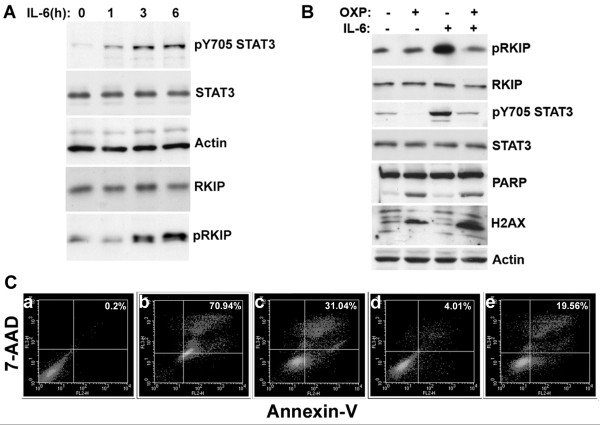
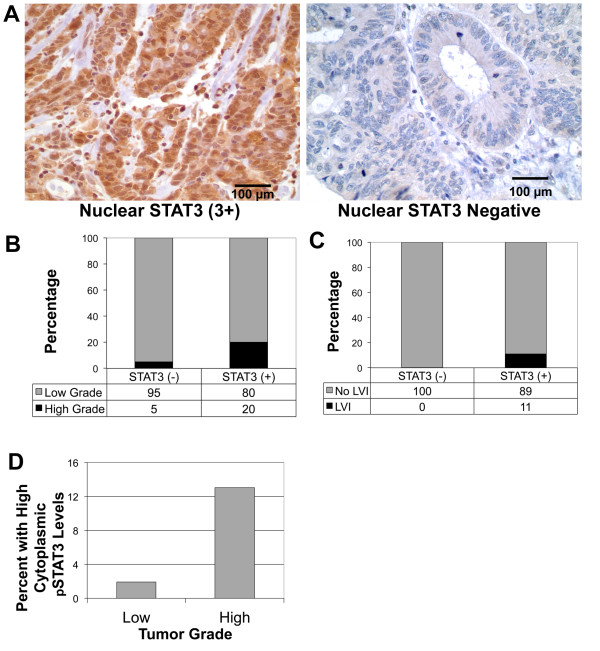
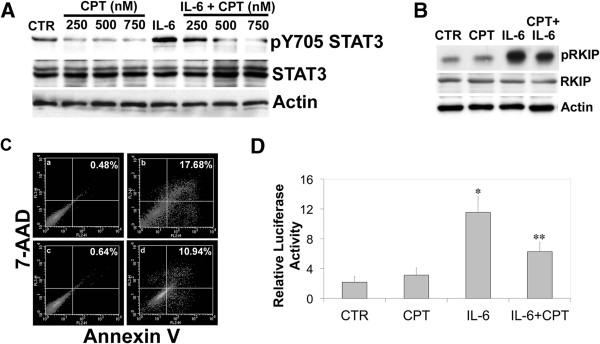
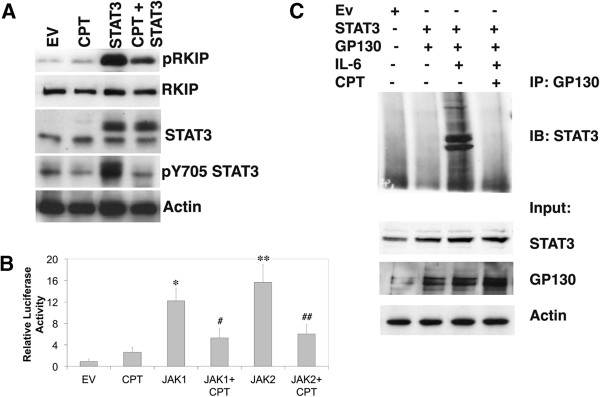
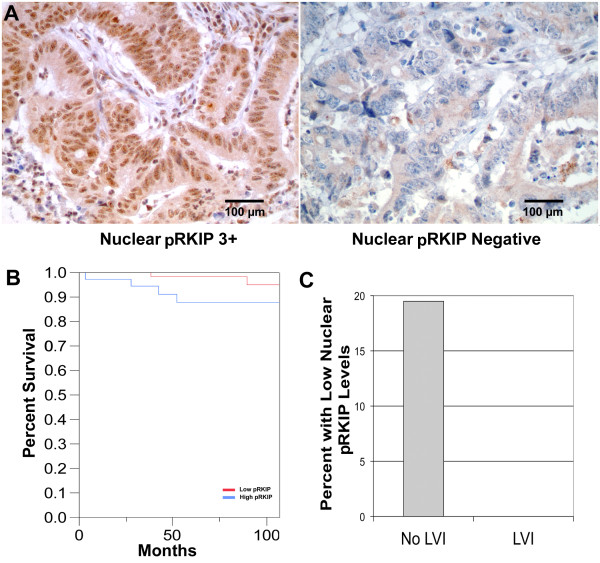
We demonstrate IL-6-mediated activation of STAT3 occurs in conjunction with the phosphorylation of RKIP in vitro in human colon cancer cells. OXP and CPT block IL-6 mediated STAT3 activation and RKIP phosphorylation via the inhibition of the interaction of STAT3 with gp130. We determined that STAT3 and nuclear pRKIP are significantly associated with poor patient prognosis in stage II colon cancer patients.
In the analysis of tumor samples from stage II colon cancer patients and the human colon carcinoma cell line HCT116, pRKIP and STAT3, 2 proteins potentially involved in the resistance to conventional treatments were detected. The phosphorylation of pRKIP and STAT3 are induced by the cytokine IL-6 and suppressed by the chemotherapeutic drugs CPT and OXP. Therefore, these results suggest that STAT3 and pRKIP may serve as prognostic biomarkers in stage II colon cancer patients and may improve chemotherapy.
治疗结直肠癌(CRC)的一个主要障碍是对化疗药物产生获得性耐药。Raf激酶抑制蛋白(RKIP)是调节癌细胞死亡和临床结局的一种重要蛋白质。相反,活化的信号转导和转录激活因子3(STAT3)是一种通过抑制细胞凋亡促进肿瘤细胞存活的蛋白质,在多种癌症类型的肿瘤进展中起重要作用。本研究的目的是评估在HCT116结肠癌细胞中用临床相关化疗药物(喜树碱(CPT)和奥沙利铂(OXP))以及细胞因子白细胞介素-6(IL-6)处理后RKIP和STAT3的调节情况,并评估RKIP和STAT3与II期结肠癌患者临床结局之间的关联。
HCT-116结肠癌细胞分别或联合用CPT、OXP和IL-6以时间和剂量依赖性方式处理,并通过蛋白质印迹分析检测磷酸化和非磷酸化的RKIP和STAT3。在用CPT、IL-6处理或分别或联合转染JAK 1、2的HCT116细胞中,通过荧光素酶报告基因测定法测量STAT3转录活性。我们扩展了这些观察结果,并在II期结肠癌患者的肿瘤微阵列(TMA)中测定了STAT3和RKIP/pRKIP。
我们证明在人结肠癌细胞中,IL-6介导的STAT3激活与RKIP的磷酸化在体外同时发生。OXP和CPT通过抑制STAT3与gp130的相互作用来阻断IL-6介导的STAT3激活和RKIP磷酸化。我们确定在II期结肠癌患者中,STAT3和核pRKIP与患者预后不良显著相关。
在对II期结肠癌患者的肿瘤样本和人结肠癌细胞系HCT116的分析中,检测到了可能与传统治疗耐药有关的2种蛋白质pRKIP和STAT3。pRKIP和STAT3的磷酸化由细胞因子IL-6诱导,并被化疗药物CPT和OXP抑制。因此,这些结果表明STAT3和pRKIP可能作为II期结肠癌患者的预后生物标志物,并可能改善化疗效果。