Plant Breeding, Wageningen University and Research Center, Wageningen, Netherlands.
Plant Methods. 2013 Oct 7;9(1):37. doi: 10.1186/1746-4811-9-37.
Molecular profiling of gene families is a versatile tool to study diversity between individual genomes in sexual crosses and germplasm. Nucleotide binding site (NBS) profiling, in particular, targets conserved nucleotide binding site-encoding sequences of resistance gene analogs (RGAs), and is widely used to identify molecular markers for disease resistance (R) genes.
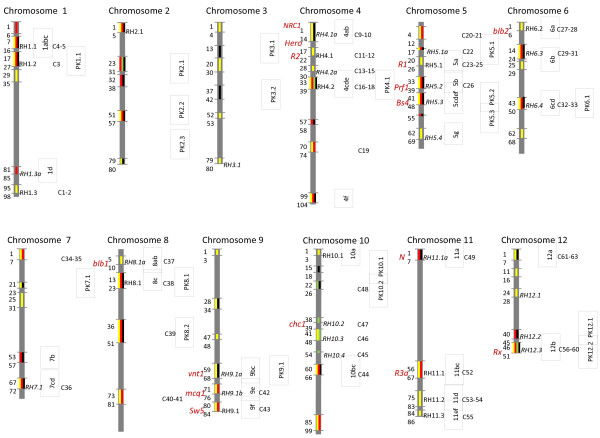
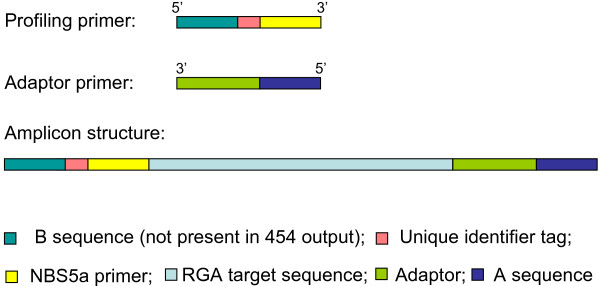
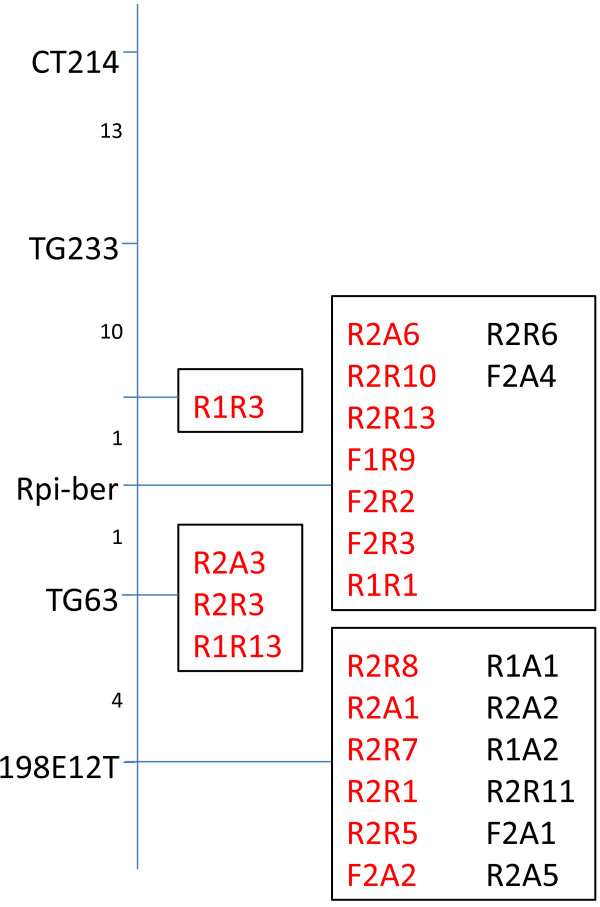
In this study, we used NBS profiling to identify genome-wide locations of RGA clusters in the genome of potato clone RH. Positions of RGAs in the potato RH and DM genomes that were generated using profiling and genome sequencing, respectively, were compared. Largely overlapping results, but also interesting discrepancies, were found. Due to the clustering of RGAs, several parts of the genome are overexposed while others remain underexposed using NBS profiling. It is shown how the profiling of other gene families, i.e. protein kinases and different protein domain-coding sequences (i.e., TIR), can be used to achieve a better marker distribution. The power of profiling techniques is further illustrated using RGA cluster-directed profiling in a population of Solanum berthaultii. Multiple different paralogous RGAs within the Rpi-ber cluster could be genetically distinguished. Finally, an adaptation of the profiling protocol was made that allowed the parallel sequencing of profiling fragments using next generation sequencing. The types of RGAs that were tagged in this next-generation profiling approach largely overlapped with classical gel-based profiling. As a potential application of next-generation profiling, we showed how the R gene family associated with late blight resistance in the SH*RH population could be identified using a bulked segregant approach.
In this study, we provide a comprehensive overview of previously described and novel profiling primers and their genomic targets in potato through genetic mapping and comparative genomics. Furthermore, it is shown how genome-wide or fine mapping can be pursued by choosing different sets of profiling primers. A protocol for next-generation profiling is provided and will form the basis for novel applications. Using the current overview of genomic targets, a rational choice can be made for profiling primers to be employed.
基因家族的分子谱分析是研究性杂交和种质个体基因组之间多样性的一种多功能工具。特别是核苷酸结合位点(NBS)谱分析,针对抗病基因类似物(RGA)保守核苷酸结合位点编码序列,广泛用于鉴定抗病(R)基因的分子标记。
本研究利用 NBS 谱分析鉴定了马铃薯克隆 RH 基因组中 RGA 簇的全基因组位置。分别使用谱分析和基因组测序生成的马铃薯 RH 和 DM 基因组中 RGA 的位置进行了比较。发现了大量重叠的结果,但也存在有趣的差异。由于 RGA 的聚类,使用 NBS 谱分析时,部分基因组被过度暴露,而其他部分则被低估。结果表明如何使用其他基因家族(如蛋白激酶和不同蛋白结构域编码序列(即 TIR))的谱分析来实现更好的标记分布。通过在 Solanum berthaultii 群体中进行 RGA 簇定向谱分析进一步说明了谱分析技术的强大功能。在 Rpi-ber 簇内的多个不同的旁系同源 RGA 可以在遗传上区分。最后,对谱分析方案进行了适应性修改,允许使用下一代测序对谱分析片段进行平行测序。在这种下一代谱分析方法中标记的 RGA 类型与经典凝胶谱分析大致重叠。作为下一代谱分析的潜在应用,我们展示了如何使用批量分离分析方法识别与 SH*RH 群体中晚疫病抗性相关的 R 基因家族。
本研究通过遗传图谱和比较基因组学,提供了马铃薯中先前描述和新的谱分析引物及其基因组靶标的全面概述。此外,还展示了如何通过选择不同的谱分析引物集来进行全基因组或精细图谱分析。提供了下一代谱分析的方案,并将为新的应用奠定基础。利用当前的基因组靶标概述,可以合理选择用于谱分析的引物。