School of Physics and State Key Laboratory of Crystal Materials, Shandong University, Jinan 250100, People's Republic of China.
Nanoscale Res Lett. 2013 Oct 8;8(1):415. doi: 10.1186/1556-276X-8-415.
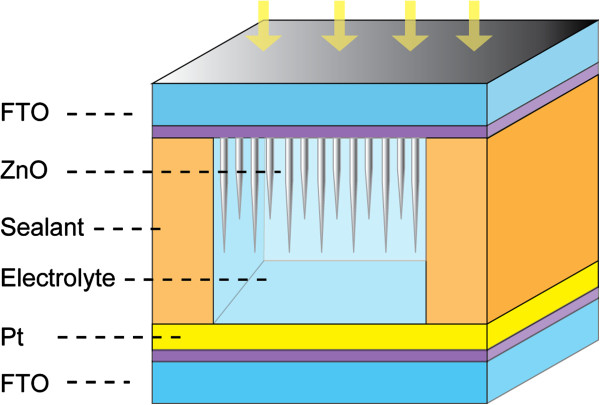
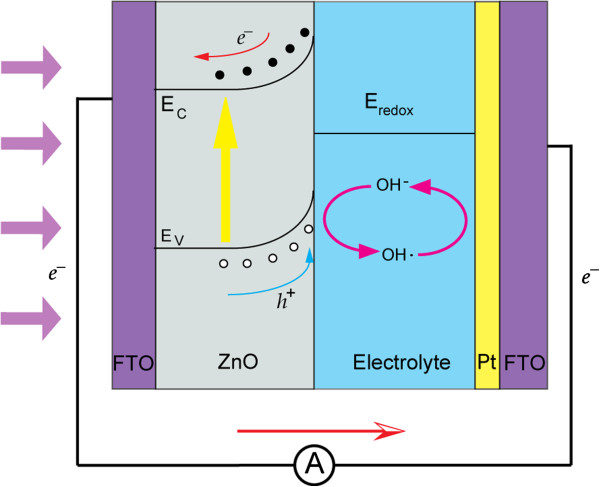
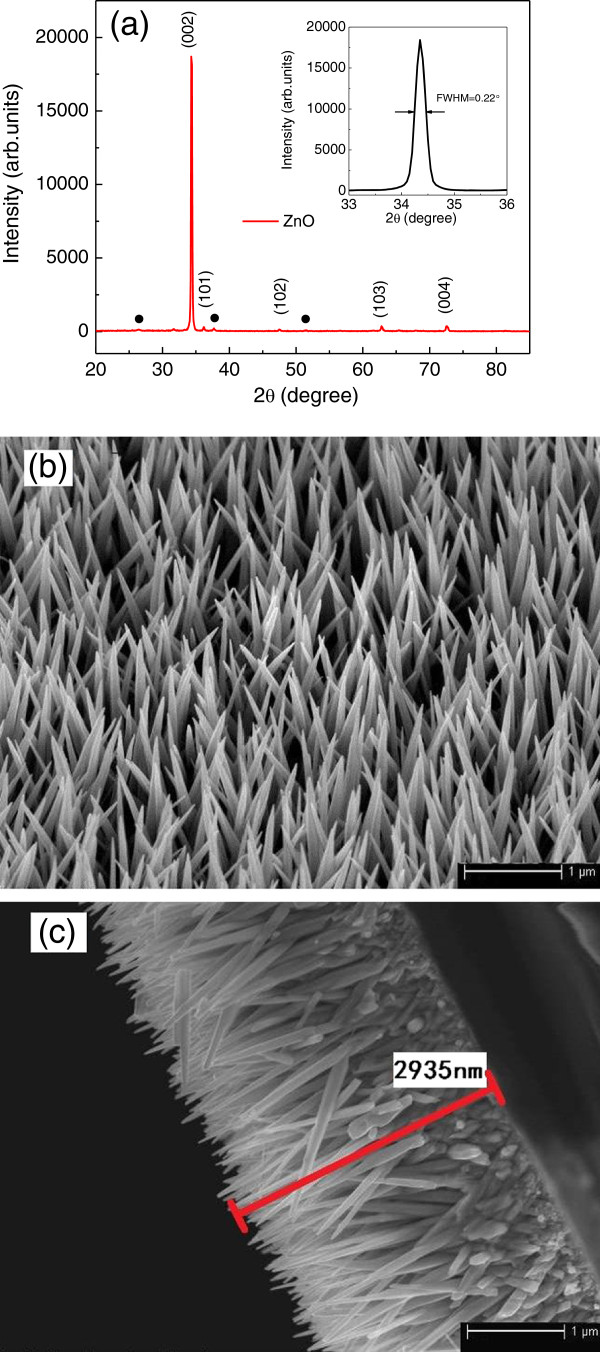
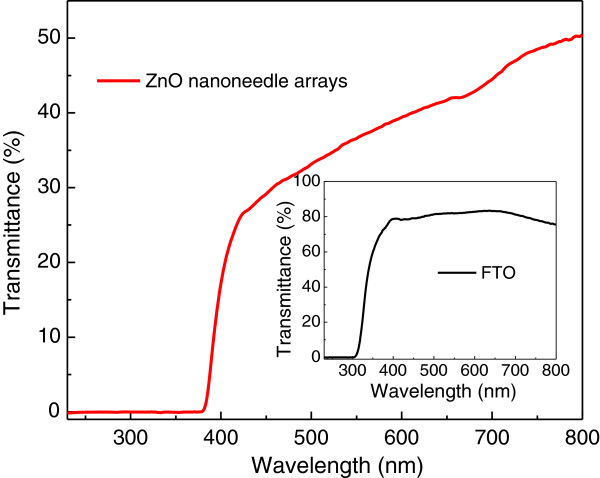
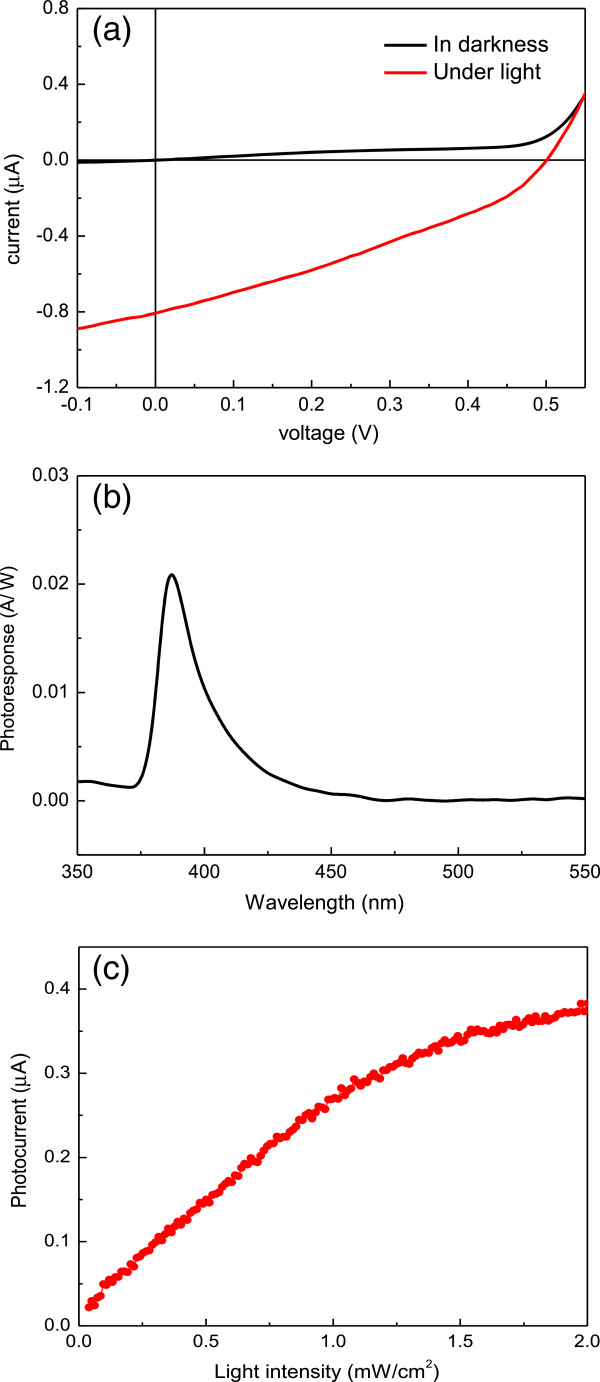
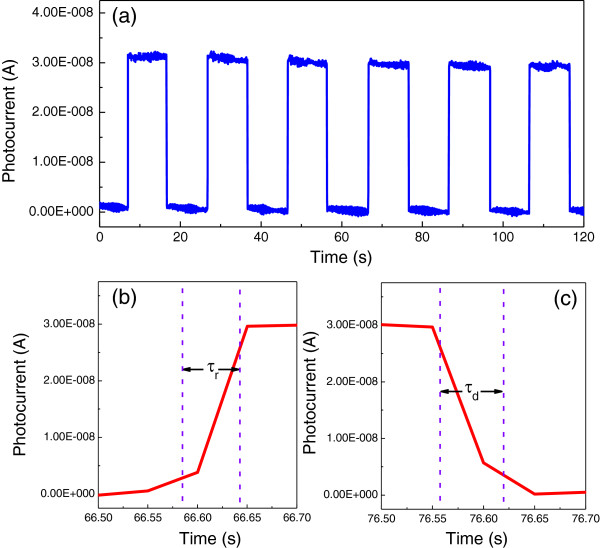
ZnO nanoneedle arrays were grown vertically on a fluorine-doped tin oxide-coated glass by hydrothermal method at a relatively low temperature. A self-powered photoelectrochemical cell-type UV detector was fabricated using the ZnO nanoneedles as the active photoanode and H2O as the electrolyte. This solid-liquid heterojunction offers an enlarged ZnO/water contact area and a direct pathway for electron transport simultaneously. By connecting this UV photodetector to an ammeter, the intensity of UV light can be quantified using the output short-circuit photocurrent without a power source. High photosensitivity, excellent spectral selectivity, and fast photoresponse at zero bias are observed in this UV detector. The self-powered behavior can be well explained by the formation of a space charge layer near the interface of the solid-liquid heterojunction, which results in a built-in potential and makes the solid-liquid heterojunction work in photovoltaic mode.
氧化锌纳米针阵列通过水热法在掺氟氧化锡(FTO)玻璃上垂直生长,生长温度相对较低。使用氧化锌纳米针作为有源光电阳极,以 H2O 作为电解质,制备了自供电光电器件型紫外光探测器。这种固-液异质结同时提供了更大的 ZnO/水接触面积和电子传输的直接途径。通过将这种紫外光探测器与电流表相连,无需电源即可使用输出短路光电流来量化紫外光的强度。在这种紫外光探测器中观察到了高灵敏度、优异的光谱选择性和零偏压下的快速光响应。自供电行为可以通过固-液异质结界面附近空间电荷层的形成得到很好的解释,这导致了内置电势,使固-液异质结工作在光伏模式下。