Department of Psychiatry, Clinical Cognitive Neuroscience Center, SNU-MRC Seoul, South Korea.
Front Hum Neurosci. 2013 Oct 2;7:633. doi: 10.3389/fnhum.2013.00633. eCollection 2013.
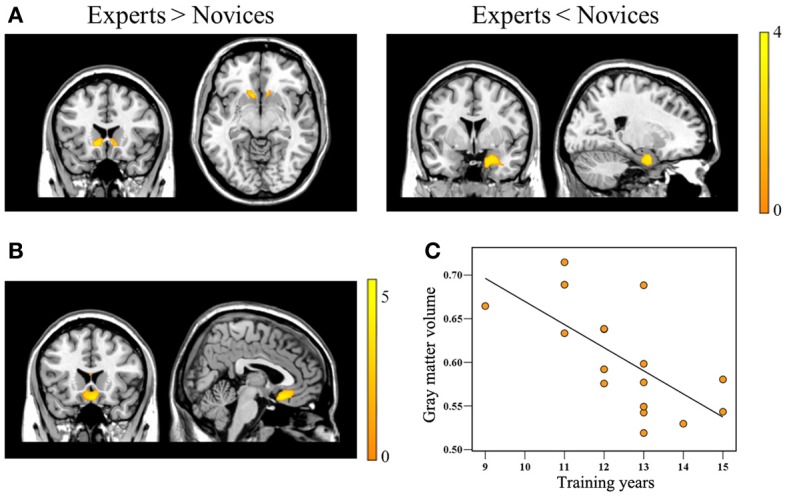
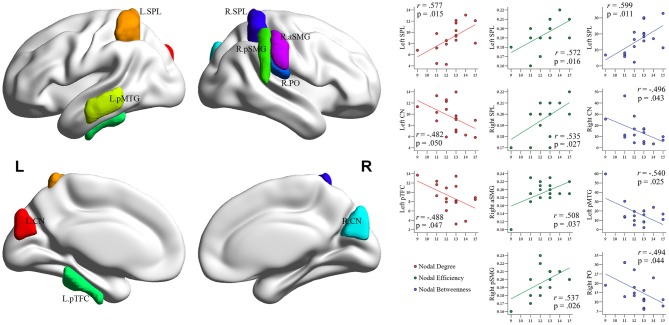
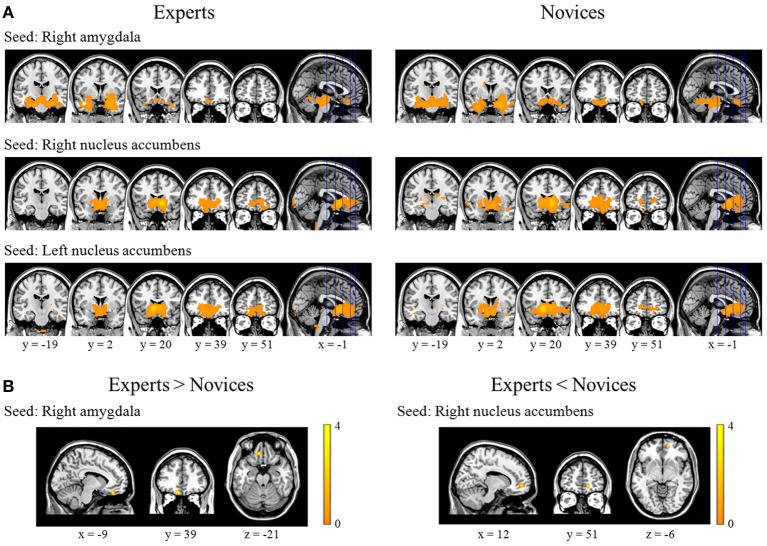
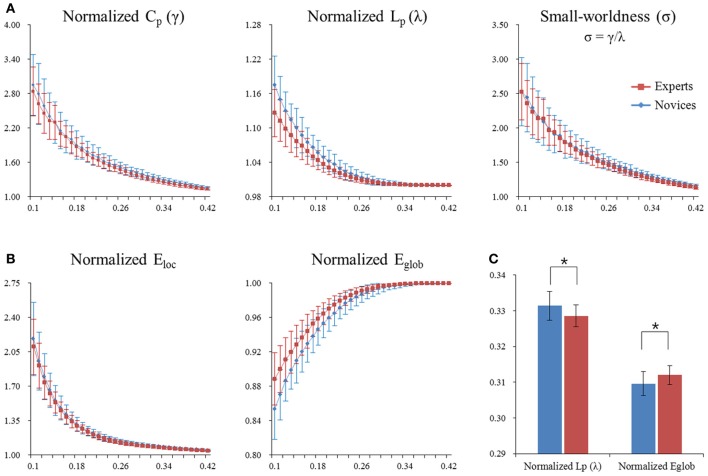
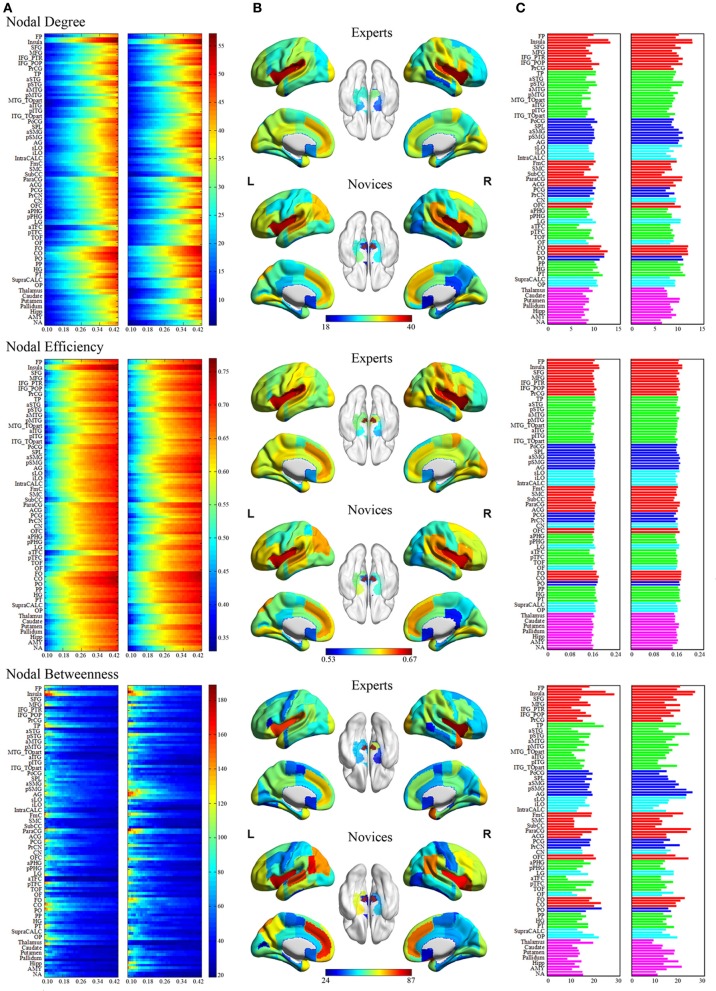
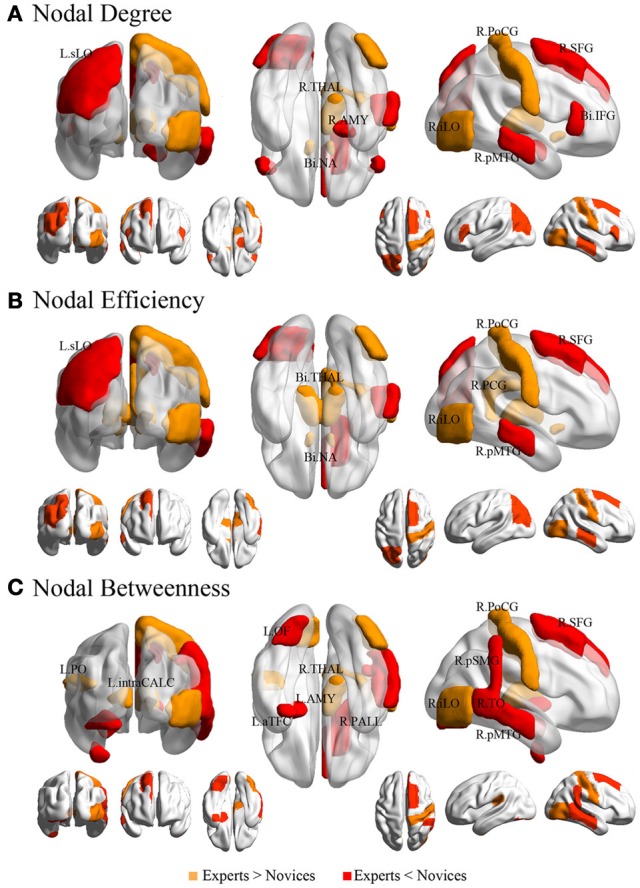
One major characteristic of experts is intuitive judgment, which is an automatic process whereby patterns stored in memory through long-term training are recognized. Indeed, long-term training may influence brain structure and function. A recent study revealed that chess experts at rest showed differences in structure and functional connectivity (FC) in the head of caudate, which is associated with rapid best next-move generation. However, less is known about the structure and function of the brains of Baduk experts (BEs) compared with those of experts in other strategy games. Therefore, we performed voxel-based morphometry (VBM) and FC analyses in BEs to investigate structural brain differences and to clarify the influence of these differences on functional interactions. We also conducted graph theoretical analysis (GTA) to explore the topological organization of whole-brain functional networks. Compared to novices, BEs exhibited decreased and increased gray matter volume (GMV) in the amygdala and nucleus accumbens (NA), respectively. We also found increased FC between the amygdala and medial orbitofrontal cortex (mOFC) and decreased FC between the NA and medial prefrontal cortex (mPFC). Further GTA revealed differences in measures of the integration of the network and in the regional nodal characteristics of various brain regions activated during Baduk. This study provides evidence for structural and functional differences as well as altered topological organization of the whole-brain functional networks in BEs. Our findings also offer novel suggestions about the cognitive mechanisms behind Baduk expertise, which involves intuitive decision-making mediated by somatic marker circuitry and visuospatial processing.
专家的一个主要特征是直观判断,这是一种自动过程,通过长期训练存储在记忆中的模式被识别出来。事实上,长期训练可能会影响大脑结构和功能。最近的一项研究表明,在休息时,国际象棋专家的大脑尾状核的结构和功能连接(FC)存在差异,这与快速生成最佳下一步有关。然而,与其他策略游戏的专家相比,人们对围棋专家(BE)的大脑结构和功能了解较少。因此,我们对 BE 进行了基于体素的形态测量学(VBM)和 FC 分析,以研究大脑结构的差异,并阐明这些差异对功能相互作用的影响。我们还进行了图论分析(GTA),以探索全脑功能网络的拓扑组织。与新手相比,BE 表现出杏仁核和伏隔核(NA)的灰质体积(GMV)减少和增加。我们还发现杏仁核和内侧眶额皮质(mOFC)之间的 FC 增加,NA 和内侧前额叶皮质(mPFC)之间的 FC 减少。进一步的 GTA 揭示了网络集成和各种在围棋中激活的大脑区域的区域节点特征的测量值的差异。这项研究为 BE 中的大脑全脑功能网络的结构和功能差异以及拓扑组织的改变提供了证据。我们的发现还为围棋专业知识背后的认知机制提供了新的建议,这些机制涉及到由躯体标记电路和视空间处理介导的直观决策。