Henry Wellcome Laboratory of Cell Biology, Institute of Molecular, Cell and Systems Biology, College of Medical, Veterinary and Life Sciences, University of Glasgow, Glasgow G12 8QQ, United Kingdom.
Mol Biol Cell. 2013 Dec;24(23):3663-74. doi: 10.1091/mbc.E13-06-0302. Epub 2013 Oct 9.
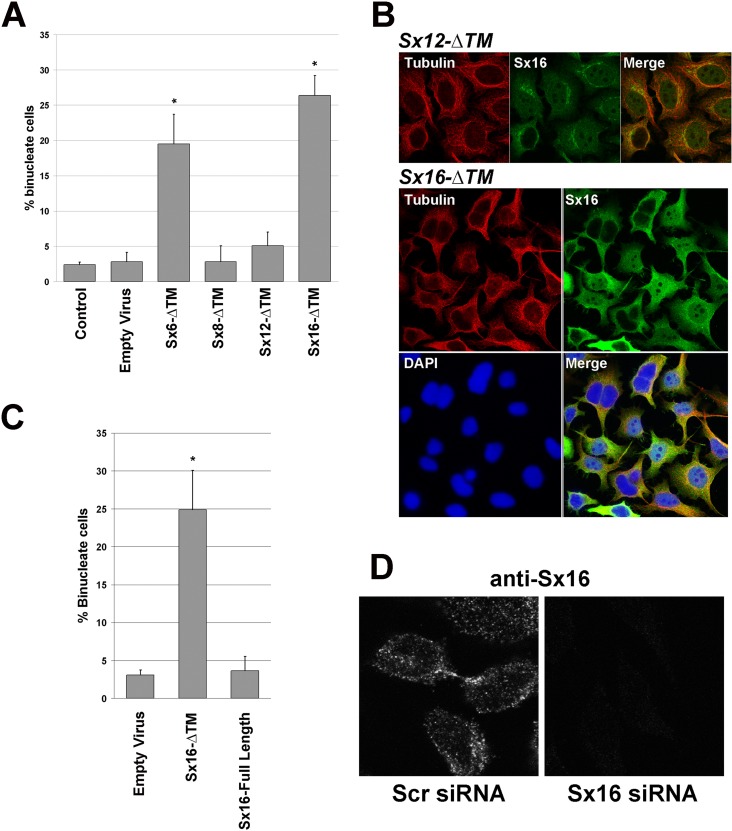
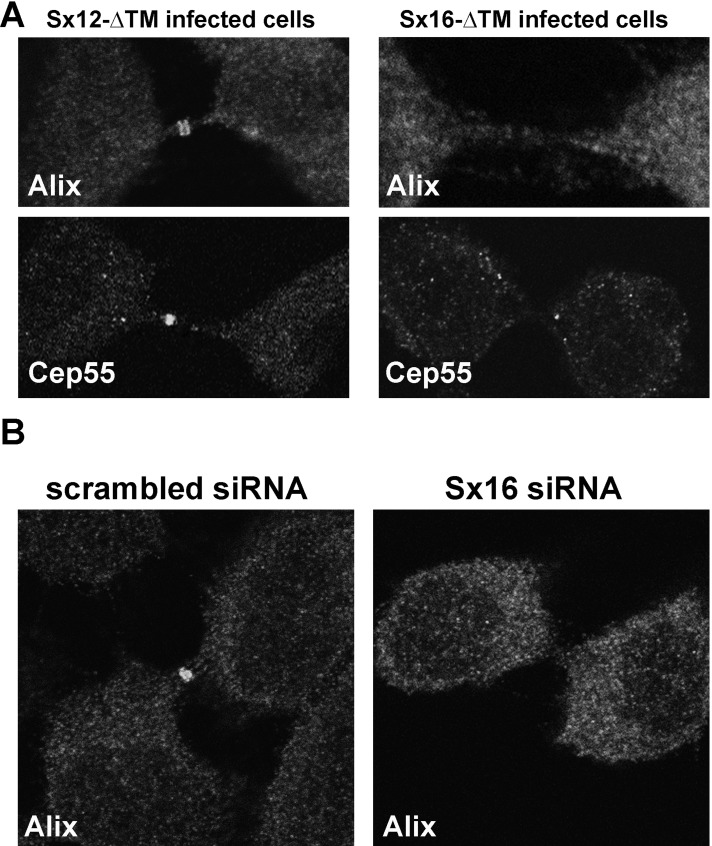
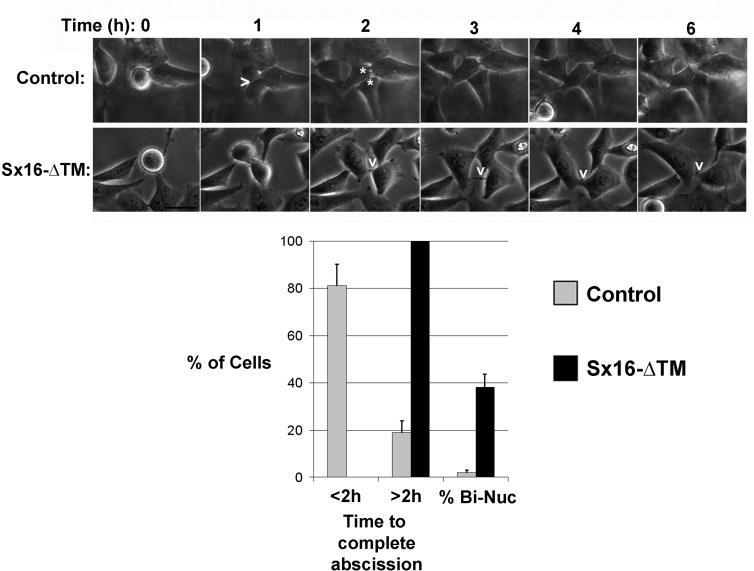
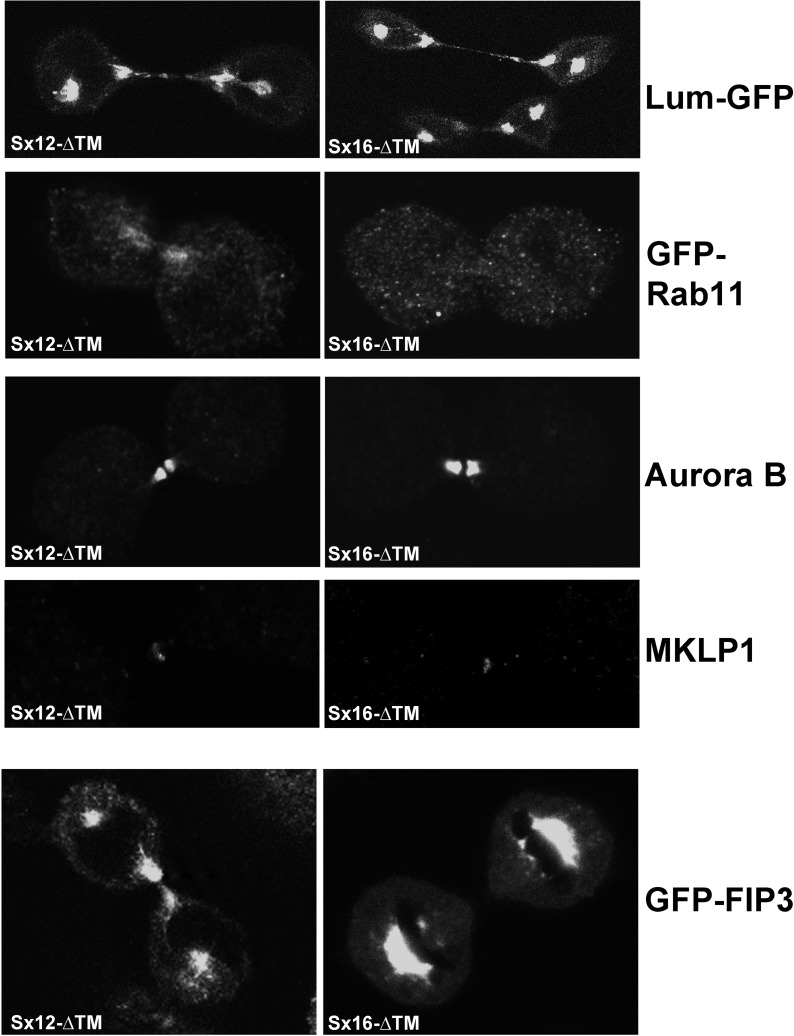
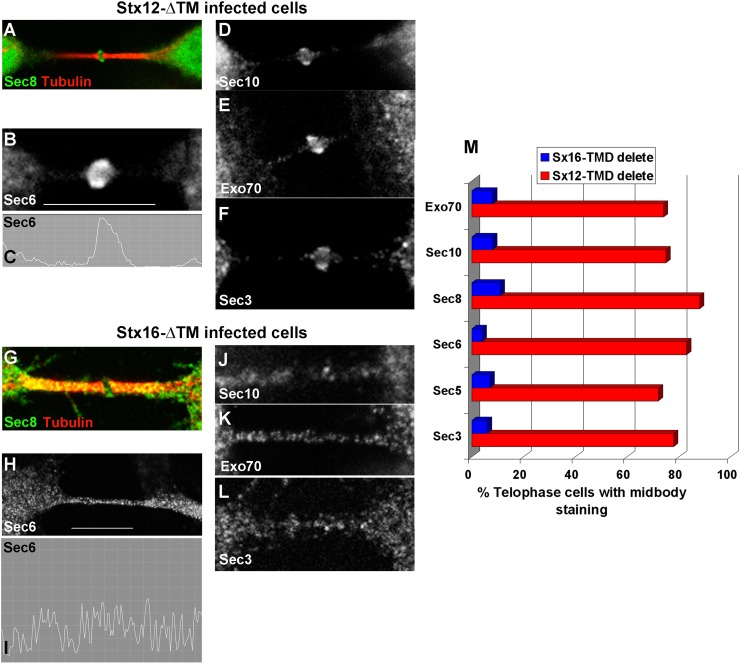
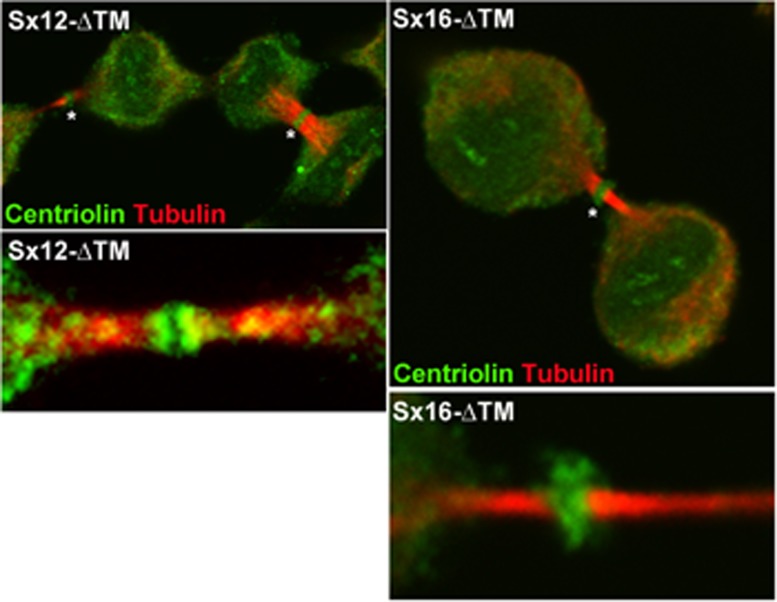
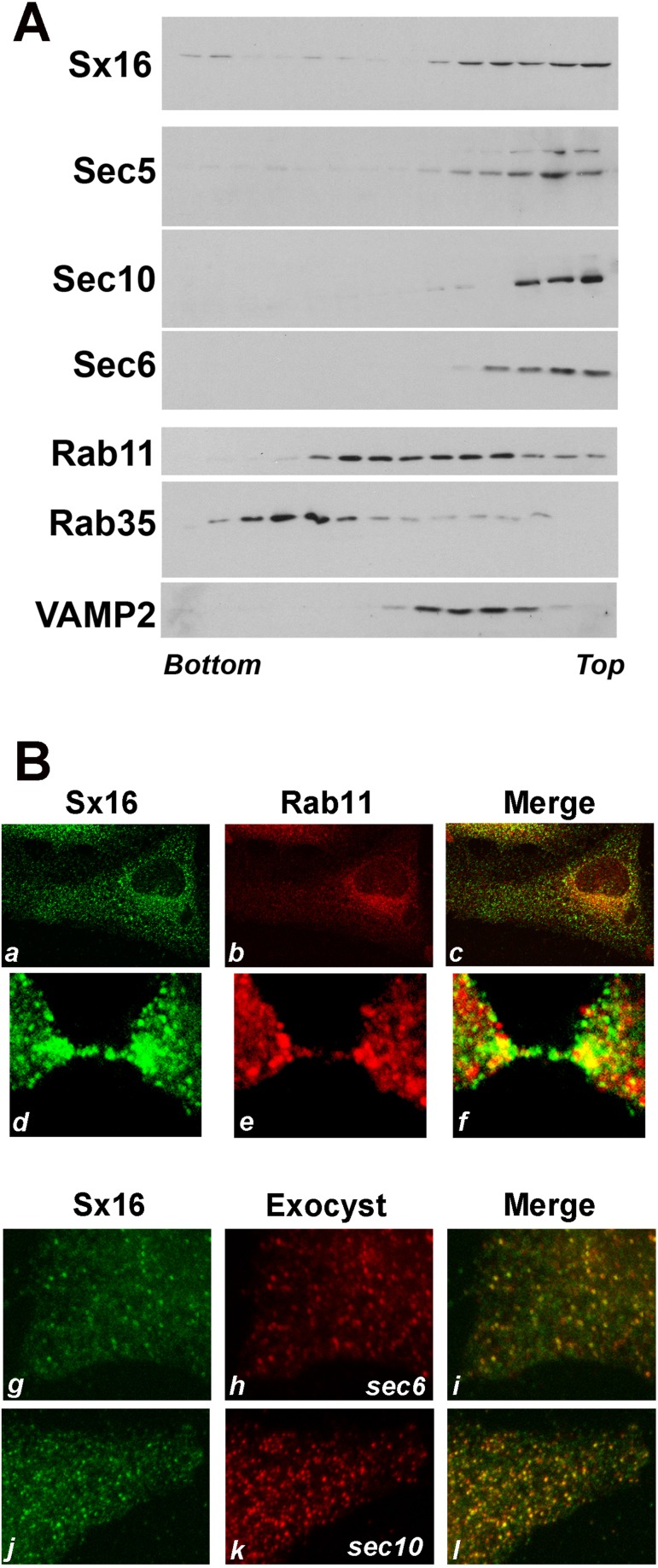
Recently it was shown that both recycling endosome and endosomal sorting complex required for transport (ESCRT) components are required for cytokinesis, in which they are believed to act in a sequential manner to bring about secondary ingression and abscission, respectively. However, it is not clear how either of these complexes is targeted to the midbody and whether their delivery is coordinated. The trafficking of membrane vesicles between different intracellular organelles involves the formation of soluble N-ethylmaleimide-sensitive factor attachment protein receptor (SNARE) complexes. Although membrane traffic is known to play an important role in cytokinesis, the contribution and identity of intracellular SNAREs to cytokinesis remain unclear. Here we demonstrate that syntaxin 16 is a key regulator of cytokinesis, as it is required for recruitment of both recycling endosome-associated Exocyst and ESCRT machinery during late telophase, and therefore that these two distinct facets of cytokinesis are inextricably linked.
最近的研究表明,再循环内体和内体分选复合物所需的运输(ESCRT)成分对于胞质分裂都是必需的,它们分别被认为以顺序方式起作用以分别引起二次内陷和分离。然而,尚不清楚这些复合物中的任何一种复合物如何靶向到中体,以及它们的传递是否协调。不同细胞内细胞器之间的膜囊泡的运输涉及可溶性 N-乙基马来酰亚胺敏感因子附着蛋白受体(SNARE)复合物的形成。尽管已知膜运输在胞质分裂中起重要作用,但胞质分裂中细胞内 SNARE 的作用和身份仍不清楚。在这里,我们证明了 syntaxin 16 是胞质分裂的关键调节因子,因为它在末期需要募集再循环内体相关的外泌体和 ESCRT 机器,因此这两个不同方面的胞质分裂是不可分割的。