Department of Chemistry, Scripps Research Institute, 10550 North Torrey Pines Road, La Jolla, CA 92037, USA; Department of Molecular and Cell Biology, University of California, Berkeley, CA 94720, USA.
Trends Biochem Sci. 2013 Nov;38(11):566-75. doi: 10.1016/j.tibs.2013.08.008. Epub 2013 Oct 7.
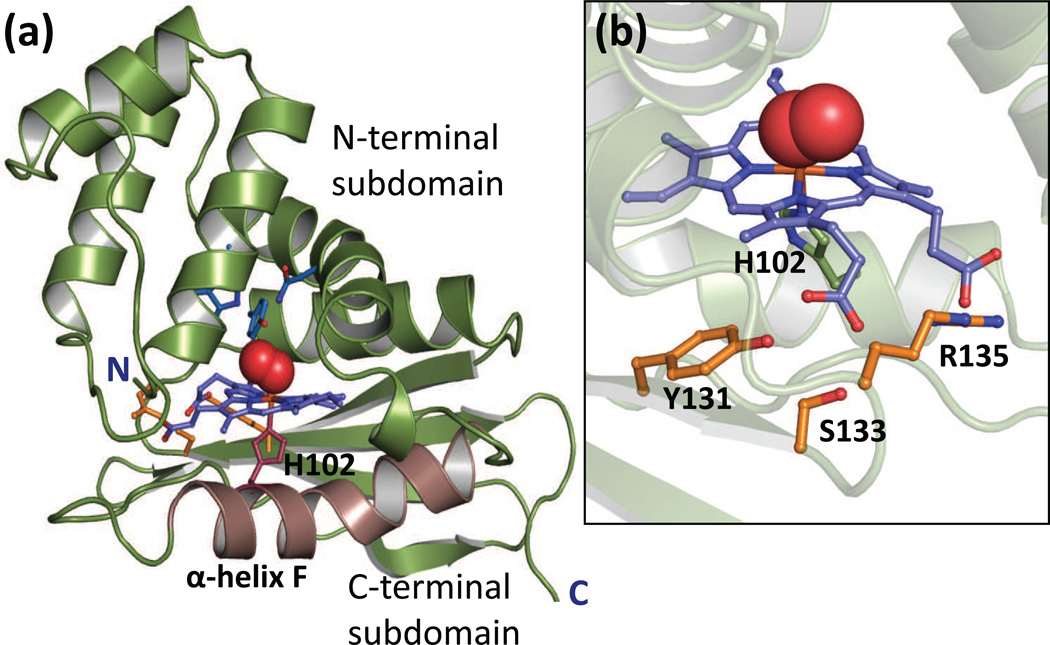
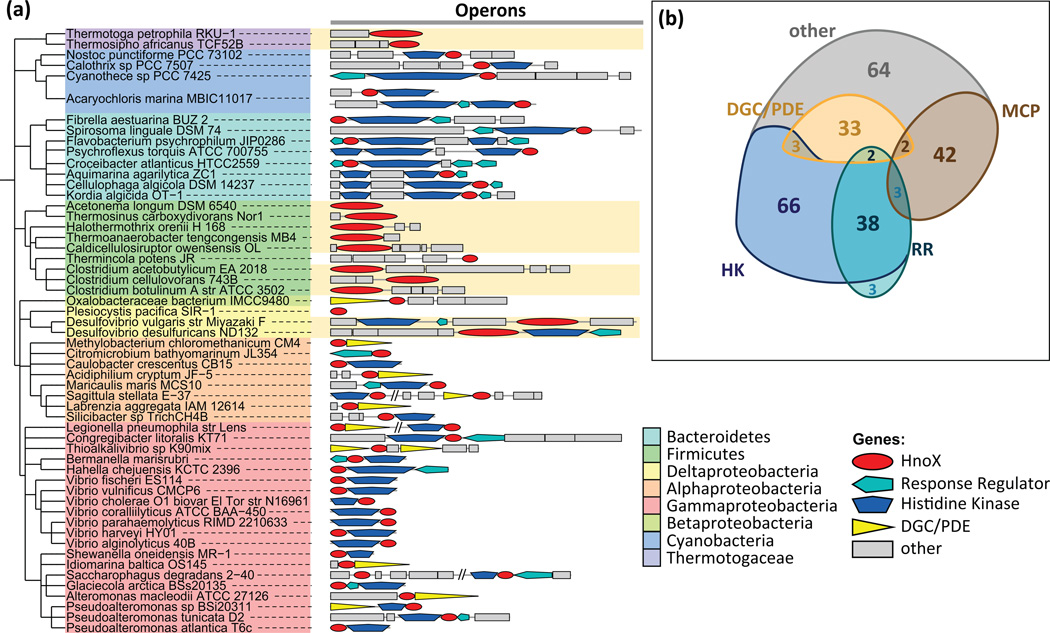
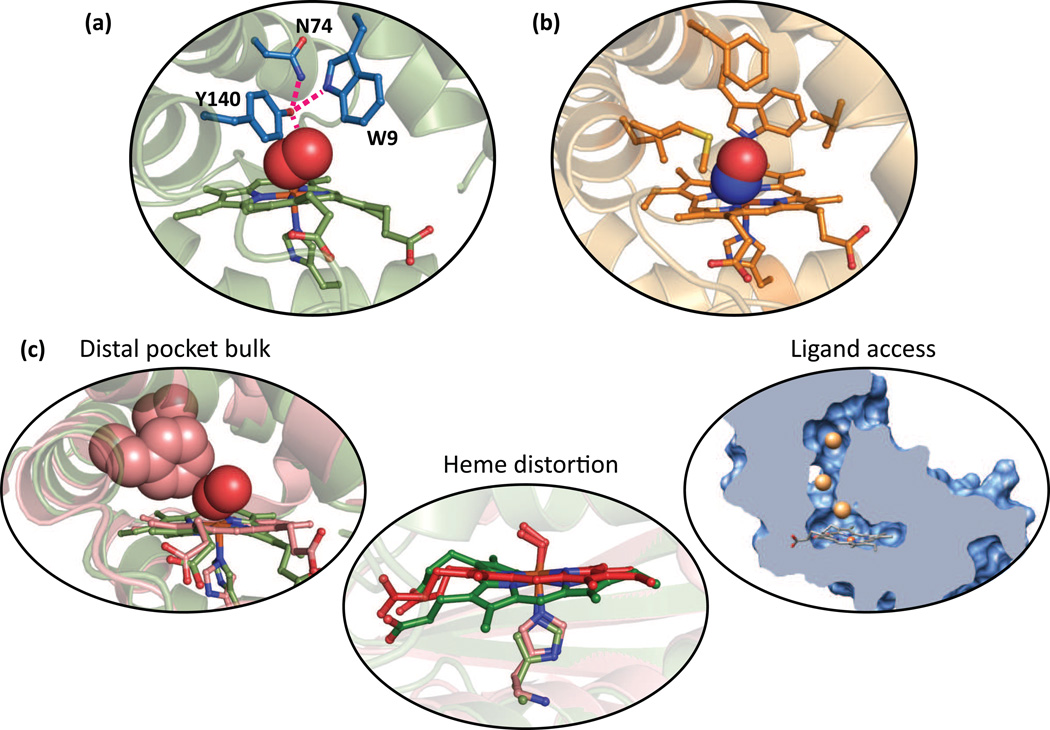
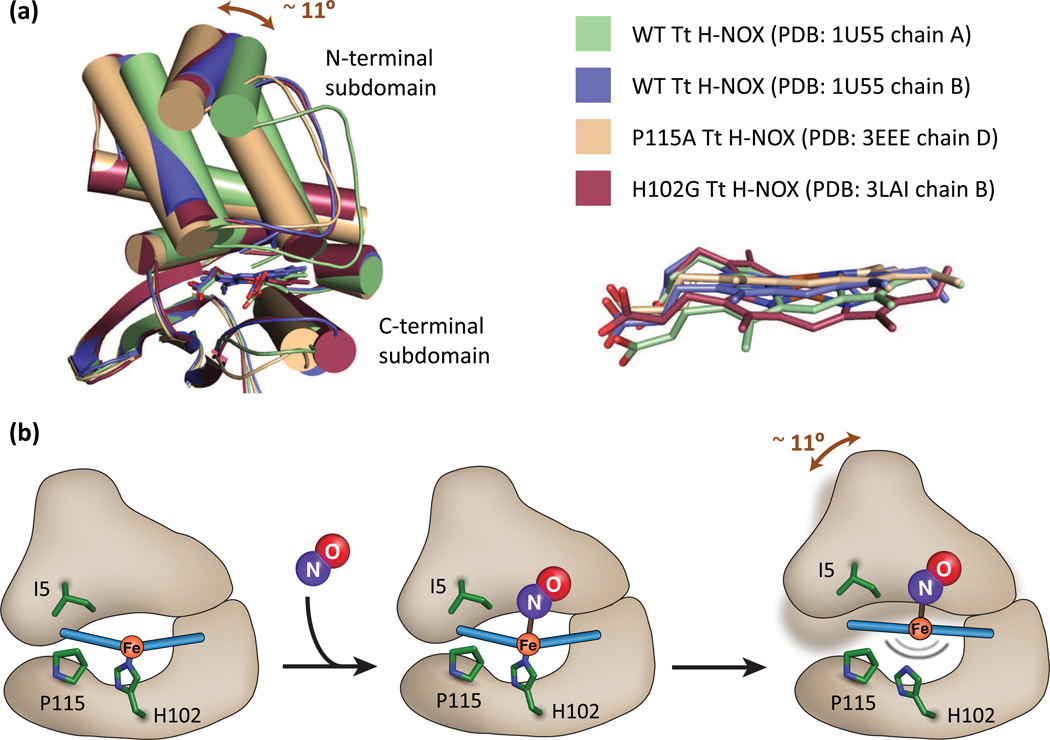
Heme-nitric oxide/oxygen binding (H-NOX) domains function as sensors for the gaseous signaling agent nitric oxide (NO) in eukaryotes and bacteria. Mammalian NO signaling is well characterized and involves the H-NOX domain of soluble guanylate cyclase. In bacteria, H-NOX proteins interact with bacterial signaling proteins in two-component signaling systems or in cyclic-di-GMP metabolism. Characterization of several downstream signaling processes has shown that bacterial H-NOX proteins share a common role in controlling important bacterial communal behaviors in response to NO. The H-NOX pathways regulate motility, biofilm formation, quorum sensing, and symbiosis. Here, we review the latest structural and mechanistic studies that have elucidated how H-NOX domains selectively bind NO and transduce ligand binding into conformational changes that modulate activity of signaling partners. Furthermore, we summarize the recent advances in understanding the physiological function and biochemical details of the H-NOX signaling pathways.
血红素-一氧化氮/氧结合(H-NOX)结构域作为真核生物和细菌中气体信号分子一氧化氮(NO)的传感器发挥作用。哺乳动物的 NO 信号转导得到了很好的描述,涉及可溶性鸟苷酸环化酶的 H-NOX 结构域。在细菌中,H-NOX 蛋白通过两种成分信号系统或环二鸟苷酸代谢与细菌信号蛋白相互作用。对几个下游信号转导过程的特征分析表明,细菌 H-NOX 蛋白在控制细菌对 NO 的重要社区行为方面具有共同作用。H-NOX 途径调节运动性、生物膜形成、群体感应和共生关系。在这里,我们综述了最新的结构和机制研究,这些研究阐明了 H-NOX 结构域如何选择性地结合 NO,并将配体结合转导为构象变化,从而调节信号伙伴的活性。此外,我们总结了对 H-NOX 信号通路的生理功能和生化细节的最新理解进展。