Red Sea Research Center, King Abdullah University of Science and Technology (KAUST), 4700 KAUST, Thuwal 23955, Saudi Arabia.
BMC Genomics. 2013 Oct 12;14:704. doi: 10.1186/1471-2164-14-704.
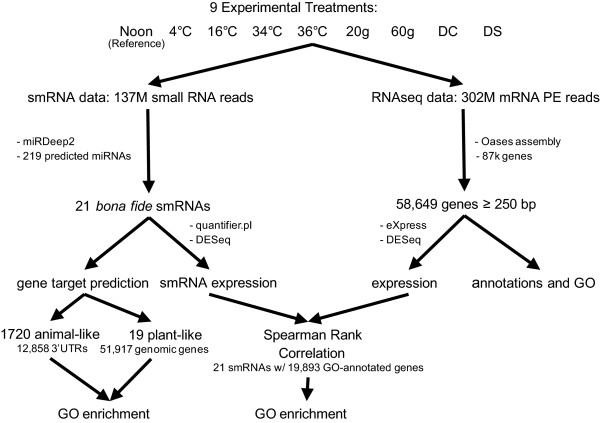
Animal and plant genomes produce numerous small RNAs (smRNAs) that regulate gene expression post-transcriptionally affecting metabolism, development, and epigenetic inheritance. In order to characterize the repertoire of endogenous smRNAs and potential gene targets in dinoflagellates, we conducted smRNA and mRNA expression profiling over 9 experimental treatments of cultures from Symbiodinium microadriaticum, a photosynthetic symbiont of scleractinian corals.
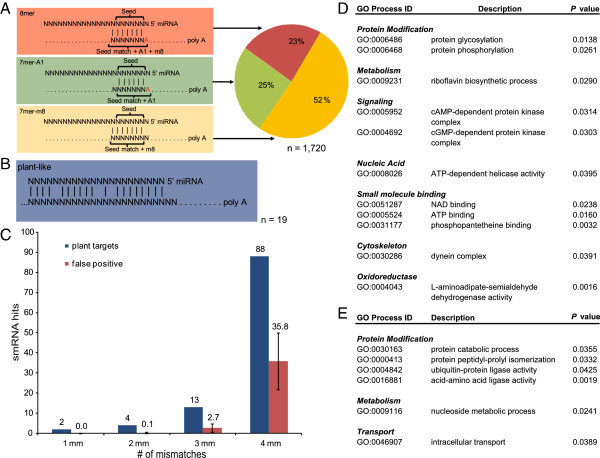
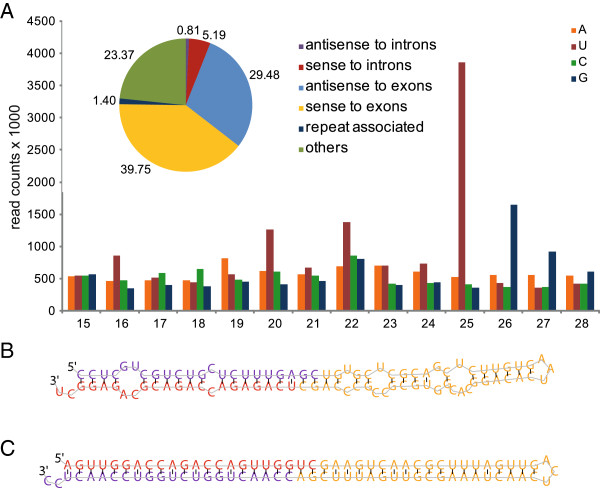
We identified a set of 21 novel smRNAs that share stringent key features with functional microRNAs from other model organisms. smRNAs were predicted independently over all 9 treatments and their putative gene targets were identified. We found 1,720 animal-like target sites in the 3'UTRs of 12,858 mRNAs and 19 plant-like target sites in 51,917 genes. We assembled a transcriptome of 58,649 genes and determined differentially expressed genes (DEGs) between treatments. Heat stress was found to produce a much larger number of DEGs than other treatments that yielded only few DEGs. Analysis of DEGs also revealed that minicircle-encoded photosynthesis proteins seem to be common targets of transcriptional regulation. Furthermore, we identified the core RNAi protein machinery in Symbiodinium.
Integration of smRNA and mRNA expression profiling identified a variety of processes that could be under microRNA control, e.g. protein modification, signaling, gene expression, and response to DNA damage. Given that Symbiodinium seems to have a paucity of transcription factors and differentially expressed genes, identification and characterization of its smRNA repertoire establishes the possibility of a range of gene regulatory mechanisms in dinoflagellates acting post-transcriptionally.
动植物基因组产生大量的小 RNA(smRNA),这些 RNA 通过转录后调控基因表达,影响代谢、发育和表观遗传遗传。为了描述共生甲藻 Symbiodinium microadriaticum 中的内源性 smRNA 及其潜在基因靶标,我们对 9 种培养条件下的 smRNA 和 mRNA 表达谱进行了分析。
我们鉴定了一组 21 种新的 smRNA,它们与其他模式生物的功能性 microRNA 具有严格的关键特征。对所有 9 种处理进行了独立的 smRNA 预测,并鉴定了其潜在的基因靶标。我们在 12858 个 mRNA 的 3'UTR 中发现了 1720 个类似动物的靶标位点,在 51917 个基因中发现了 19 个类似植物的靶标位点。我们组装了 58649 个基因的转录组,并确定了处理之间差异表达的基因(DEGs)。与其他仅产生少数 DEGs 的处理相比,热应激产生了更多的 DEGs。对 DEGs 的分析还表明,迷你环编码的光合作用蛋白似乎是转录调控的常见靶标。此外,我们在 Symbiodinium 中鉴定了核心 RNAi 蛋白机制。
smRNA 和 mRNA 表达谱的整合鉴定了多种可能受到 microRNA 调控的过程,例如蛋白质修饰、信号转导、基因表达和对 DNA 损伤的反应。鉴于 Symbiodinium 似乎缺乏转录因子和差异表达的基因,鉴定和表征其 smRNA 谱为在甲藻中存在一系列转录后基因调控机制提供了可能。