Health & Community Systems Department, The University of Pittsburgh School of Nursing, Pittsburgh, PA.
Health & Community Systems Department, The University of Pittsburgh School of Nursing, Pittsburgh, PA.
Am J Geriatr Psychiatry. 2014 Aug;22(8):771-81. doi: 10.1016/j.jagp.2013.07.007. Epub 2013 Oct 8.
Interventions directed at the mental health of family dementia caregivers may have limited impact when focused on caregivers who have provided care for years and report high burden levels. We sought to evaluate the mental health effects of problem-solving therapy (PST), designed for caregivers of individuals with a recent diagnosis of Mild Cognitive Impairment (MCI) or early dementia.
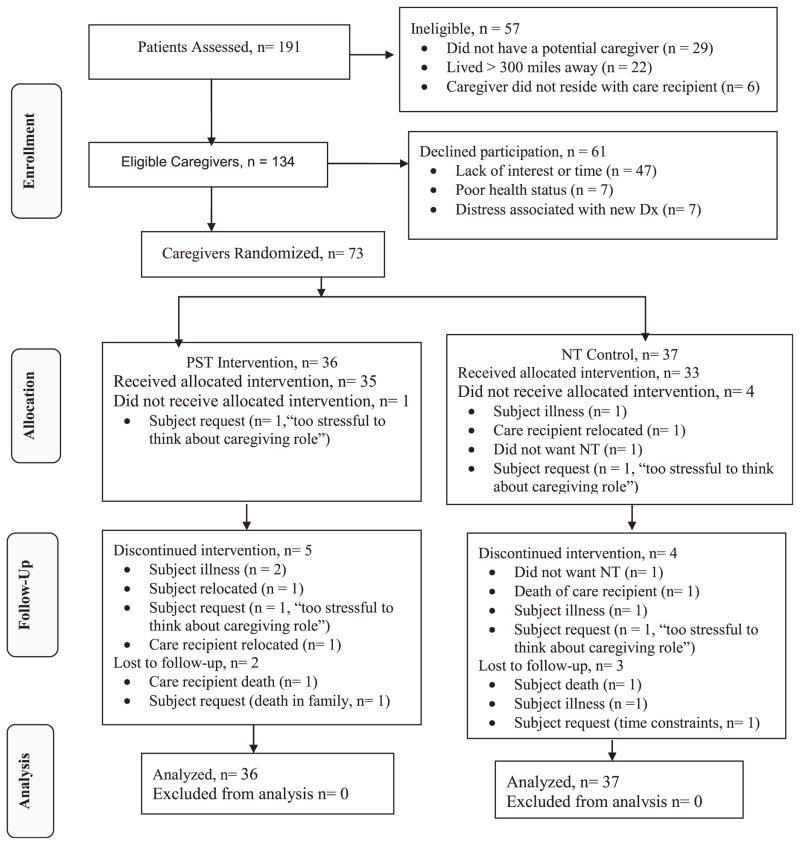
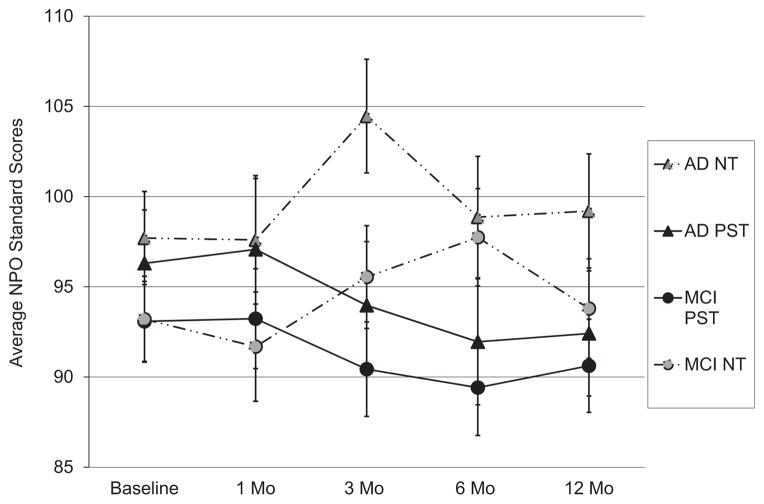
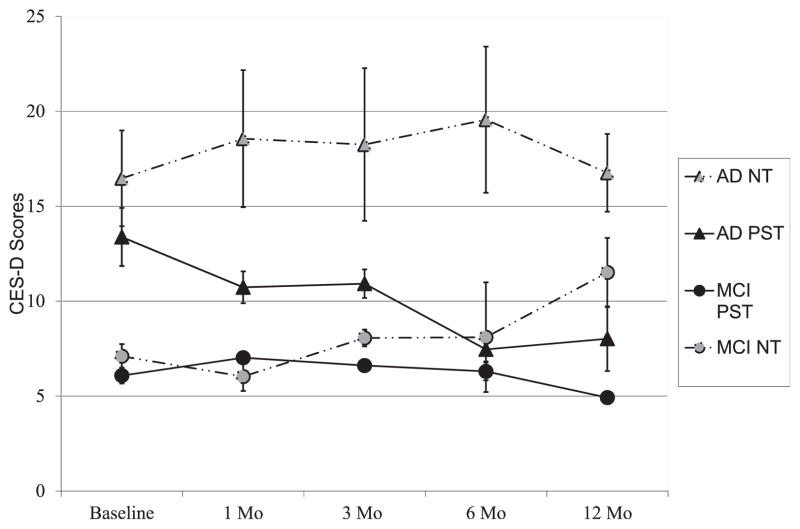
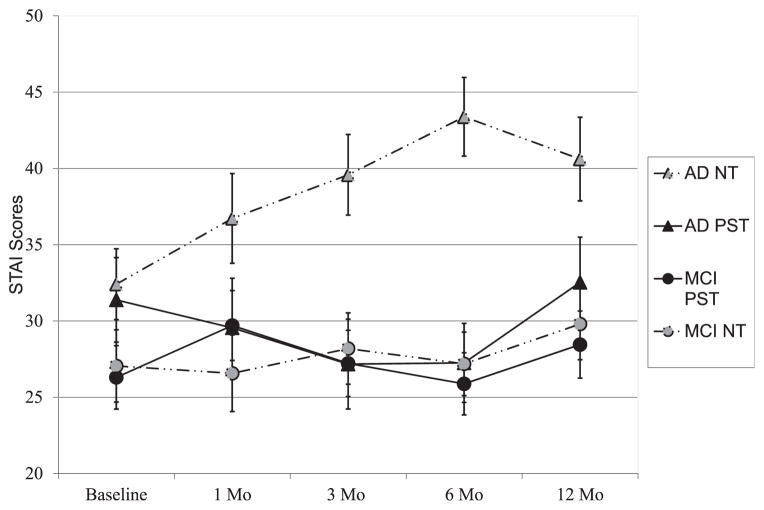
Seventy-three (43 MCI and 30 early dementia) family caregivers were randomly assigned to receive PST or a comparison condition (nutritional education). Depression, anxiety, and problem-solving orientation were assessed at baseline and at 1, 3, 6, and 12 months post intervention.
In general, the PST caregiver intervention was feasible and acceptable to family caregivers of older adults with a new cognitive diagnosis. Relative to nutritional education, PST led to significantly reduced depression symptoms, particularly among early dementia caregivers. PST also lowered caregivers' anxiety levels, and led to lessening of negative problem orientation.
Enhanced problem-solving skills, learned early after a loved one's cognitive diagnosis (especially dementia), results in positive mental health outcomes among new family caregivers.
针对已经照顾患者多年且报告负担水平较高的家庭痴呆症照顾者的心理健康进行干预,可能效果有限。我们试图评估针对近期被诊断为轻度认知障碍(MCI)或早期痴呆症患者的个体的家庭成员的问题解决疗法(PST)对其心理健康的影响。
73 名(43 名 MCI 和 30 名早期痴呆症)家庭照顾者被随机分配接受 PST 或对照组(营养教育)。在干预前、干预后 1、3、6 和 12 个月评估抑郁、焦虑和问题解决取向。
一般来说,PST 照顾者干预对有新认知诊断的老年人的家庭照顾者来说是可行且可接受的。与营养教育相比,PST 显著降低了抑郁症状,尤其是在早期痴呆症照顾者中。PST 还降低了照顾者的焦虑水平,并减少了消极的问题取向。
在亲人认知诊断后早期(尤其是痴呆症)学习增强的问题解决技能,可改善新的家庭照顾者的心理健康结果。