Respiratory Research Division, Department of Medicine, Royal College of Surgeons in Ireland Education and Research Centre, Beaumont Hospital, Dublin, Ireland.
Int J Nanomedicine. 2013;8:3907-15. doi: 10.2147/IJN.S47551. Epub 2013 Oct 11.
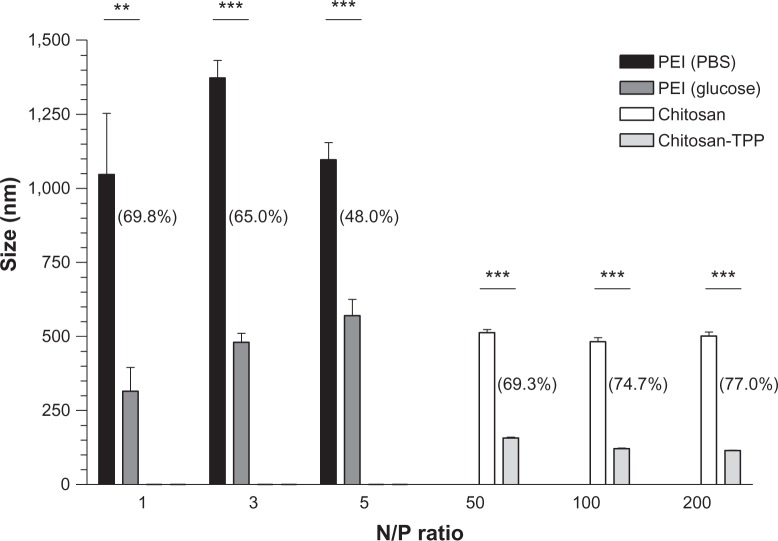
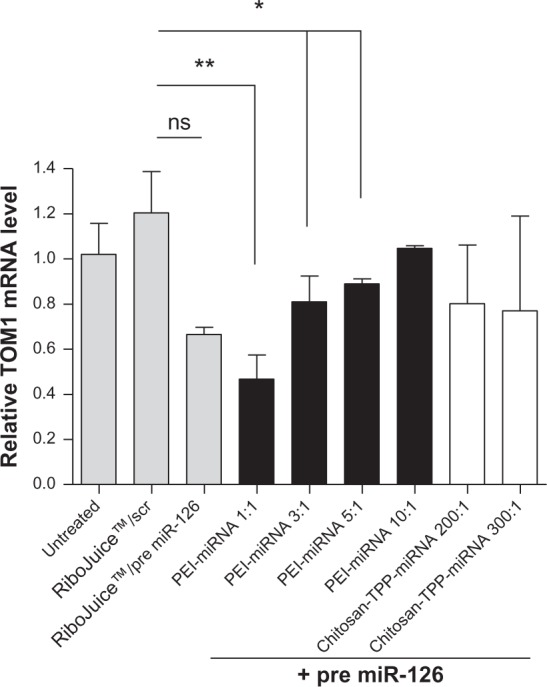
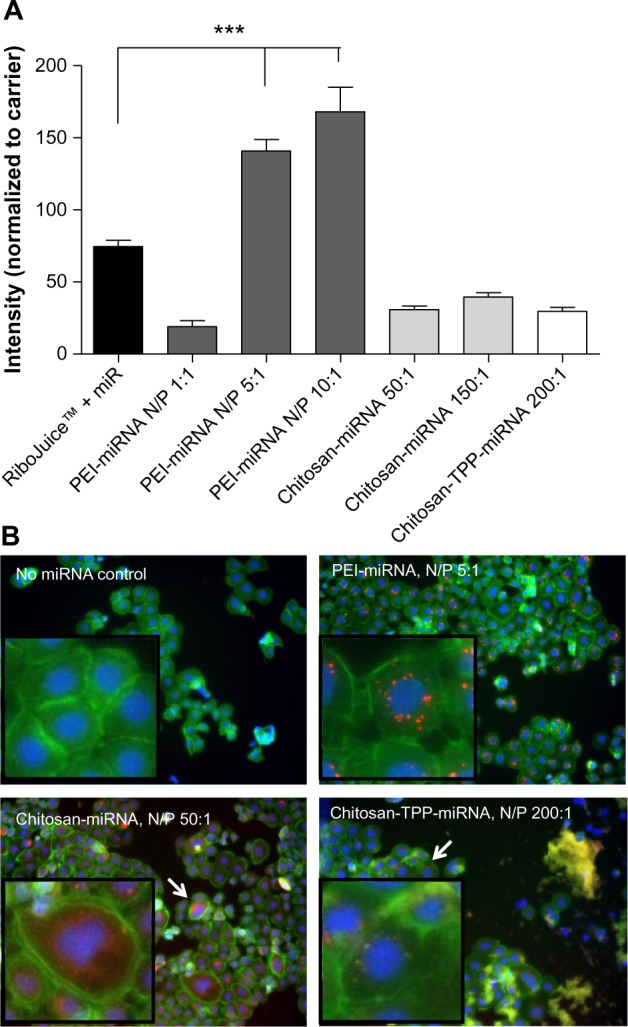
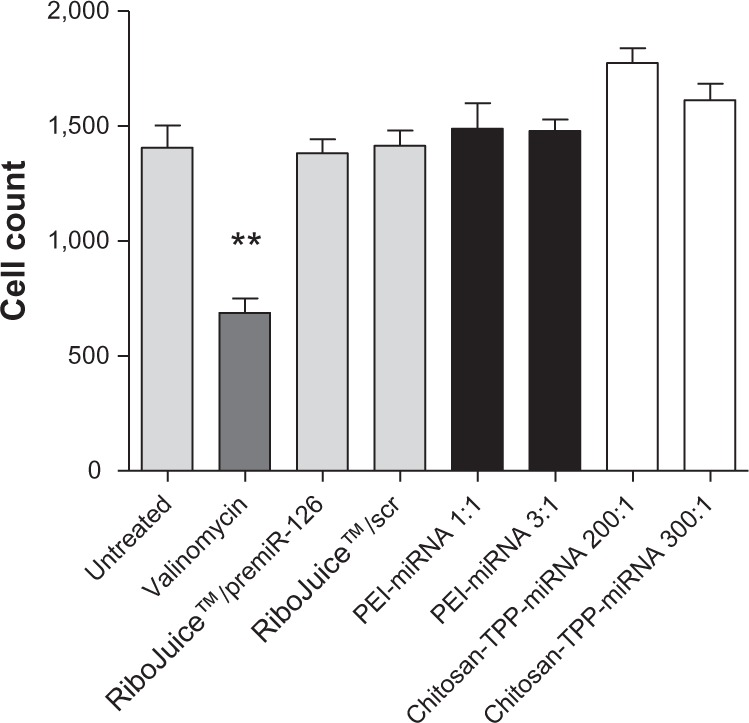
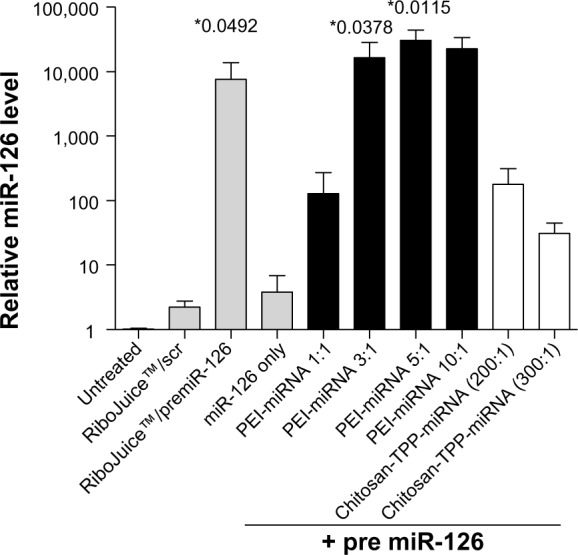
Cystic fibrosis (CF) is an inherited disorder characterized by chronic airway inflammation. microRNAs (miRNAs) are endogenous small RNAs which act on messenger (m) RNA at a post transcriptional level, and there is a growing understanding that altered expression of miRNA is involved in the CF phenotype. Modulation of miRNA by replacement using miRNA mimics (premiRs) presents a new therapeutic paradigm for CF, but effective and safe methods of delivery to the CF epithelium are limiting clinical translation. Herein, polymeric nanoparticles are investigated for delivery of miRNA mimics into CF airway epithelial cells, using miR-126 as a proof-of-concept premiR cargo to determine efficiency. Two polymers, polyethyleneimine (PEI) and chitosan, were used to prepare miRNA nanomedicines, characterized for their size, surface (zeta) potential, and RNA complexation efficiency, and screened for delivery and cytotoxicity in CFBE41o- (human F508del cystic fibrosis transmembrane conductance regulator bronchial epithelial) cells using a novel high content analysis method. RNA extraction was carried out 24 hours post transfection, and miR-126 and TOM1 (target of Myb1) expression (a validated miR-126 target) was assessed. Manufacture was optimized to produce small nanoparticles that effectively complexed miRNA. Using high content analysis, PEI-based nanoparticles were more effective than chitosan-based nanoparticles in facilitating uptake of miRNA into CFBE41o- cells and this was confirmed in miR-126 assays. PEI-premiR-126 nanoparticles at low nitrogen/phosphate (N/P) ratios resulted in significant knockdown of TOM1 in CFBE41o- cells, with the most significant reduction of 66% in TOM1 expression elicited at an N/P ratio of 1:1 while chitosan-based miR-126 nanomedicines failed to facilitate statistically significant knockdown of TOM1 and both nanoparticles appeared relatively nontoxic. miRNA nanomedicine uptake can be qualitatively and quantitatively assessed rapidly by high content analysis and is highly polymer-dependent but, interestingly, there is not a direct correlation between the levels of miRNA uptake and the downstream gene knockdown. Polymeric nanoparticles can deliver premiRs effectively to CFBEs in order to modulate gene expression but must be tailored specifically for miRNA delivery.
囊性纤维化 (CF) 是一种遗传性疾病,其特征为慢性气道炎症。微小 RNA (miRNA) 是一种内源性的小分子 RNA,可在信使 (m) RNA 的转录后水平上发挥作用,越来越多的研究表明 miRNA 的表达改变与 CF 表型有关。使用 miRNA 模拟物 (premiRs) 对 miRNA 进行调节为 CF 提供了一种新的治疗范例,但将其递送到 CF 上皮的有效和安全方法限制了临床转化。本文研究了聚合物纳米粒子在 CF 气道上皮细胞中递送 miRNA 模拟物的作用,使用 miR-126 作为证明概念的 premiR 货物来确定效率。使用聚乙烯亚胺 (PEI) 和壳聚糖两种聚合物来制备 miRNA 纳米药物,对其粒径、表面 (zeta) 电位和 RNA 复合效率进行了表征,并使用新型高内涵分析方法筛选 CFBE41o- (人 F508del 囊性纤维化跨膜电导调节子支气管上皮) 细胞中的递送和细胞毒性。转染后 24 小时提取 RNA,并评估 miR-126 和 TOM1(Myb1 靶标)的表达(miR-126 的验证靶标)。通过优化制造工艺,生产出能有效复合 miRNA 的小纳米颗粒。使用高内涵分析,PEI 基纳米颗粒比壳聚糖基纳米颗粒更有效地促进 CFBE41o-细胞摄取 miRNA,在 miR-126 测定中得到了证实。在低氮/磷 (N/P) 比下,PEI-premiR-126 纳米颗粒可显著降低 CFBE41o-细胞中的 TOM1 表达,在 N/P 比为 1:1 时,TOM1 表达的降低最为显著,达到 66%,而壳聚糖基 miR-126 纳米药物则未能显著降低 TOM1 的表达,两种纳米颗粒的细胞毒性都相对较低。高内涵分析可快速定性和定量评估 miRNA 纳米药物的摄取情况,高度依赖于聚合物,但有趣的是,miRNA 摄取水平与下游基因敲低之间没有直接的相关性。聚合物纳米颗粒可以有效地将 premiRs 递送到 CFBE 中以调节基因表达,但必须针对 miRNA 递送来进行专门设计。