Murphy George F, Wilson Brian J, Girouard Sasha D, Frank Natasha Y, Frank Markus H
Department of Pathology, Brigham & Women's Hospital, Boston, MA, USA.
Transplantation Research Center, Children's Hospital Boston, Boston, MA, USA; Department of Dermatology, Brigham & Women's Hospital, Boston, MA, USA.
Mol Aspects Med. 2014 Oct;39:33-49. doi: 10.1016/j.mam.2013.10.003. Epub 2013 Oct 19.
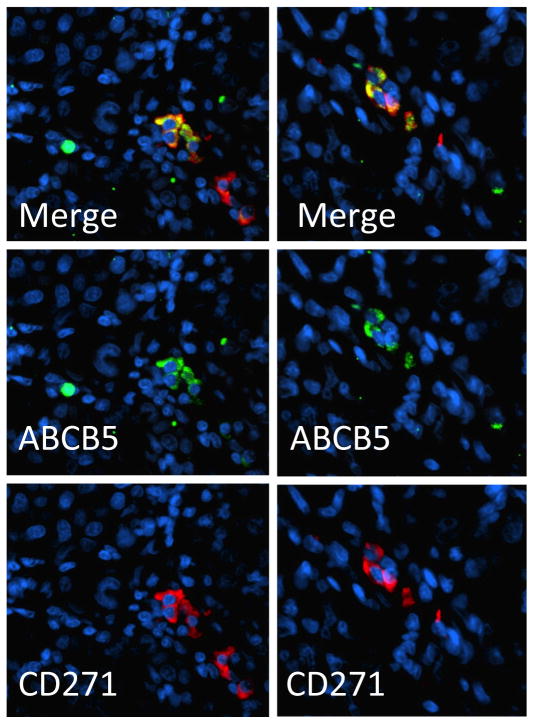
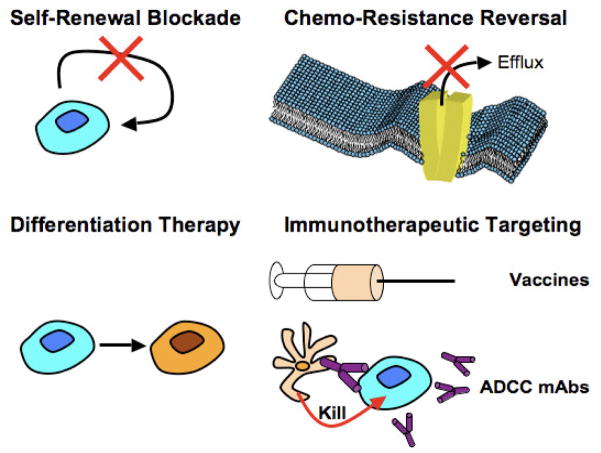
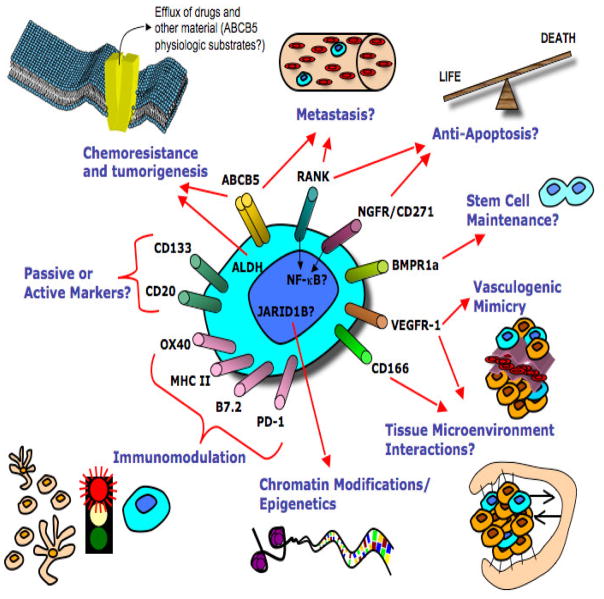
Melanoma stem cells, also known as malignant melanoma-initiating cells, are identifiable through expression of specific biomarkers such as ABCB5 (ATP-binding cassette, sub-family B (MDR/TAP), member 5), NGFR (nerve growth factor receptor, CD271) and ALDH (aldehyde dehydrogenase), and drive melanoma initiation and progression based on prolonged self-renewal capacity, vasculogenic differentiation and immune evasion. As we will review here, specific roles of these aggressive subpopulations have been documented in tumorigenic growth, metastatic dissemination, therapeutic resistance, and malignant recurrence. Moreover, recent findings have provided pre-clinical proof-of-concept for the potential therapeutic utility of the melanoma stem cell concept. Therefore, melanoma stem cell-directed therapeutic approaches represent promising novel strategies to improve therapy of this arguably most virulent human cancer.
黑色素瘤干细胞,也被称为恶性黑色素瘤起始细胞,可通过特定生物标志物如ABCB5(ATP结合盒,B亚家族(MDR/TAP),成员5)、NGFR(神经生长因子受体,CD271)和ALDH(醛脱氢酶)的表达来识别,并基于其延长的自我更新能力、血管生成分化和免疫逃逸驱动黑色素瘤的起始和进展。正如我们在此将回顾的,这些侵袭性亚群在致瘤生长、转移播散、治疗抗性和恶性复发中的特定作用已被记录。此外,最近的研究结果为黑色素瘤干细胞概念的潜在治疗效用提供了临床前概念验证。因此,针对黑色素瘤干细胞的治疗方法代表了有前景的新策略,以改善对这种可能是最具毒性的人类癌症的治疗。