1] Department of Genetics and Complex Diseases, Division of Biological Sciences, Harvard School of Public Health, 665 Huntington Avenue, Boston, Massachusetts 02115, USA [2].
Nature. 2013 Oct 24;502(7472):550-4. doi: 10.1038/nature12710.
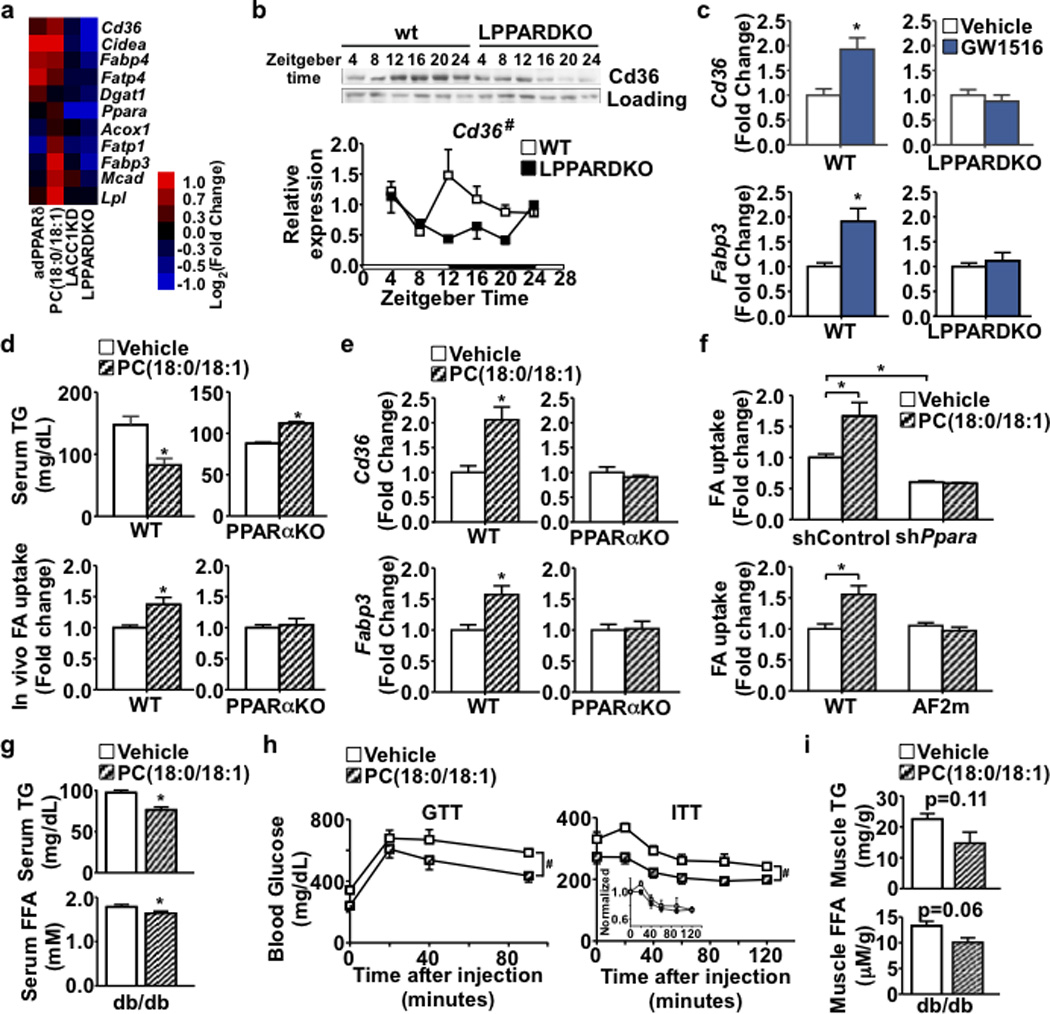
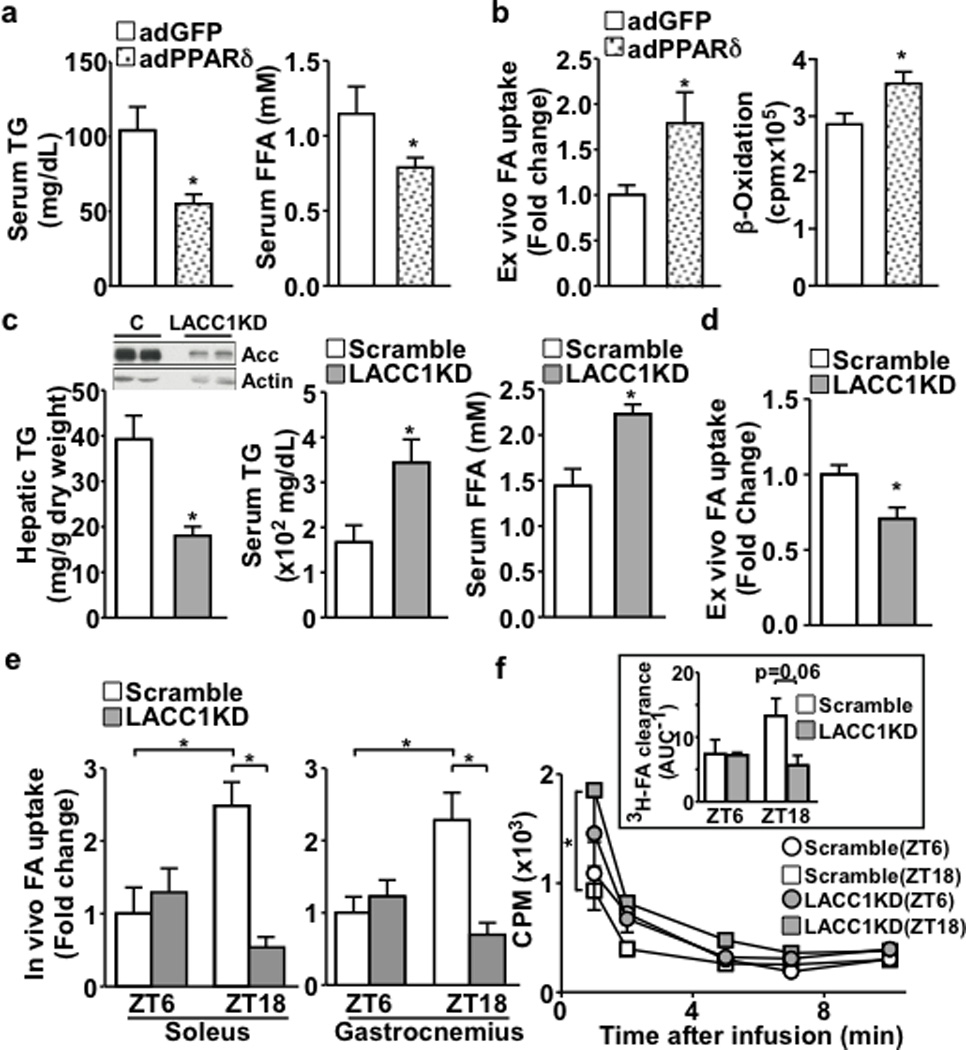
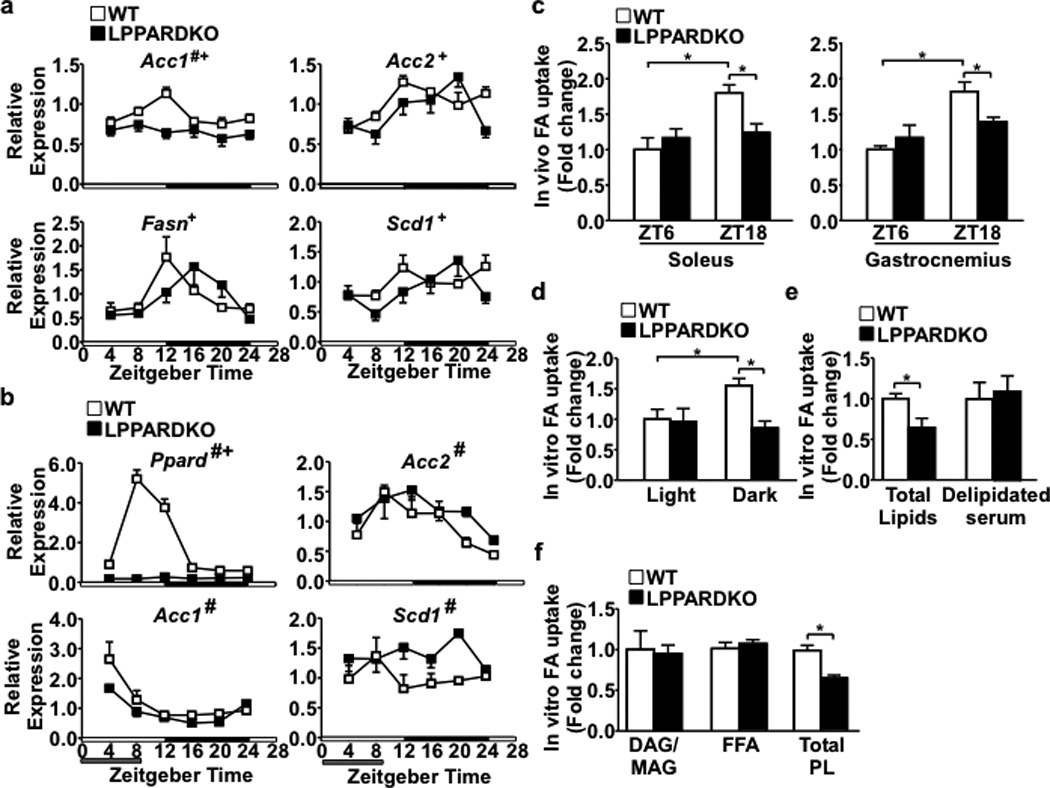
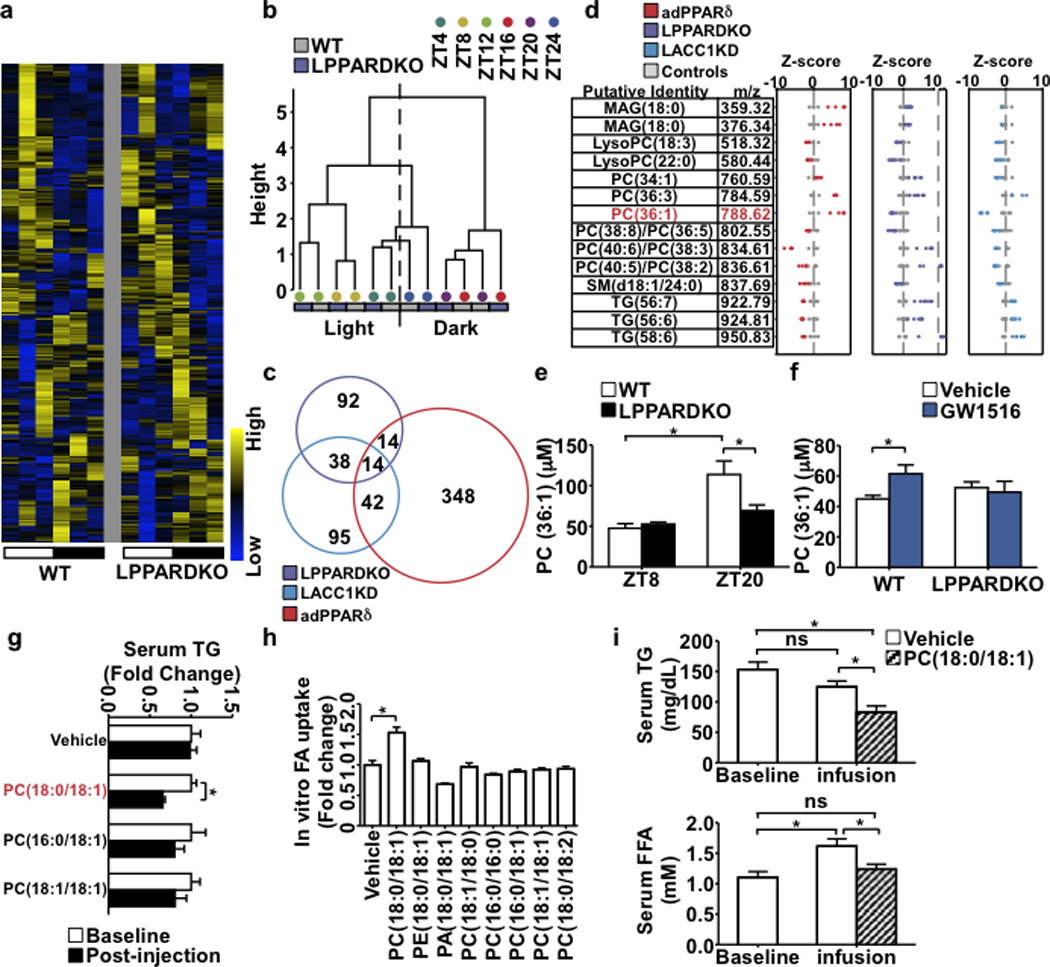
Food intake increases the activity of hepatic de novo lipogenesis, which mediates the conversion of glucose to fats for storage or use. In mice, this program follows a circadian rhythm that peaks with nocturnal feeding and is repressed by Rev-erbα/β and an HDAC3-containing complex during the day. The transcriptional activators controlling rhythmic lipid synthesis in the dark cycle remain poorly defined. Disturbances in hepatic lipogenesis are also associated with systemic metabolic phenotypes, suggesting that lipogenesis in the liver communicates with peripheral tissues to control energy substrate homeostasis. Here we identify a PPARδ-dependent de novo lipogenic pathway in the liver that modulates fat use by muscle via a circulating lipid. The nuclear receptor PPARδ controls diurnal expression of lipogenic genes in the dark/feeding cycle. Liver-specific PPARδ activation increases, whereas hepatocyte-Ppard deletion reduces, muscle fatty acid uptake. Unbiased metabolite profiling identifies phosphatidylcholine 18:0/18:1 (PC(18:0/18:1) as a serum lipid regulated by diurnal hepatic PPARδ activity. PC(18:0/18:1) reduces postprandial lipid levels and increases fatty acid use through muscle PPARα. High-fat feeding diminishes rhythmic production of PC(18:0/18:1), whereas PC(18:0/18:1) administration in db/db mice (also known as Lepr(-/-)) improves metabolic homeostasis. These findings reveal an integrated regulatory circuit coupling lipid synthesis in the liver to energy use in muscle by coordinating the activity of two closely related nuclear receptors. These data implicate alterations in diurnal hepatic PPARδ-PC(18:0/18:1) signalling in metabolic disorders, including obesity.
进食会增加肝脏从头合成脂肪的活性,将葡萄糖转化为脂肪进行储存或利用。在小鼠中,这一过程遵循昼夜节律,在夜间进食时达到高峰,并在白天受到 Rev-erbα/β 和含有 HDAC3 的复合物的抑制。控制暗周期节律性脂质合成的转录激活因子仍未得到很好的定义。肝脏脂肪生成的紊乱也与全身代谢表型有关,这表明肝脏的脂肪生成与外周组织进行通讯,以控制能量底物的平衡。在这里,我们鉴定了一种在肝脏中由 PPARδ 依赖的从头合成脂肪途径,该途径通过循环脂质调节肌肉对脂肪的利用。核受体 PPARδ 在暗/进食周期控制脂肪生成基因的昼夜表达。肝脏特异性 PPARδ 激活增加,而肝细胞-Ppard 缺失减少肌肉脂肪酸摄取。无偏代谢物分析鉴定出磷脂酰胆碱 18:0/18:1(PC(18:0/18:1)作为一种受昼夜肝脏 PPARδ 活性调节的血清脂质。PC(18:0/18:1)可降低餐后血脂水平,并通过肌肉 PPARα 增加脂肪酸的利用。高脂肪喂养减少了 PC(18:0/18:1)的节律性产生,而 PC(18:0/18:1)在 db/db 小鼠(也称为 Lepr(-/-))中的给药改善了代谢稳态。这些发现揭示了一个整合的调节回路,通过协调两个密切相关的核受体的活性,将肝脏中的脂质合成与肌肉中的能量利用联系起来。这些数据表明,昼夜肝脏 PPARδ-PC(18:0/18:1)信号的改变与代谢紊乱有关,包括肥胖。