Chu Chaeshin, Do Younghae, Kim Yongkuk, Saito Yasuhisa, Lee Sun-Dong, Park Haemo, Lee Jong-Koo
Division of Epidemic Intelligence Service, Korea Centers for Disease Control and Prevention, Osong, Korea.
Osong Public Health Res Perspect. 2011 Jun;2(1):51-8. doi: 10.1016/j.phrp.2011.05.002. Epub 2011 May 7.
To investigate the possible link between Vibrio vulnificus population size in seawater and water temperature.
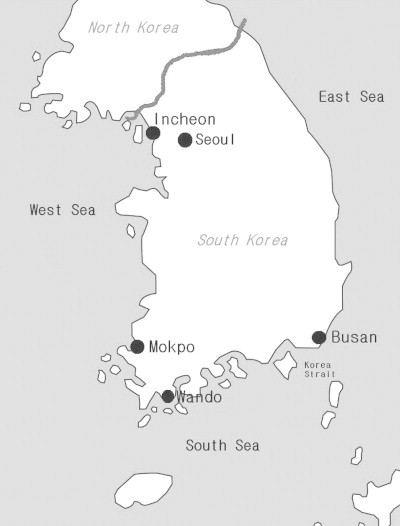
We collected incidence and water temperature data in coastal regions of Korea and constructed a mathematical model that consisted of three classes; susceptible fish, infected fish available to humans, and infected humans.
We developed a mathematical model to connect V. vulnificus incidence with water temperature using estimated bacterial population sizes and actual coastal water temperatures.
Increased V. vulnificus population sizes in marine environments may increase the risk of infection in people who eat at coastal restaurants in Korea. Furthermore, we estimated the near-future number of infected patients using our model, which will help to establish a public-health policy to reduce the disease burden.
研究海水中创伤弧菌种群数量与水温之间的可能联系。
我们收集了韩国沿海地区的发病率和水温数据,并构建了一个由三类组成的数学模型;易感鱼类、可供人类食用的受感染鱼类和受感染人类。
我们利用估计的细菌种群数量和实际沿海水温,开发了一个将创伤弧菌发病率与水温联系起来的数学模型。
海洋环境中创伤弧菌种群数量的增加可能会增加在韩国沿海餐馆就餐的人感染的风险。此外,我们使用我们的模型估计了近期受感染患者的数量,这将有助于制定公共卫生政策以减轻疾病负担。