International Crops Research Institute for the Semi-Arid Tropics (ICRISAT), Patancheru, Andhra Pradesh, India.
PLoS One. 2013 Oct 22;8(10):e78555. doi: 10.1371/journal.pone.0078555. eCollection 2013.
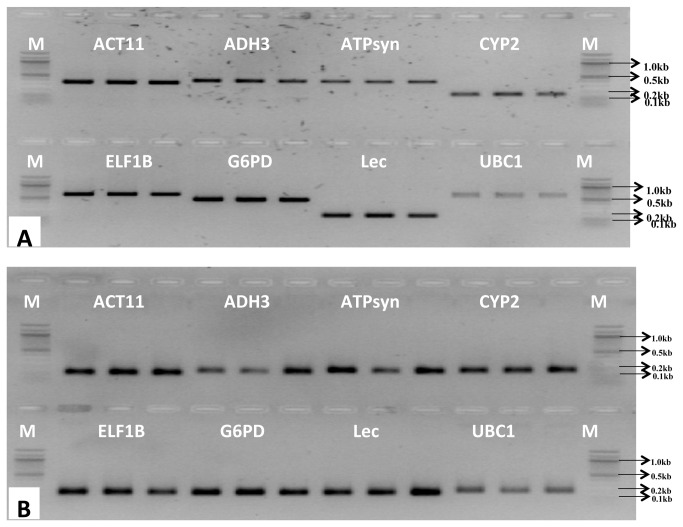
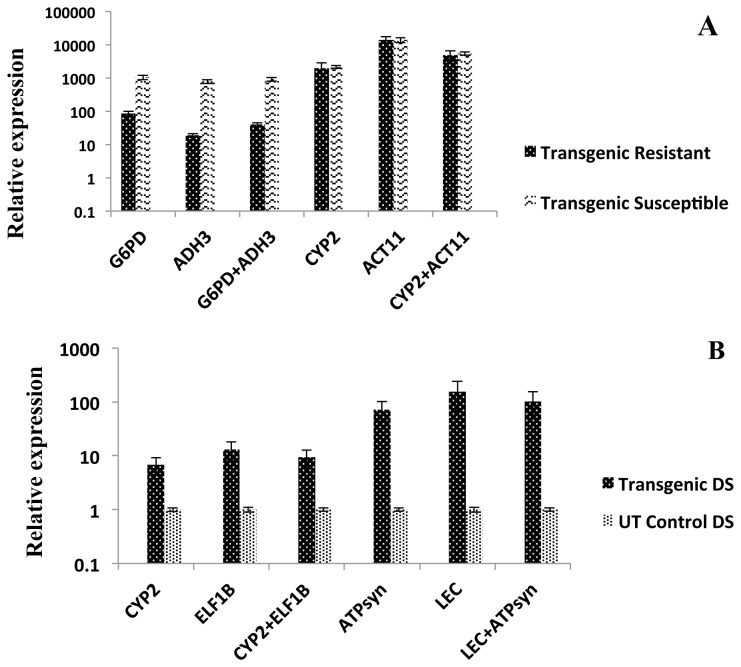
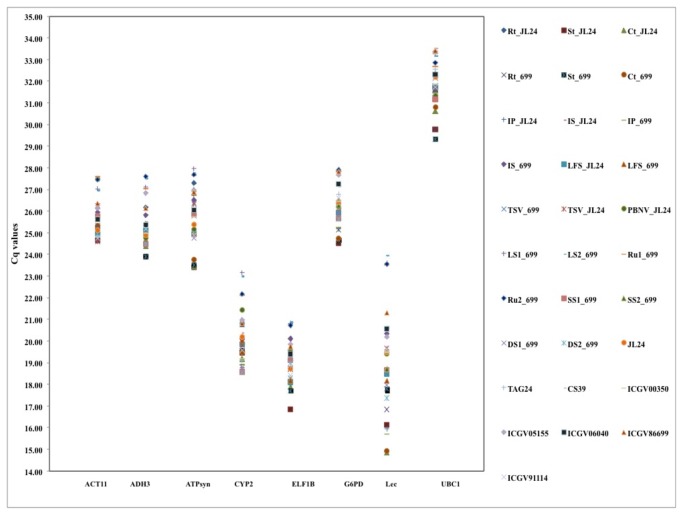
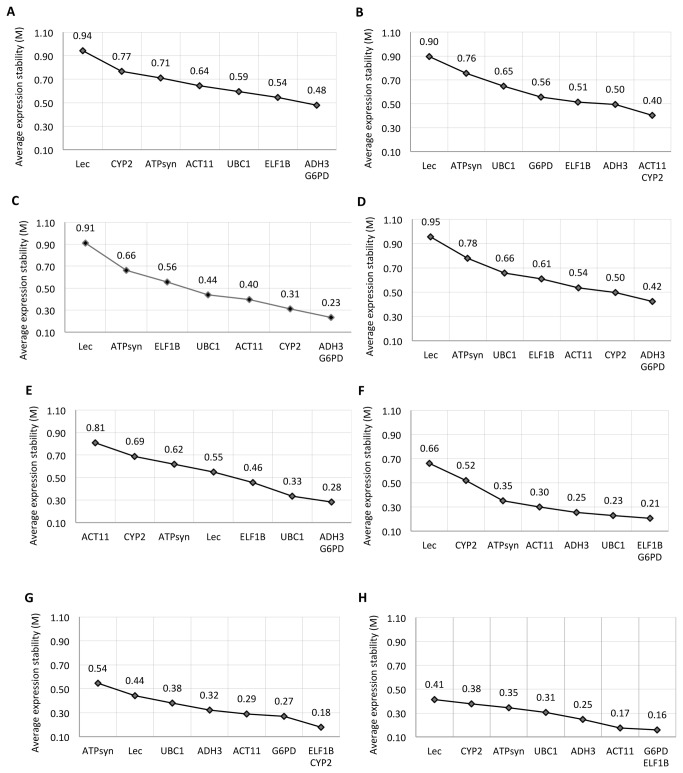
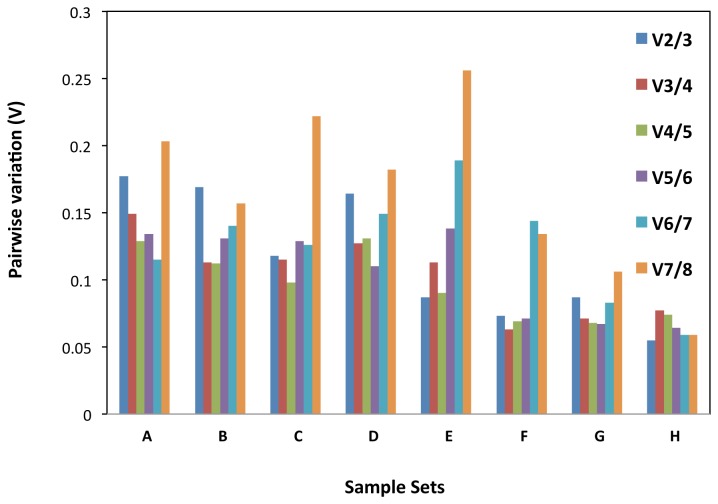
The quantitative real-time PCR (qPCR) based techniques have become essential for gene expression studies and high-throughput molecular characterization of transgenic events. Normalizing to reference gene in relative quantification make results from qPCR more reliable when compared to absolute quantification, but requires robust reference genes. Since, ideal reference gene should be species specific, no single internal control gene is universal for use as a reference gene across various plant developmental stages and diverse growth conditions. Here, we present validation studies of multiple stably expressed reference genes in cultivated peanut with minimal variations in temporal and spatial expression when subjected to various biotic and abiotic stresses. Stability in the expression of eight candidate reference genes including ADH3, ACT11, ATPsyn, CYP2, ELF1B, G6PD, LEC and UBC1 was compared in diverse peanut plant samples. The samples were categorized into distinct experimental sets to check the suitability of candidate genes for accurate and reliable normalization of gene expression using qPCR. Stability in expression of the references genes in eight sets of samples was determined by geNorm and NormFinder methods. While three candidate reference genes including ADH3, G6PD and ELF1B were identified to be stably expressed across experiments, LEC was observed to be the least stable, and hence must be avoided for gene expression studies in peanut. Inclusion of the former two genes gave sufficiently reliable results; nonetheless, the addition of the third reference gene ELF1B may be potentially better in a diverse set of tissue samples of peanut.
基于实时荧光定量 PCR (qPCR) 的技术已成为基因表达研究和转基因事件高通量分子特征分析的重要手段。与绝对定量相比,相对定量中通过内参基因进行标准化可以使 qPCR 的结果更加可靠,但需要稳健的内参基因。由于理想的内参基因应该是物种特异性的,因此没有单一的内参基因可以在不同的植物发育阶段和不同的生长条件下普遍用作内参基因。在这里,我们介绍了在经过各种生物和非生物胁迫后,在栽培花生中最小化时空表达变化的多个稳定表达的内参基因的验证研究。在不同的花生植物样本中比较了包括 ADH3、ACT11、ATPsyn、CYP2、ELF1B、G6PD、LEC 和 UBC1 在内的 8 个候选内参基因的表达稳定性。将样本分为不同的实验集,以检查候选基因是否适合使用 qPCR 对基因表达进行准确和可靠的归一化。使用 geNorm 和 NormFinder 方法确定了这 8 组样本中内参基因表达的稳定性。虽然包括 ADH3、G6PD 和 ELF1B 在内的三个候选内参基因在所有实验中都表现出稳定的表达,但 LEC 被观察到是最不稳定的,因此在花生的基因表达研究中必须避免使用。包含前两个基因可以得到足够可靠的结果;然而,在花生的不同组织样本中添加第三个参考基因 ELF1B 可能会更好。