• 文献检索
  • 文档翻译
  • 深度研究
  • 学术资讯
  • Suppr Zotero 插件Zotero 插件
  • 邀请有礼
  • 套餐&价格
  • 历史记录
应用&插件
Suppr Zotero 插件Zotero 插件浏览器插件Mac 客户端Windows 客户端微信小程序
定价
高级版会员购买积分包购买API积分包
服务
文献检索文档翻译深度研究API 文档MCP 服务
关于我们
关于 Suppr公司介绍联系我们用户协议隐私条款
关注我们

Suppr 超能文献

核心技术专利:CN118964589B侵权必究
粤ICP备2023148730 号-1Suppr @ 2026

文献检索

告别复杂PubMed语法,用中文像聊天一样搜索,搜遍4000万医学文献。AI智能推荐,让科研检索更轻松。

立即免费搜索

文件翻译

保留排版,准确专业,支持PDF/Word/PPT等文件格式,支持 12+语言互译。

免费翻译文档

深度研究

AI帮你快速写综述,25分钟生成高质量综述,智能提取关键信息,辅助科研写作。

立即免费体验

BRAF抑制剂通过对JNK信号通路的非靶向抑制作用来抑制细胞凋亡。

BRAF inhibitors suppress apoptosis through off-target inhibition of JNK signaling.

作者信息

Vin Harina, Ojeda Sandra S, Ching Grace, Leung Marco L, Chitsazzadeh Vida, Dwyer David W, Adelmann Charles H, Restrepo Monica, Richards Kristen N, Stewart Larissa R, Du Lili, Ferguson Scarlett B, Chakravarti Deepavali, Ehrenreiter Karin, Baccarini Manuela, Ruggieri Rosamaria, Curry Jonathan L, Kim Kevin B, Ciurea Ana M, Duvic Madeleine, Prieto Victor G, Ullrich Stephen E, Dalby Kevin N, Flores Elsa R, Tsai Kenneth Y

机构信息

Department of Immunology, University of Texas MD Anderson Cancer Center, Houston, United States.

出版信息

Elife. 2013 Nov 5;2:e00969. doi: 10.7554/eLife.00969.

DOI:10.7554/eLife.00969
PMID:24192036
原文链接:https://pmc.ncbi.nlm.nih.gov/articles/PMC3814616/
Abstract

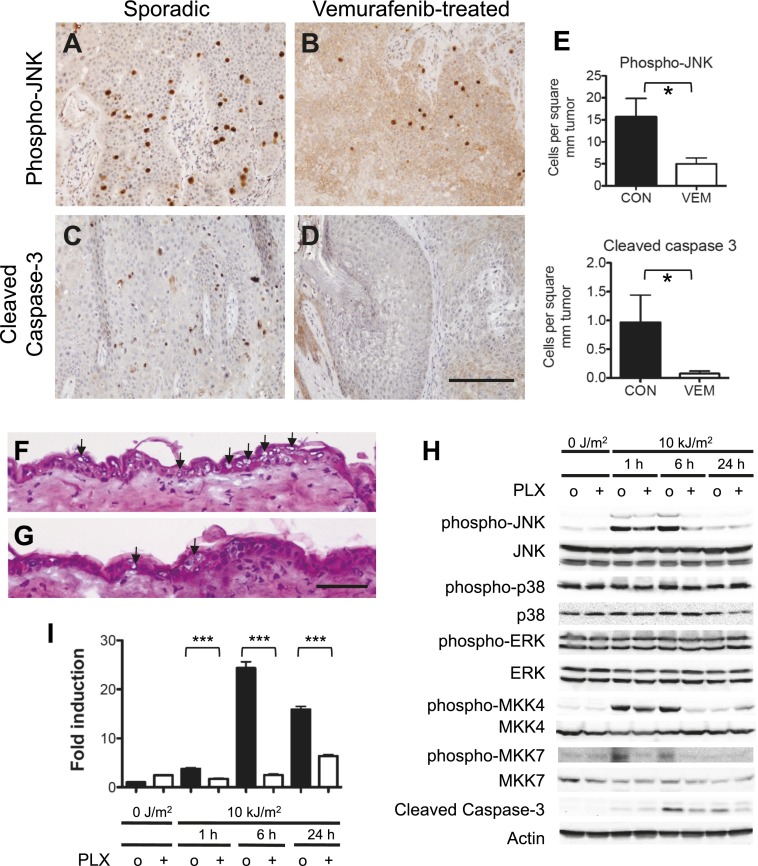
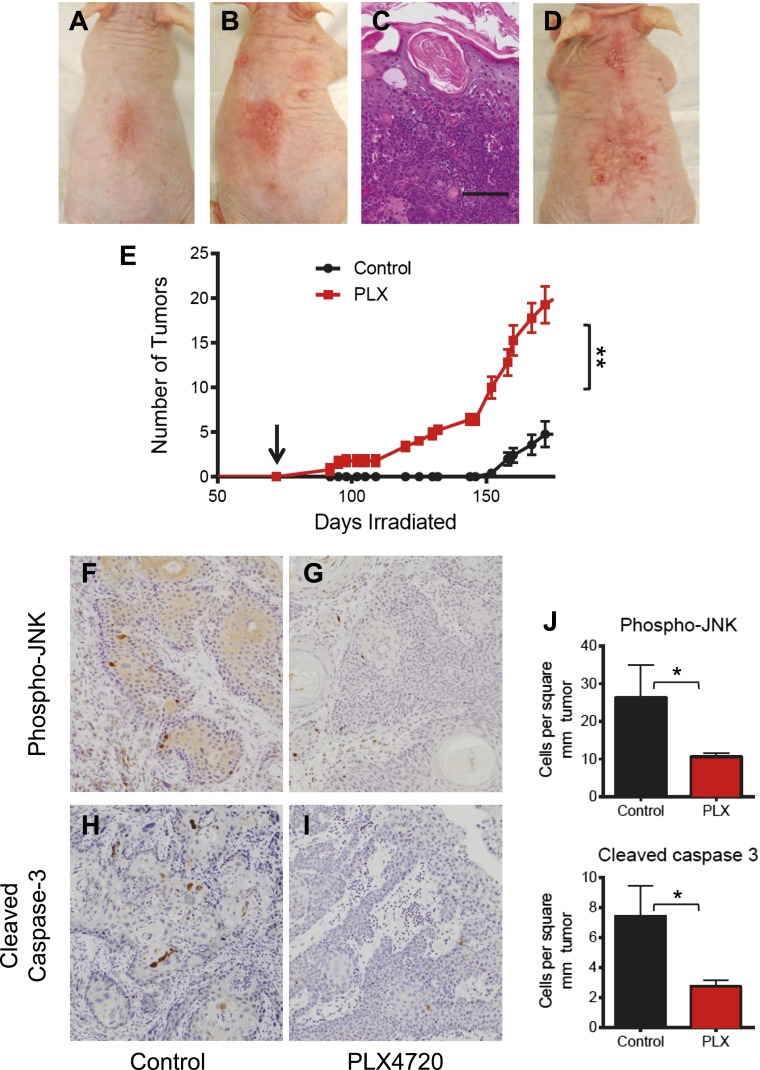
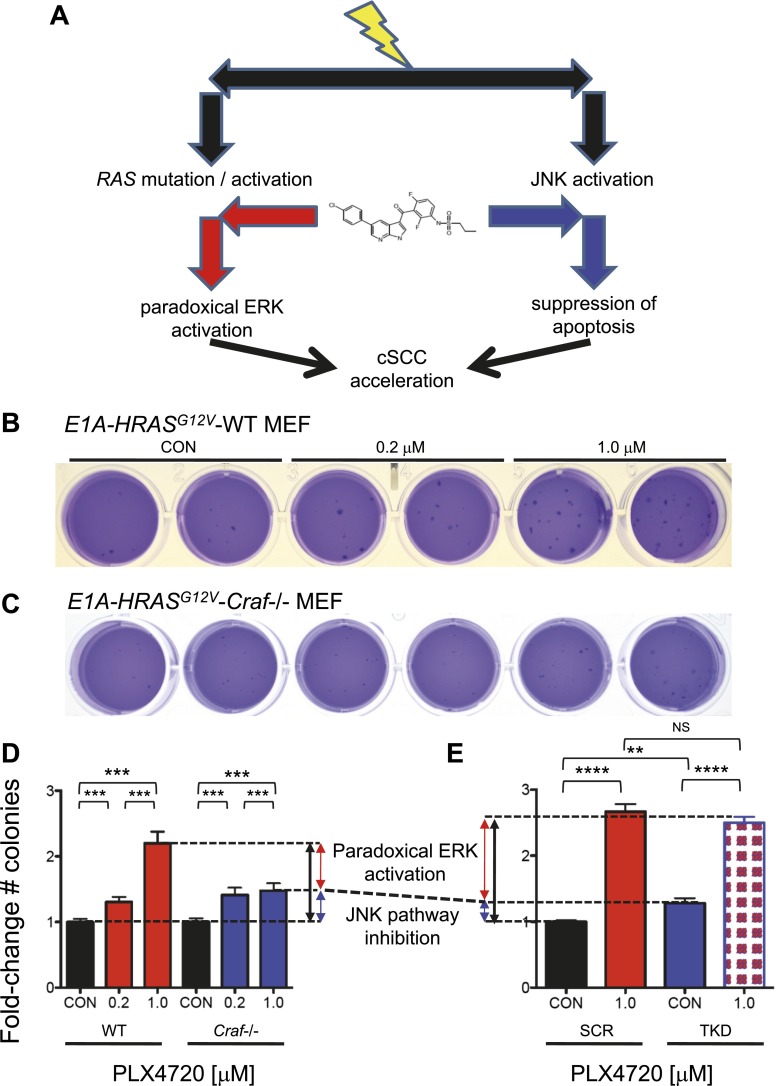
Vemurafenib and dabrafenib selectively inhibit the v-Raf murine sarcoma viral oncogene homolog B1 (BRAF) kinase, resulting in high response rates and increased survival in melanoma. Approximately 22% of individuals treated with vemurafenib develop cutaneous squamous cell carcinoma (cSCC) during therapy. The prevailing explanation for this is drug-induced paradoxical ERK activation, resulting in hyperproliferation. Here we show an unexpected and novel effect of vemurafenib/PLX4720 in suppressing apoptosis through the inhibition of multiple off-target kinases upstream of c-Jun N-terminal kinase (JNK), principally ZAK. JNK signaling is suppressed in multiple contexts, including in cSCC of vemurafenib-treated patients, as well as in mice. Expression of a mutant ZAK that cannot be inhibited reverses the suppression of JNK activation and apoptosis. Our results implicate suppression of JNK-dependent apoptosis as a significant, independent mechanism that cooperates with paradoxical ERK activation to induce cSCC, suggesting broad implications for understanding toxicities associated with BRAF inhibitors and for their use in combination therapies. DOI: http://dx.doi.org/10.7554/eLife.00969.001.

摘要

维莫非尼和达拉非尼可选择性抑制v-Raf鼠肉瘤病毒癌基因同源物B1(BRAF)激酶,从而在黑色素瘤治疗中实现高缓解率并延长生存期。接受维莫非尼治疗的患者中约有22%在治疗期间发生皮肤鳞状细胞癌(cSCC)。对此现象的普遍解释是药物诱导的反常ERK激活,导致细胞过度增殖。在此我们展示了维莫非尼/PLX4720通过抑制c-Jun氨基末端激酶(JNK)上游的多种脱靶激酶(主要是ZAK)来抑制细胞凋亡这一意外的新效应。JNK信号在多种情况下受到抑制,包括在接受维莫非尼治疗患者的cSCC中以及在小鼠体内。一种无法被抑制的突变型ZAK的表达可逆转对JNK激活和细胞凋亡的抑制。我们的结果表明,抑制JNK依赖性细胞凋亡是一种与反常ERK激活协同作用以诱导cSCC的重要独立机制,这对于理解与BRAF抑制剂相关的毒性及其在联合治疗中的应用具有广泛意义。DOI:http://dx.doi.org/10.7554/eLife.00969.001 。
https://cdn.ncbi.nlm.nih.gov/pmc/blobs/be6c/3814616/f5a52fb44eca/elife00969fs014.jpg
https://cdn.ncbi.nlm.nih.gov/pmc/blobs/be6c/3814616/4225e5358fa6/elife00969f001.jpg
https://cdn.ncbi.nlm.nih.gov/pmc/blobs/be6c/3814616/8f49e5871a60/elife00969fs001.jpg
https://cdn.ncbi.nlm.nih.gov/pmc/blobs/be6c/3814616/12faac35128e/elife00969fs002.jpg
https://cdn.ncbi.nlm.nih.gov/pmc/blobs/be6c/3814616/d36a12f2c440/elife00969fs003.jpg
https://cdn.ncbi.nlm.nih.gov/pmc/blobs/be6c/3814616/c14e0ffe9b99/elife00969f002.jpg
https://cdn.ncbi.nlm.nih.gov/pmc/blobs/be6c/3814616/57a8fa8c7f92/elife00969fs004.jpg
https://cdn.ncbi.nlm.nih.gov/pmc/blobs/be6c/3814616/a0ee1873c9b2/elife00969fs005.jpg
https://cdn.ncbi.nlm.nih.gov/pmc/blobs/be6c/3814616/37389ead4ddc/elife00969f003.jpg
https://cdn.ncbi.nlm.nih.gov/pmc/blobs/be6c/3814616/20a174ea2254/elife00969fs006.jpg
https://cdn.ncbi.nlm.nih.gov/pmc/blobs/be6c/3814616/c169a1eb3f58/elife00969fs007.jpg
https://cdn.ncbi.nlm.nih.gov/pmc/blobs/be6c/3814616/efd1ed667f86/elife00969fs008.jpg
https://cdn.ncbi.nlm.nih.gov/pmc/blobs/be6c/3814616/5f7973a45b3d/elife00969fs009.jpg
https://cdn.ncbi.nlm.nih.gov/pmc/blobs/be6c/3814616/d59bda90507e/elife00969f004.jpg
https://cdn.ncbi.nlm.nih.gov/pmc/blobs/be6c/3814616/0efc94322057/elife00969fs010.jpg
https://cdn.ncbi.nlm.nih.gov/pmc/blobs/be6c/3814616/8adfe3d9c151/elife00969f005.jpg
https://cdn.ncbi.nlm.nih.gov/pmc/blobs/be6c/3814616/ec02651990e2/elife00969fs011.jpg
https://cdn.ncbi.nlm.nih.gov/pmc/blobs/be6c/3814616/e4ceb61cd0c3/elife00969f006.jpg
https://cdn.ncbi.nlm.nih.gov/pmc/blobs/be6c/3814616/cd13f15e7678/elife00969fs012.jpg
https://cdn.ncbi.nlm.nih.gov/pmc/blobs/be6c/3814616/35f00a8728c9/elife00969fs013.jpg
https://cdn.ncbi.nlm.nih.gov/pmc/blobs/be6c/3814616/f5a52fb44eca/elife00969fs014.jpg
https://cdn.ncbi.nlm.nih.gov/pmc/blobs/be6c/3814616/4225e5358fa6/elife00969f001.jpg
https://cdn.ncbi.nlm.nih.gov/pmc/blobs/be6c/3814616/8f49e5871a60/elife00969fs001.jpg
https://cdn.ncbi.nlm.nih.gov/pmc/blobs/be6c/3814616/12faac35128e/elife00969fs002.jpg
https://cdn.ncbi.nlm.nih.gov/pmc/blobs/be6c/3814616/d36a12f2c440/elife00969fs003.jpg
https://cdn.ncbi.nlm.nih.gov/pmc/blobs/be6c/3814616/c14e0ffe9b99/elife00969f002.jpg
https://cdn.ncbi.nlm.nih.gov/pmc/blobs/be6c/3814616/57a8fa8c7f92/elife00969fs004.jpg
https://cdn.ncbi.nlm.nih.gov/pmc/blobs/be6c/3814616/a0ee1873c9b2/elife00969fs005.jpg
https://cdn.ncbi.nlm.nih.gov/pmc/blobs/be6c/3814616/37389ead4ddc/elife00969f003.jpg
https://cdn.ncbi.nlm.nih.gov/pmc/blobs/be6c/3814616/20a174ea2254/elife00969fs006.jpg
https://cdn.ncbi.nlm.nih.gov/pmc/blobs/be6c/3814616/c169a1eb3f58/elife00969fs007.jpg
https://cdn.ncbi.nlm.nih.gov/pmc/blobs/be6c/3814616/efd1ed667f86/elife00969fs008.jpg
https://cdn.ncbi.nlm.nih.gov/pmc/blobs/be6c/3814616/5f7973a45b3d/elife00969fs009.jpg
https://cdn.ncbi.nlm.nih.gov/pmc/blobs/be6c/3814616/d59bda90507e/elife00969f004.jpg
https://cdn.ncbi.nlm.nih.gov/pmc/blobs/be6c/3814616/0efc94322057/elife00969fs010.jpg
https://cdn.ncbi.nlm.nih.gov/pmc/blobs/be6c/3814616/8adfe3d9c151/elife00969f005.jpg
https://cdn.ncbi.nlm.nih.gov/pmc/blobs/be6c/3814616/ec02651990e2/elife00969fs011.jpg
https://cdn.ncbi.nlm.nih.gov/pmc/blobs/be6c/3814616/e4ceb61cd0c3/elife00969f006.jpg
https://cdn.ncbi.nlm.nih.gov/pmc/blobs/be6c/3814616/cd13f15e7678/elife00969fs012.jpg
https://cdn.ncbi.nlm.nih.gov/pmc/blobs/be6c/3814616/35f00a8728c9/elife00969fs013.jpg
https://cdn.ncbi.nlm.nih.gov/pmc/blobs/be6c/3814616/f5a52fb44eca/elife00969fs014.jpg

相似文献

1
BRAF inhibitors suppress apoptosis through off-target inhibition of JNK signaling.BRAF抑制剂通过对JNK信号通路的非靶向抑制作用来抑制细胞凋亡。
Elife. 2013 Nov 5;2:e00969. doi: 10.7554/eLife.00969.
2
Inhibition of mutant BRAF splice variant signaling by next-generation, selective RAF inhibitors.新一代选择性RAF抑制剂对突变BRAF剪接变体信号传导的抑制作用。
Pigment Cell Melanoma Res. 2014 May;27(3):479-84. doi: 10.1111/pcmr.12218. Epub 2014 Feb 10.
3
Critical role of reactive oxygen species (ROS) for synergistic enhancement of apoptosis by vemurafenib and the potassium channel inhibitor TRAM-34 in melanoma cells.活性氧(ROS)在维莫非尼和钾通道抑制剂TRAM-34协同增强黑色素瘤细胞凋亡中的关键作用。
Cell Death Dis. 2017 Feb 2;8(2):e2594. doi: 10.1038/cddis.2017.6.
4
Paradoxical oncogenesis: are all BRAF inhibitors equal?矛盾的致癌作用:所有 BRAF 抑制剂都一样吗?
Pigment Cell Melanoma Res. 2013 Sep;26(5):611-5. doi: 10.1111/pcmr.12132. Epub 2013 Jul 19.
5
Combinatorial treatments that overcome PDGFRβ-driven resistance of melanoma cells to V600EB-RAF inhibition.联合治疗方案可克服黑色素瘤细胞对 V600EB-RAF 抑制的 PDGFRβ 驱动耐药性。
Cancer Res. 2011 Aug 1;71(15):5067-74. doi: 10.1158/0008-5472.CAN-11-0140.
6
BRAF Inhibitors and Radiation Do Not Act Synergistically to Inhibit WT and V600E BRAF Human Melanoma.BRAF抑制剂与放疗对野生型及V600E BRAF突变型人类黑色素瘤并无协同抑制作用。
Anticancer Res. 2018 Mar;38(3):1335-1341. doi: 10.21873/anticanres.12356.
7
A new water soluble MAPK activator exerts antitumor activity in melanoma cells resistant to the BRAF inhibitor vemurafenib.一种新型水溶性丝裂原活化蛋白激酶(MAPK)激活剂在对BRAF抑制剂威罗菲尼耐药的黑色素瘤细胞中发挥抗肿瘤活性。
Biochem Pharmacol. 2015 May 1;95(1):16-27. doi: 10.1016/j.bcp.2015.03.004. Epub 2015 Mar 17.
8
The RAF inhibitor PLX4032 inhibits ERK signaling and tumor cell proliferation in a V600E BRAF-selective manner.RAF 抑制剂 PLX4032 以 V600E BRAF 选择性方式抑制 ERK 信号和肿瘤细胞增殖。
Proc Natl Acad Sci U S A. 2010 Aug 17;107(33):14903-8. doi: 10.1073/pnas.1008990107. Epub 2010 Jul 28.
9
Combinations of BRAF, MEK, and PI3K/mTOR inhibitors overcome acquired resistance to the BRAF inhibitor GSK2118436 dabrafenib, mediated by NRAS or MEK mutations.BRAF、MEK 和 PI3K/mTOR 抑制剂的联合应用克服了由 NRAS 或 MEK 突变介导的 BRAF 抑制剂 GSK2118436(dabrafenib)获得性耐药。
Mol Cancer Ther. 2012 Apr;11(4):909-20. doi: 10.1158/1535-7163.MCT-11-0989. Epub 2012 Mar 2.
10
BRAF inhibition is associated with enhanced melanoma antigen expression and a more favorable tumor microenvironment in patients with metastatic melanoma.BRAF 抑制与转移性黑色素瘤患者中黑色素瘤相关抗原表达增强和更有利的肿瘤微环境相关。
Clin Cancer Res. 2013 Mar 1;19(5):1225-31. doi: 10.1158/1078-0432.CCR-12-1630. Epub 2013 Jan 10.

引用本文的文献

1
Increased Mitochondrial Superoxide Level Is Partially Associated With Vemurafenib-Induced Renal Tubular Toxicity.线粒体超氧化物水平升高与维莫非尼诱导的肾小管毒性部分相关。
Basic Clin Pharmacol Toxicol. 2025 Apr;136(4):e70015. doi: 10.1111/bcpt.70015.
2
The paradoxical activity of BRAF inhibitors: potential use in wound healing.BRAF抑制剂的矛盾活性:在伤口愈合中的潜在用途。
Arch Dermatol Res. 2025 Jan 28;317(1):311. doi: 10.1007/s00403-024-03785-5.
3
BRAF Modulates the Interplay Between Cell-Cell and Cell-Extracellular Matrix Adhesions in PECAM-1-Mediated Mechanotransduction.

本文引用的文献

1
Paradoxical oncogenesis: are all BRAF inhibitors equal?矛盾的致癌作用:所有 BRAF 抑制剂都一样吗?
Pigment Cell Melanoma Res. 2013 Sep;26(5):611-5. doi: 10.1111/pcmr.12132. Epub 2013 Jul 19.
2
Shiga toxin 2-induced intestinal pathology in infant rabbits is A-subunit dependent and responsive to the tyrosine kinase and potential ZAK inhibitor imatinib.志贺毒素 2 诱导的幼兔肠病理学与 A 亚单位有关,对酪氨酸激酶和潜在的 ZAK 抑制剂伊马替尼有反应。
Front Cell Infect Microbiol. 2012 Nov 8;2:135. doi: 10.3389/fcimb.2012.00135. eCollection 2012.
3
Small molecule kinase inhibitors block the ZAK-dependent inflammatory effects of doxorubicin.
BRAF 调节 PECAM-1 介导的机械转导中细胞-细胞和细胞-细胞外基质黏附之间的相互作用。
Int J Mol Sci. 2024 Oct 18;25(20):11234. doi: 10.3390/ijms252011234.
4
Cell-specific models reveal conformation-specific RAF inhibitor combinations that synergistically inhibit ERK signaling in pancreatic cancer cells.细胞特异性模型揭示了构象特异性 RAF 抑制剂组合,这些组合协同抑制胰腺癌细胞中的 ERK 信号传导。
Cell Rep. 2024 Sep 24;43(9):114710. doi: 10.1016/j.celrep.2024.114710. Epub 2024 Sep 5.
5
The ribotoxic stress response drives UV-mediated cell death.核糖体毒性应激反应会导致紫外线介导的细胞死亡。
Cell. 2024 Jul 11;187(14):3652-3670.e40. doi: 10.1016/j.cell.2024.05.018. Epub 2024 Jun 5.
6
First-in-class MKK4 inhibitors enhance liver regeneration and prevent liver failure.首个 MKK4 抑制剂增强肝脏再生并预防肝功能衰竭。
Cell. 2024 Mar 28;187(7):1666-1684.e26. doi: 10.1016/j.cell.2024.02.023. Epub 2024 Mar 14.
7
Targeting PEAK1 sensitizes anaplastic thyroid carcinoma cells harboring BRAF to Vemurafenib by Bim upregulation.靶向 PEAK1 通过上调 Bim 使携带 BRAF 的甲状腺未分化癌对威罗非尼敏感。
Histol Histopathol. 2024 Sep;39(9):1159-1165. doi: 10.14670/HH-18-705. Epub 2024 Jan 8.
8
Vemurafenib improves muscle histopathology in a mouse model of LAMA2-related congenital muscular dystrophy.维莫非尼可改善 LAMA2 相关先天性肌营养不良症小鼠模型的肌肉组织病理学。
Dis Model Mech. 2023 Jun 1;16(6). doi: 10.1242/dmm.049916. Epub 2023 May 10.
9
ROS-mediated SRMS activation confers platinum resistance in ovarian cancer.ROS 介导线粒体分裂激活赋予卵巢癌细胞铂类耐药性。
Oncogene. 2023 May;42(20):1672-1684. doi: 10.1038/s41388-023-02679-6. Epub 2023 Apr 5.
10
Oncogenic induces microglial proliferation through extracellular signal-regulated kinase and neuronal death through c-Jun N-terminal kinase.致癌基因通过细胞外信号调节激酶诱导小胶质细胞增殖,并通过c-Jun氨基末端激酶诱导神经元死亡。
Neural Regen Res. 2023 Jul;18(7):1613-1622. doi: 10.4103/1673-5374.361516.
小分子激酶抑制剂可阻断多柔比星依赖 ZAK 的炎症效应。
Cancer Biol Ther. 2013 Jan;14(1):56-63. doi: 10.4161/cbt.22628. Epub 2012 Oct 31.
4
Dabrafenib in patients with Val600Glu or Val600Lys BRAF-mutant melanoma metastatic to the brain (BREAK-MB): a multicentre, open-label, phase 2 trial.达拉非尼治疗 Val600Glu 或 Val600Lys BRAF 突变型黑色素瘤脑转移患者(BREAK-MB):一项多中心、开放标签、二期临床试验。
Lancet Oncol. 2012 Nov;13(11):1087-95. doi: 10.1016/S1470-2045(12)70431-X. Epub 2012 Oct 8.
5
Combined BRAF and MEK inhibition in melanoma with BRAF V600 mutations.BRAF V600 突变型黑色素瘤的联合 BRAF 和 MEK 抑制治疗。
N Engl J Med. 2012 Nov 1;367(18):1694-703. doi: 10.1056/NEJMoa1210093. Epub 2012 Sep 29.
6
JNK and PTEN cooperatively control the development of invasive adenocarcinoma of the prostate.JNK 和 PTEN 协同控制前列腺浸润性腺癌的发展。
Proc Natl Acad Sci U S A. 2012 Jul 24;109(30):12046-51. doi: 10.1073/pnas.1209660109. Epub 2012 Jul 2.
7
Dabrafenib in BRAF-mutated metastatic melanoma: a multicentre, open-label, phase 3 randomised controlled trial.达拉非尼治疗 BRAF 突变型转移性黑色素瘤:一项多中心、开放标签、III 期随机对照临床试验。
Lancet. 2012 Jul 28;380(9839):358-65. doi: 10.1016/S0140-6736(12)60868-X. Epub 2012 Jun 25.
8
Dabrafenib in patients with melanoma, untreated brain metastases, and other solid tumours: a phase 1 dose-escalation trial.达拉非尼治疗黑色素瘤、未经治疗的脑转移瘤和其他实体瘤患者的 1 期剂量递增试验。
Lancet. 2012 May 19;379(9829):1893-901. doi: 10.1016/S0140-6736(12)60398-5.
9
Raf inhibitors target ras spatiotemporal dynamics.Raf 抑制剂靶向 ras 的时空动态。
Curr Biol. 2012 Jun 5;22(11):945-55. doi: 10.1016/j.cub.2012.03.067. Epub 2012 May 3.
10
Role of a DNA damage checkpoint pathway in ionizing radiation-induced glioblastoma cell migration and invasion.DNA 损伤检查点通路在电离辐射诱导的脑胶质母细胞瘤细胞迁移和侵袭中的作用。
Cell Mol Neurobiol. 2012 Oct;32(7):1199-208. doi: 10.1007/s10571-012-9846-y. Epub 2012 May 3.