Li Kening, Li Zihui, Zhao Ning, Xu Yaoqun, Liu Yongjing, Zhou Yuanshuai, Shang Desi, Qiu Fujun, Zhang Rui, Chang Zhiqiang, Xu Yan
College of Bioinformatics Science and Technology, Harbin Medical University, Harbin 150081, China.
BMC Syst Biol. 2013 Nov 7;7:122. doi: 10.1186/1752-0509-7-122.
Lung cancer, especially non-small cell lung cancer, is a leading cause of malignant tumor death worldwide. Understanding the mechanisms employed by the main regulators, such as microRNAs (miRNAs) and transcription factors (TFs), still remains elusive. The patterns of their cooperation and biological functions in the synergistic regulatory network have rarely been studied.
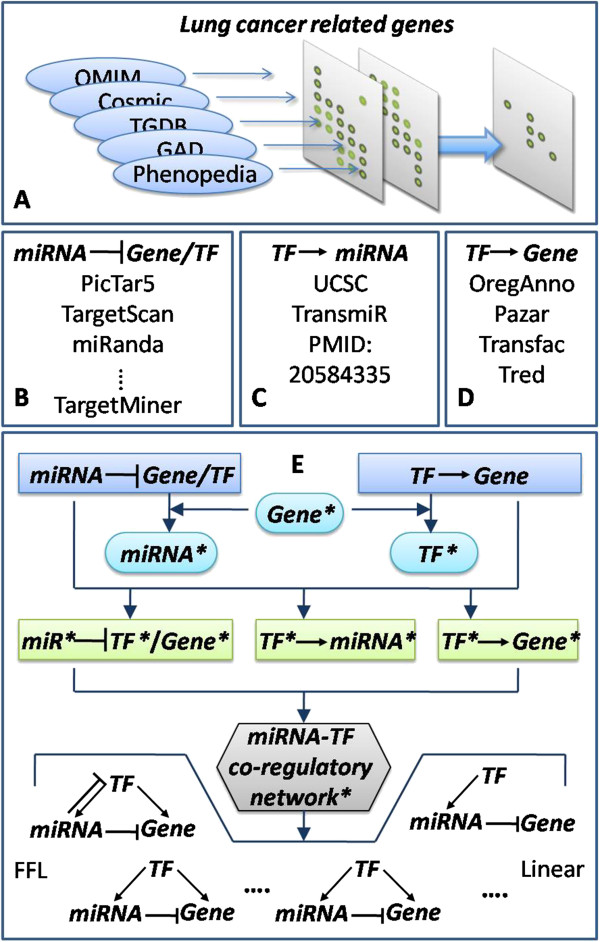
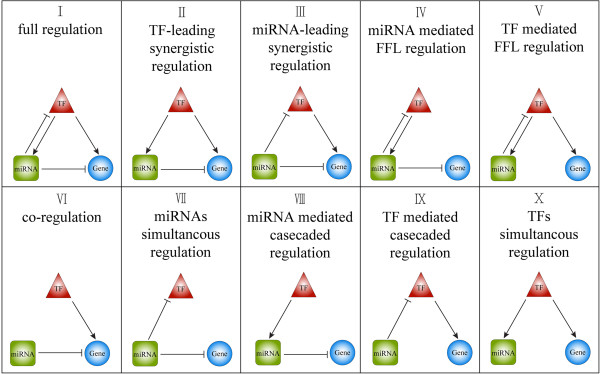
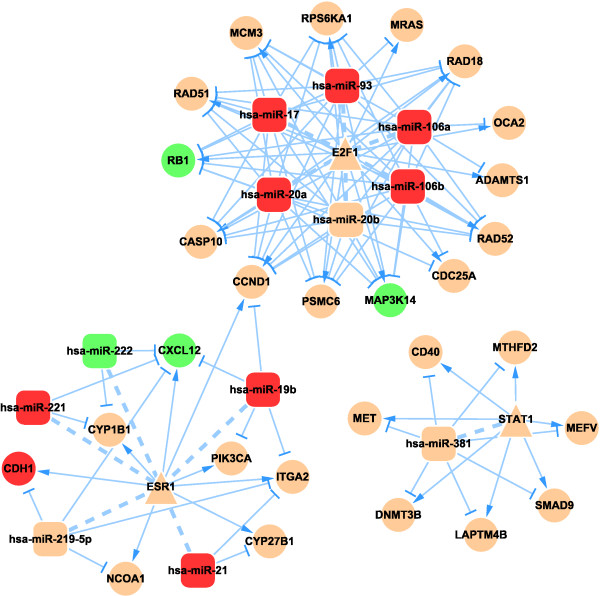
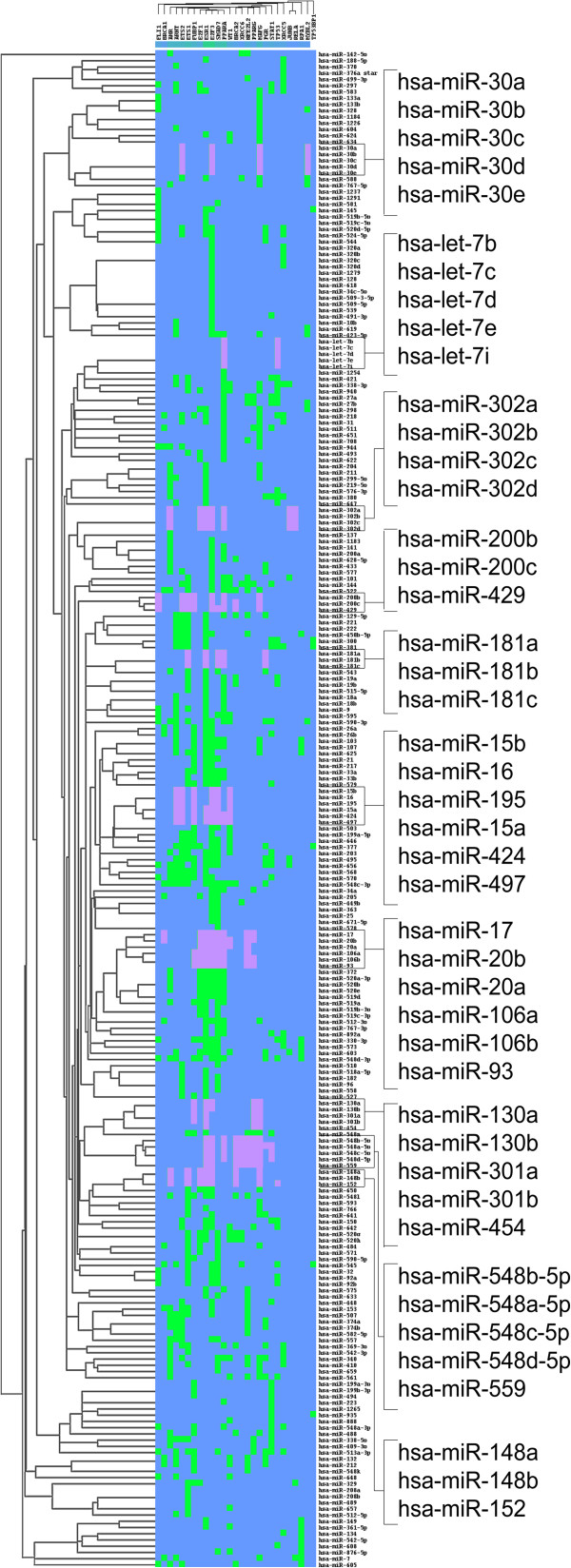
Here, we describe the first miRNA-TF synergistic regulation network in human lung cancer. We identified important regulators (MYC, NFKB1, miR-590, and miR-570) and significant miRNA-TF synergistic regulatory motifs by random simulations. The two most significant motifs were the co-regulation of miRNAs and TFs, and TF-mediated cascade regulation. We also developed an algorithm to uncover the biological functions of the human lung cancer miRNA-TF synergistic regulatory network (regulation of apoptosis, cellular protein metabolic process, and cell cycle), and the specific functions of each miRNA-TF synergistic subnetwork. We found that the miR-17 family exerted important effects in the regulation of non-small cell lung cancer, such as in proliferation and cell cycle regulation by targeting the retinoblastoma protein (RB1) and forming a feed forward loop with the E2F1 TF. We proposed a model for the miR-17 family, E2F1, and RB1 to demonstrate their potential roles in the occurrence and development of non-small cell lung cancer.
This work will provide a framework for constructing miRNA-TF synergistic regulatory networks, function analysis in diseases, and identification of the main regulators and regulatory motifs, which will be useful for understanding the putative regulatory motifs involving miRNAs and TFs, and for predicting new targets for cancer studies.
肺癌,尤其是非小细胞肺癌,是全球恶性肿瘤死亡的主要原因。目前仍不清楚主要调控因子,如微小RNA(miRNA)和转录因子(TF)所采用的机制。它们在协同调控网络中的合作模式和生物学功能鲜有研究。
在此,我们描述了人类肺癌中首个miRNA-TF协同调控网络。我们通过随机模拟确定了重要调控因子(MYC、NFKB1、miR-590和miR-570)以及显著的miRNA-TF协同调控基序。两个最显著的基序是miRNA和TF的共同调控以及TF介导的级联调控。我们还开发了一种算法来揭示人类肺癌miRNA-TF协同调控网络的生物学功能(细胞凋亡调控、细胞蛋白质代谢过程和细胞周期调控)以及每个miRNA-TF协同子网的特定功能。我们发现miR-17家族在非小细胞肺癌的调控中发挥重要作用,例如通过靶向视网膜母细胞瘤蛋白(RB1)并与E2F1转录因子形成前馈环来调控增殖和细胞周期。我们提出了一个关于miR-17家族、E2F1和RB1的模型,以展示它们在非小细胞肺癌发生和发展中的潜在作用。
这项工作将为构建miRNA-TF协同调控网络、疾病功能分析以及识别主要调控因子和调控基序提供一个框架,这将有助于理解涉及miRNA和TF的假定调控基序,并为癌症研究预测新的靶点。