Department of Neurology, The Second Affiliated Hospital, Harbin Medical University, Harbin, 150081, Heilongjiang, People's Republic of China.
Department of Neurology, Peking Union Medical College Hospital, Chinese Academy of Medical Sciences, Beijing, 100730, People's Republic of China.
Sci Rep. 2021 Jan 28;11(1):2416. doi: 10.1038/s41598-021-81962-6.
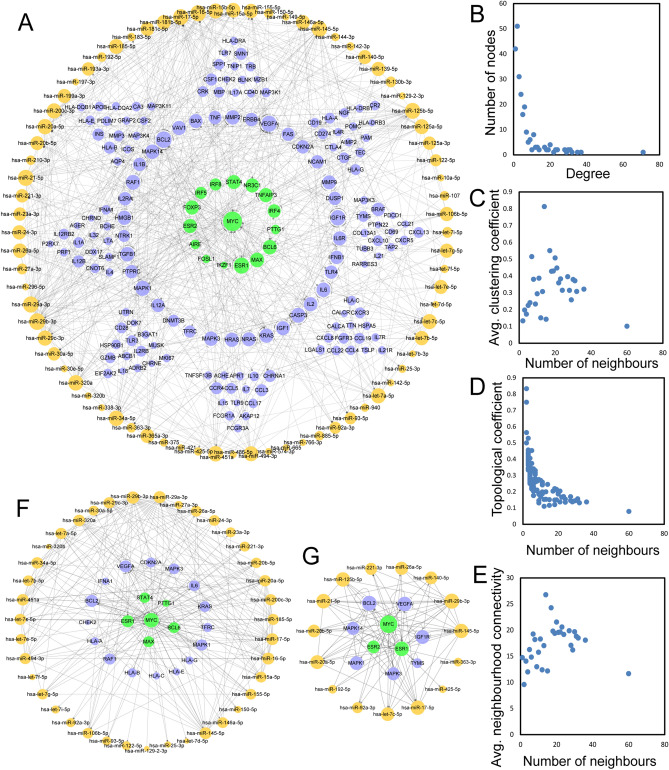
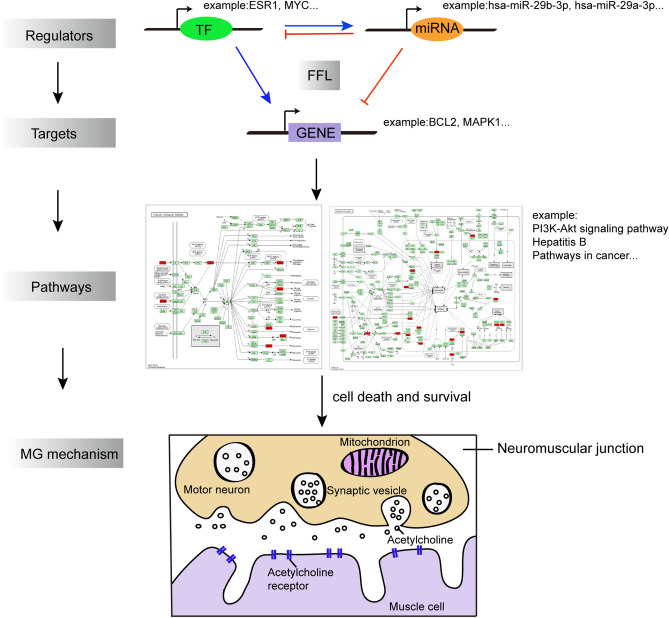
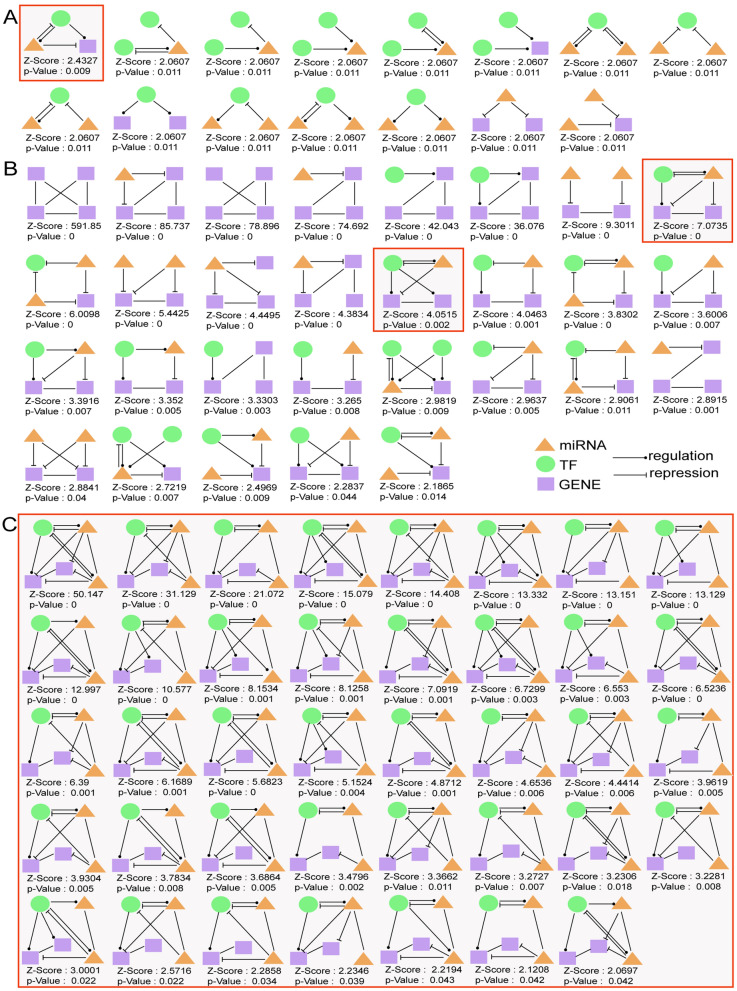
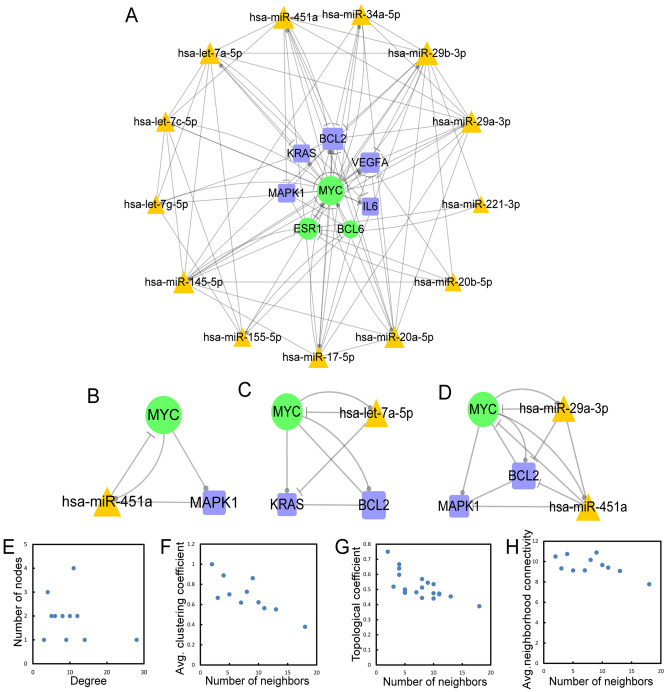
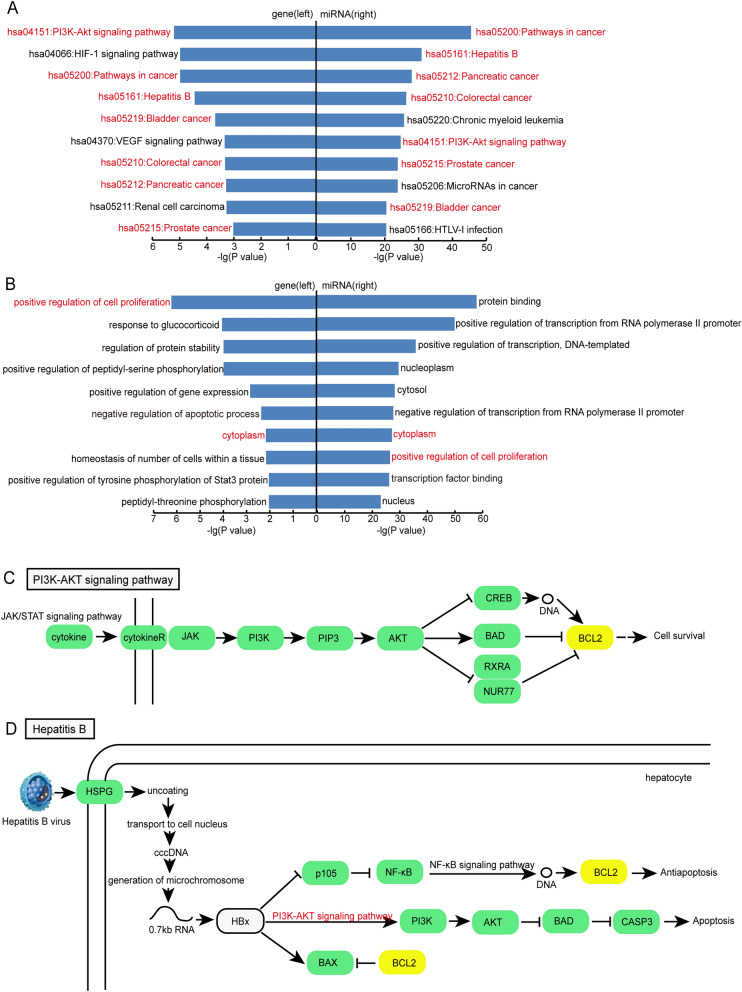
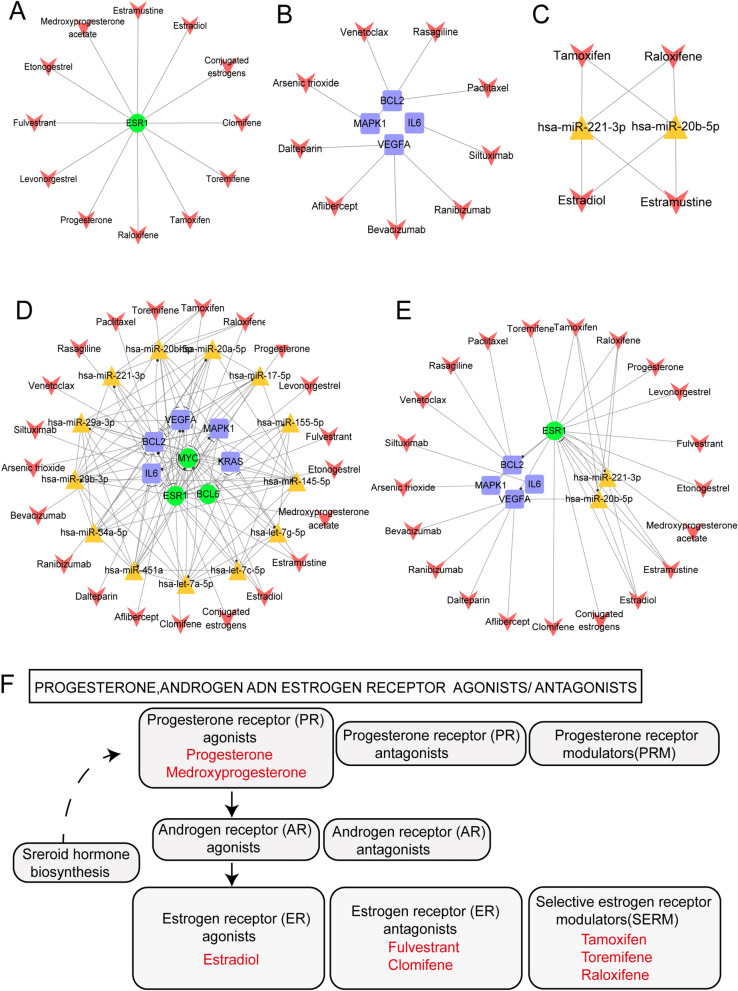
Myasthenia gravis (MG) is an autoimmune disease and the most common type of neuromuscular disease. Genes and miRNAs associated with MG have been widely studied; however, the molecular mechanisms of transcription factors (TFs) and the relationship among them remain unclear. A TF-miRNA-gene network (TMGN) of MG was constructed by extracting six regulatory pairs (TF-miRNA, miRNA-gene, TF-gene, miRNA-TF, gene-gene and miRNA-miRNA). Then, 3/4/5-node regulatory motifs were detected in the TMGN. Then, the motifs with the highest Z-score, occurring as 3/4/5-node composite feed-forward loops (FFLs), were selected as statistically significant motifs. By merging these motifs together, we constructed a 3/4/5-node composite FFL motif-specific subnetwork (CFMSN). Then, pathway and GO enrichment analyses were performed to further elucidate the mechanism of MG. In addition, the genes, TFs and miRNAs in the CFMSN were also utilized to identify potential drugs. Five related genes, 3 TFs and 13 miRNAs, were extracted from the CFMSN. As the most important TF in the CFMSN, MYC was inferred to play a critical role in MG. Pathway enrichment analysis showed that the genes and miRNAs in the CFMSN were mainly enriched in pathways related to cancer and infections. Furthermore, 21 drugs were identified through the CFMSN, of which estradiol, estramustine, raloxifene and tamoxifen have the potential to be novel drugs to treat MG. The present study provides MG-related TFs by constructing the CFMSN for further experimental studies and provides a novel perspective for new biomarkers and potential drugs for MG.
重症肌无力(MG)是一种自身免疫性疾病,也是最常见的神经肌肉疾病。与 MG 相关的基因和 miRNA 已得到广泛研究;然而,转录因子(TFs)的分子机制及其相互关系仍不清楚。通过提取六个调控对(TF-miRNA、miRNA-gene、TF-gene、miRNA-TF、gene-gene 和 miRNA-miRNA),构建了 MG 的 TF-miRNA-基因网络(TMGN)。然后,在 TMGN 中检测到 3/4/5-节点调控模块。然后,选择具有最高 Z 分数的模块,以 3/4/5-节点复合前馈环(FFL)的形式出现,作为具有统计学意义的模块。通过将这些模块合并在一起,我们构建了一个 3/4/5-节点复合 FFL 模块特异性子网(CFMSN)。然后,进行通路和 GO 富集分析以进一步阐明 MG 的机制。此外,还利用 CFMSN 中的基因、TF 和 miRNA 来鉴定潜在的药物。从 CFMSN 中提取了 5 个相关基因、3 个 TF 和 13 个 miRNA。作为 CFMSN 中最重要的 TF,MYC 被推断在 MG 中发挥关键作用。通路富集分析表明,CFMSN 中的基因和 miRNA 主要富集在与癌症和感染相关的通路中。此外,通过 CFMSN 鉴定出 21 种药物,其中雌二醇、雌莫司汀、雷洛昔芬和他莫昔芬有可能成为治疗 MG 的新型药物。本研究通过构建 CFMSN 为进一步的实验研究提供了与 MG 相关的 TFs,并为 MG 的新生物标志物和潜在药物提供了新的视角。