Pawliczek Christina M, Derntl Birgit, Kellermann Thilo, Gur Ruben C, Schneider Frank, Habel Ute
Department of Psychiatry, Psychotherapy and Psychosomatics, Medical School, RWTH Aachen University, Aachen, Germany ; JARA - Translational Brain Medicine, Aachen, Germany.
PLoS One. 2013 Oct 18;8(10):e78503. doi: 10.1371/journal.pone.0078503. eCollection 2013.
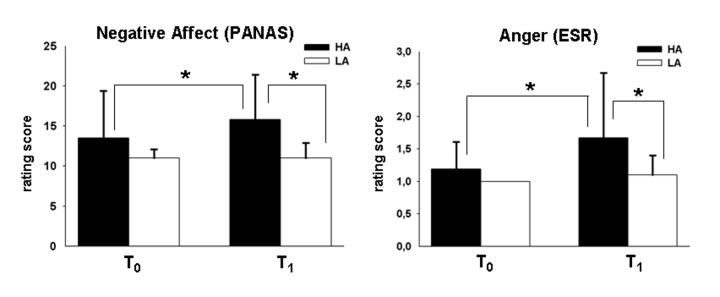
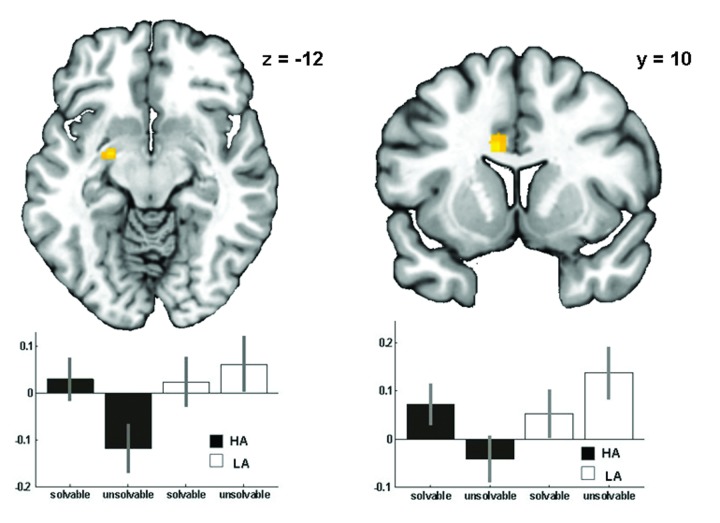
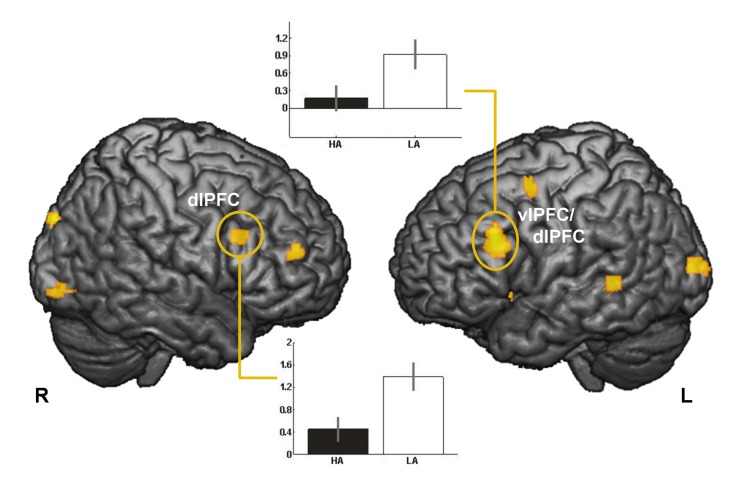
Antisocial behavior and aggression are prominent symptoms in several psychiatric disorders including antisocial personality disorder. An established precursor to aggression is a frustrating event, which can elicit anger or exasperation, thereby prompting aggressive responses. While some studies have investigated the neural correlates of frustration and aggression, examination of their relation to trait aggression in healthy populations are rare. Based on a screening of 550 males, we formed two extreme groups, one including individuals reporting high (n=21) and one reporting low (n=18) trait aggression. Using functional magnetic resonance imaging (fMRI) at 3T, all participants were put through a frustration task comprising unsolvable anagrams of German nouns. Despite similar behavioral performance, males with high trait aggression reported higher ratings of negative affect and anger after the frustration task. Moreover, they showed relatively decreased activation in the frontal brain regions and the dorsal anterior cingulate cortex (dACC) as well as relatively less amygdala activation in response to frustration. Our findings indicate distinct frontal and limbic processing mechanisms following frustration modulated by trait aggression. In response to a frustrating event, HA individuals show some of the personality characteristics and neural processing patterns observed in abnormally aggressive populations. Highlighting the impact of aggressive traits on the behavioral and neural responses to frustration in non-psychiatric extreme groups can facilitate further characterization of neural dysfunctions underlying psychiatric disorders that involve abnormal frustration processing and aggression.
反社会行为和攻击行为是包括反社会人格障碍在内的几种精神疾病的突出症状。攻击行为的一个既定先兆是令人沮丧的事件,它会引发愤怒或恼怒,从而促使产生攻击反应。虽然一些研究已经调查了挫折感和攻击行为的神经关联,但在健康人群中研究它们与特质攻击行为之间关系的却很少。基于对550名男性的筛查,我们形成了两个极端组,一组包括报告特质攻击行为高的个体(n = 21),另一组包括报告特质攻击行为低的个体(n = 18)。使用3T功能磁共振成像(fMRI),让所有参与者完成一项挫折任务,该任务包括无法解决的德语名词变位词。尽管行为表现相似,但特质攻击行为高的男性在挫折任务后报告的负面情绪和愤怒评分更高。此外,他们在额叶脑区和背侧前扣带回皮质(dACC)的激活相对减少,并且对挫折的杏仁核激活也相对较少。我们的研究结果表明,特质攻击行为调节的挫折后存在不同的额叶和边缘系统加工机制。在面对令人沮丧的事件时,高特质攻击行为个体表现出一些在异常攻击人群中观察到的人格特征和神经加工模式。强调攻击特质对非精神疾病极端组中挫折的行为和神经反应的影响,有助于进一步刻画涉及异常挫折加工和攻击行为的精神疾病潜在的神经功能障碍。