Povirk Lawrence F
Department of Pharmacology and Toxicology, and Massey Cancer Center, Virginia Commonwealth University, 401 College St. Richmond, VA 23298, USA, 804-828-9640.
ISRN Mol Biol. 2012;2012. doi: 10.5402/2012/345805.
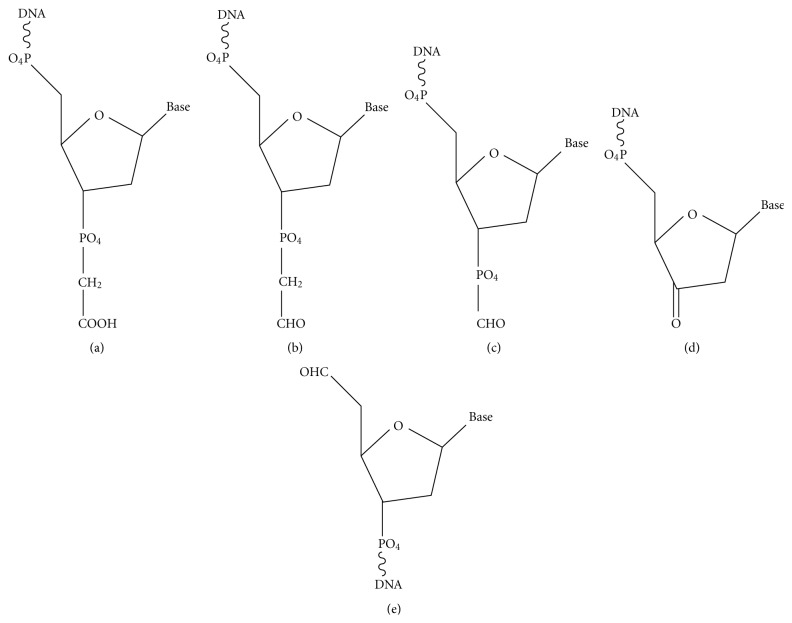
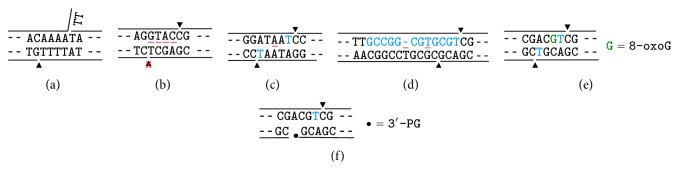
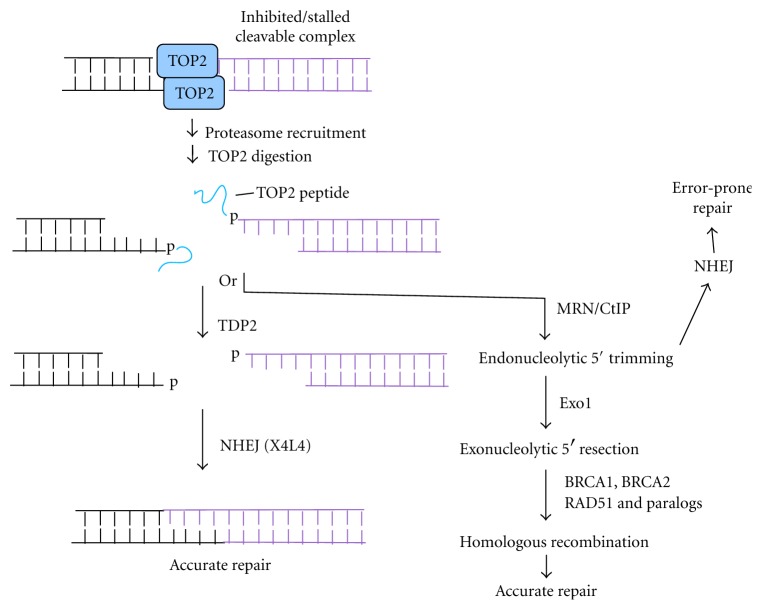
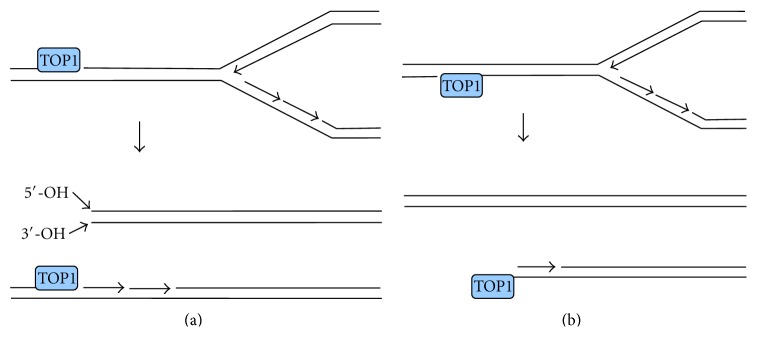
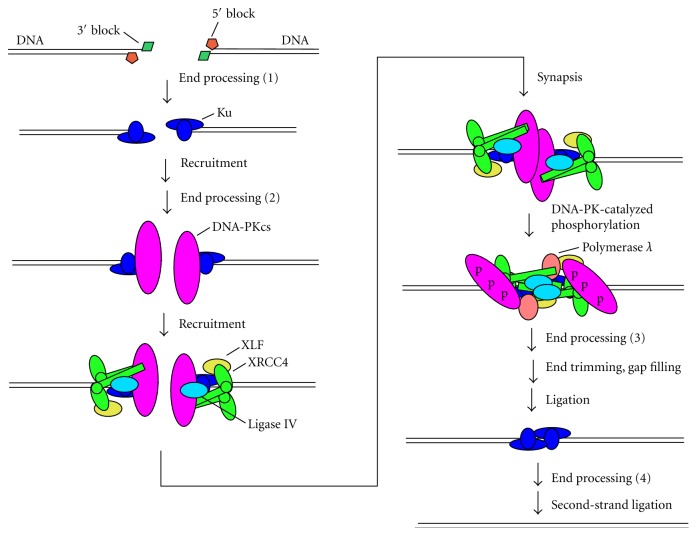
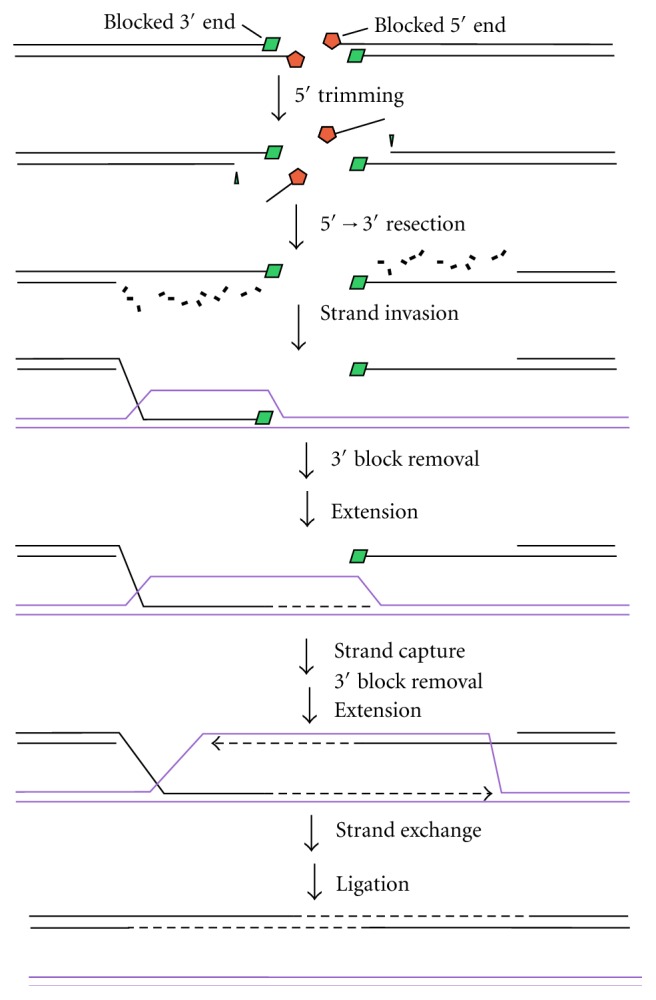
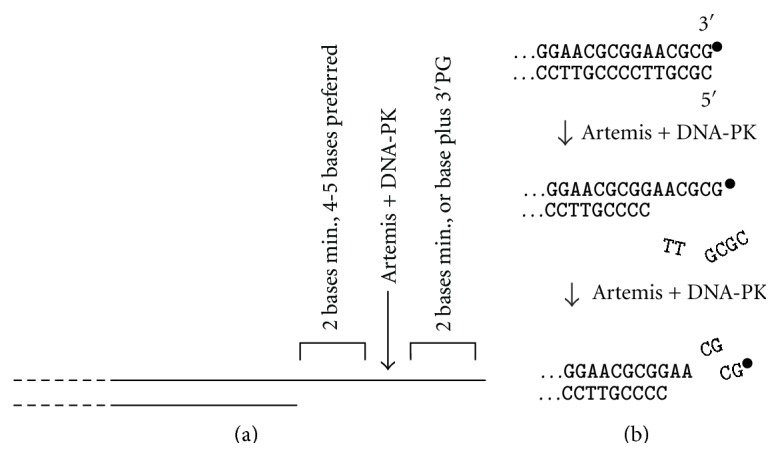
Most DNA double-strand breaks (DSBs)formed in a natural environment have chemical modifications at or near the ends that preclude direct religation and require removal or other processing so that rejoining can proceed. Free radical-mediated DSBs typically bear unligatable 3'-phosphate or 3'-phosphoglycolate termini and often have oxidized bases and/or abasic sites near the break. Topoisomerase-mediated DSBs are blocked by covalently bound peptide fragments of the topoisomerase. Enzymes capable of resolving damaged ends include polynucleotide kinase/phosphatase, which restores missing 5'-phosphates and removes 3'-phosphates; tyrosyl-DNA phosphodiesterases I and II (TDP1 and TDP2), which remove peptide fragments of topoisomerases I and II, respectively, and the Artemis and Metnase endonucleases, which can trim damaged overhangs of diverse structure. TDP1 as well as APE1 can remove 3'-phosphoglycolates and other 3' blocks, while CtIP appears to provide an alternative pathway for topoisomerase II fragment removal. Ku, a core DSB joining protein, can cleave abasic sites near DNA ends. The downstream processes of patching and ligation are tolerant of residual damage, and can sometimes proceed without complete damage removal. Despite these redundant pathways for resolution, damaged ends appear to be a significant barrier to rejoining, and their resolution may be a rate-limiting step in repair of some DSBs..
在自然环境中形成的大多数DNA双链断裂(DSB)在末端或其附近具有化学修饰,这会阻止直接重新连接,需要去除或进行其他处理才能继续重新连接。自由基介导的DSB通常带有不可连接的3'-磷酸或3'-磷酸乙醇酸末端,并且在断裂附近常常有氧化碱基和/或无碱基位点。拓扑异构酶介导的DSB被拓扑异构酶的共价结合肽片段所阻断。能够处理受损末端的酶包括多核苷酸激酶/磷酸酶,其可恢复缺失的5'-磷酸并去除3'-磷酸;酪氨酰-DNA磷酸二酯酶I和II(TDP1和TDP2),它们分别去除拓扑异构酶I和II的肽片段,以及Artemis和Metnase核酸内切酶,它们可以修剪各种结构的受损突出端。TDP1以及APE1可以去除3'-磷酸乙醇酸和其他3'阻断基团,而CtIP似乎为去除拓扑异构酶II片段提供了一条替代途径。Ku是一种核心的DSB连接蛋白,可以切割DNA末端附近的无碱基位点。修补和连接的下游过程能够耐受残留损伤,有时在未完全去除损伤的情况下也能进行。尽管有这些多余的修复途径,但受损末端似乎是重新连接的一个重大障碍,其修复可能是某些DSB修复中的限速步骤。