Facultad de Ciencias de la Salud, Universidad Anáhuac México Norte, Edo. de México, CP 52786, Mexico ; Departamento de Ciencias de la Salud, División de Ciencias Biológicas y de la Salud, Universidad Autónoma Metropolitana Iztapalapa, DF, CP 09340, Mexico ; Centro de Investigación del Proyecto CAMINA A.C., DF, CP 14050, Mexico ; Posgrado en Biología Experimental, Universidad Autónoma Metropolitana Iztapalapa, DF, CP 09340, Mexico.
Biomed Res Int. 2013;2013:827517. doi: 10.1155/2013/827517. Epub 2013 Oct 23.
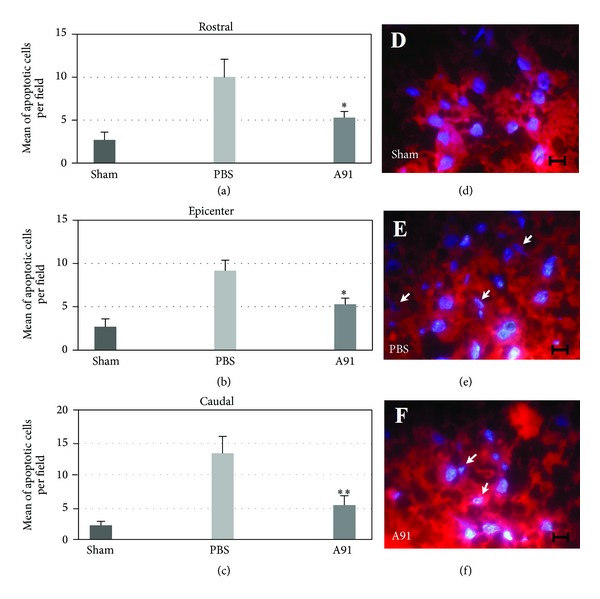
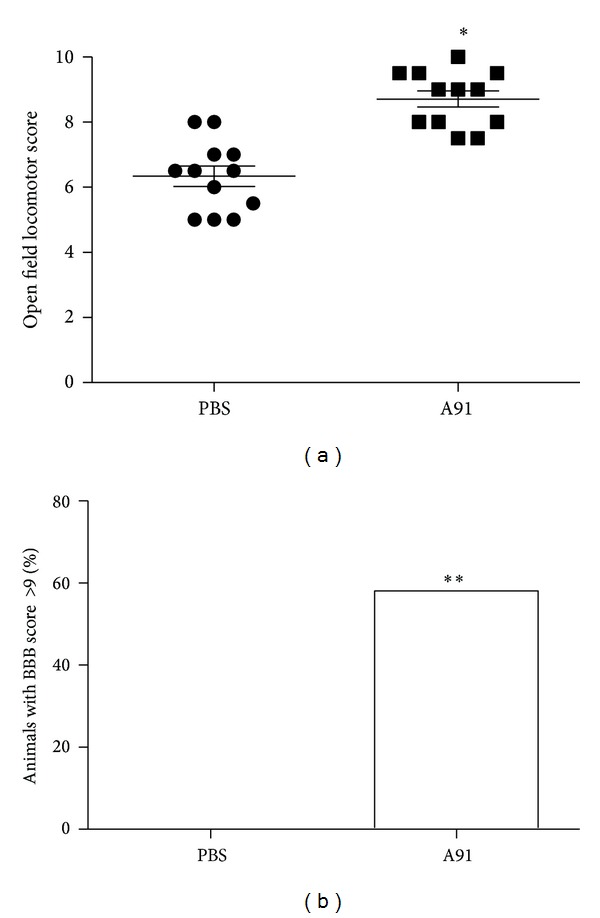
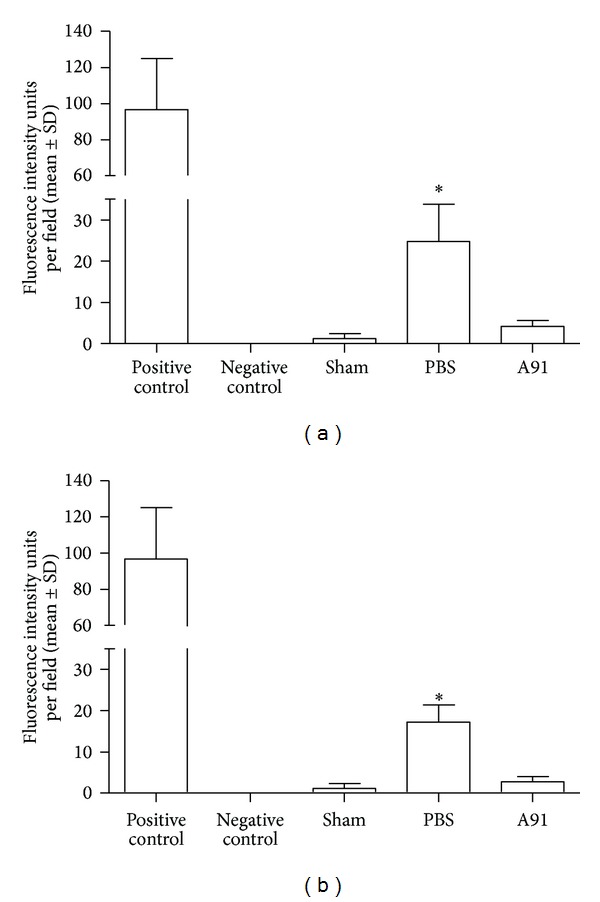
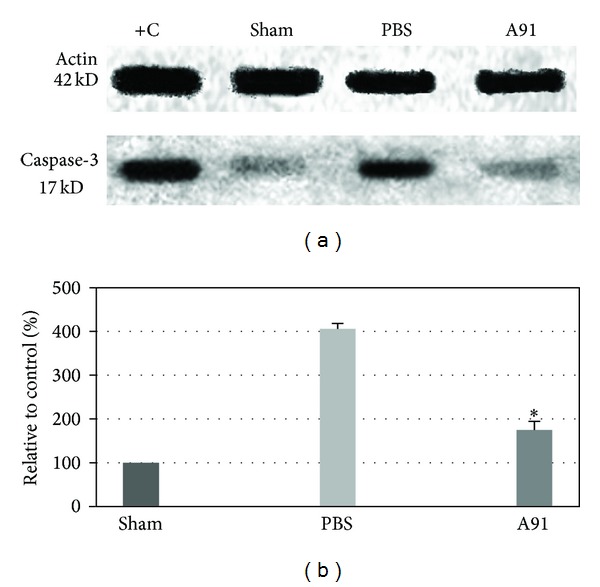
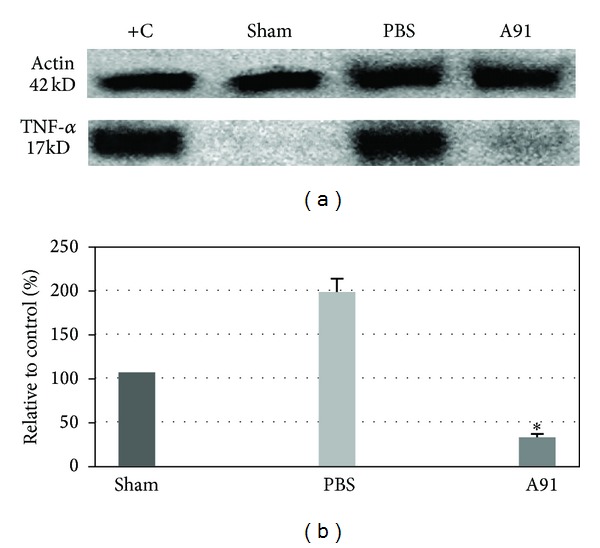
Apoptosis is one of the most destructive mechanisms that develop after spinal cord (SC) injury. Immunization with neural-derived peptides (INDPs) such as A91 has shown to reduce the deleterious proinflammatory response and the amount of harmful compounds produced after SC injury. With the notion that the aforementioned elements are apoptotic inducers, we hypothesized that INDPs would reduce apoptosis after SC injury. In order to test this assumption, adult rats were subjected to SC contusion and immunized either with A91 or phosphate buffered saline (PBS; control group). Seven days after injury, animals were euthanized to evaluate the number of apoptotic cells at the injury site. Apoptosis was evaluated using DAPI and TUNEL techniques; caspase-3 activity was also evaluated. To further elucidate the mechanisms through which A91 exerts this antiapoptotic effects we quantified tumor necrosis factor-alpha (TNF-α). To also demonstrate that the decrease in apoptotic cells correlated with a functional improvement, locomotor recovery was evaluated. Immunization with A91 significantly reduced the number of apoptotic cells and decreased caspase-3 activity and TNF-α concentration. Immunization with A91 also improved the functional recovery of injured rats. The present study shows the beneficial effect of INDPs on preventing apoptosis and provides more evidence on the neuroprotective mechanisms exerted by this strategy.
细胞凋亡是脊髓损伤后发生的最具破坏性的机制之一。用神经来源的肽(如 A91)进行免疫接种已被证明可以减少脊髓损伤后有害的促炎反应和产生的有害化合物的数量。鉴于上述元素是凋亡诱导物,我们假设 INDPs 会减少脊髓损伤后的细胞凋亡。为了验证这一假设,成年大鼠接受脊髓挫伤,并分别用 A91 或磷酸盐缓冲盐水(PBS;对照组)进行免疫接种。损伤后 7 天,处死动物以评估损伤部位的凋亡细胞数量。使用 DAPI 和 TUNEL 技术评估细胞凋亡;还评估了半胱天冬酶-3 的活性。为了进一步阐明 A91 发挥这种抗凋亡作用的机制,我们定量了肿瘤坏死因子-α(TNF-α)。为了证明凋亡细胞的减少与功能改善相关,还评估了运动功能的恢复。用 A91 免疫接种可显著减少凋亡细胞数量,并降低半胱天冬酶-3 活性和 TNF-α浓度。用 A91 免疫接种也改善了损伤大鼠的功能恢复。本研究显示了 INDPs 预防细胞凋亡的有益作用,并为该策略发挥的神经保护机制提供了更多证据。