Department of Biochemistry and Molecular Biology, The Pennsylvania State University, University Park, Pennsylvania 16802, USA;
Genes Dev. 2013 Nov 15;27(22):2500-11. doi: 10.1101/gad.229385.113.
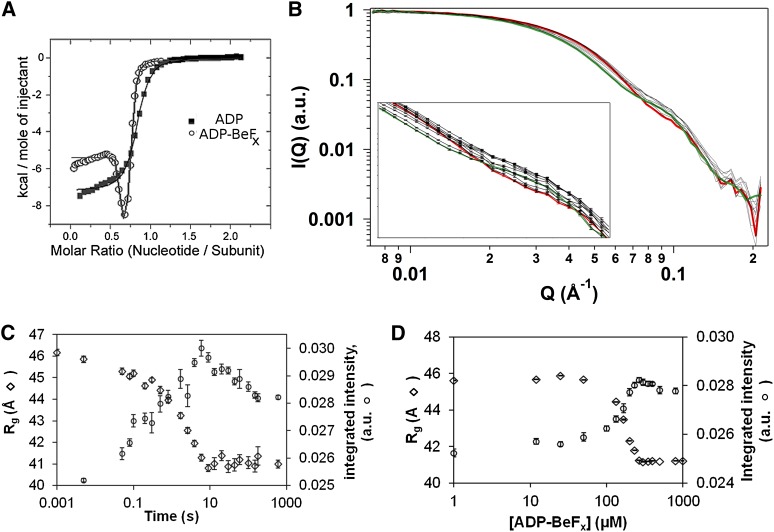
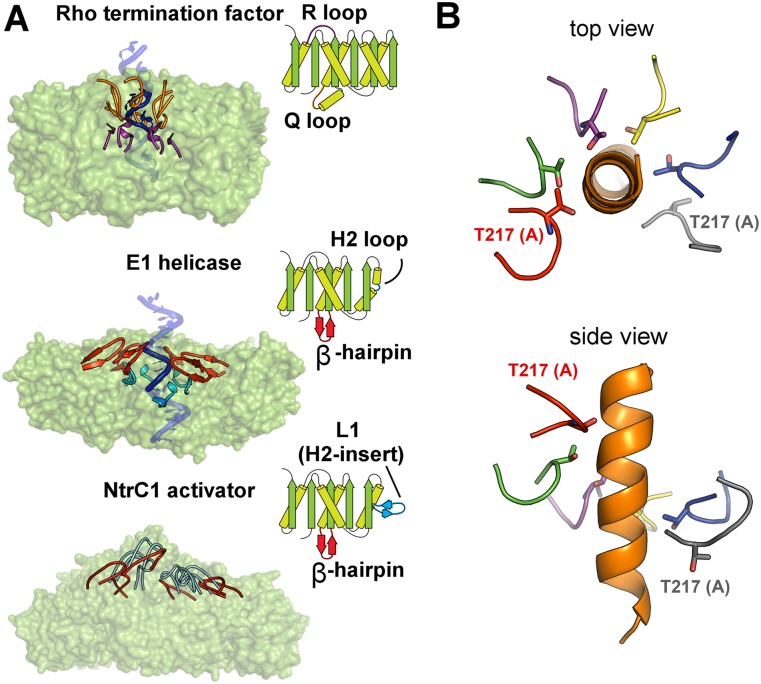
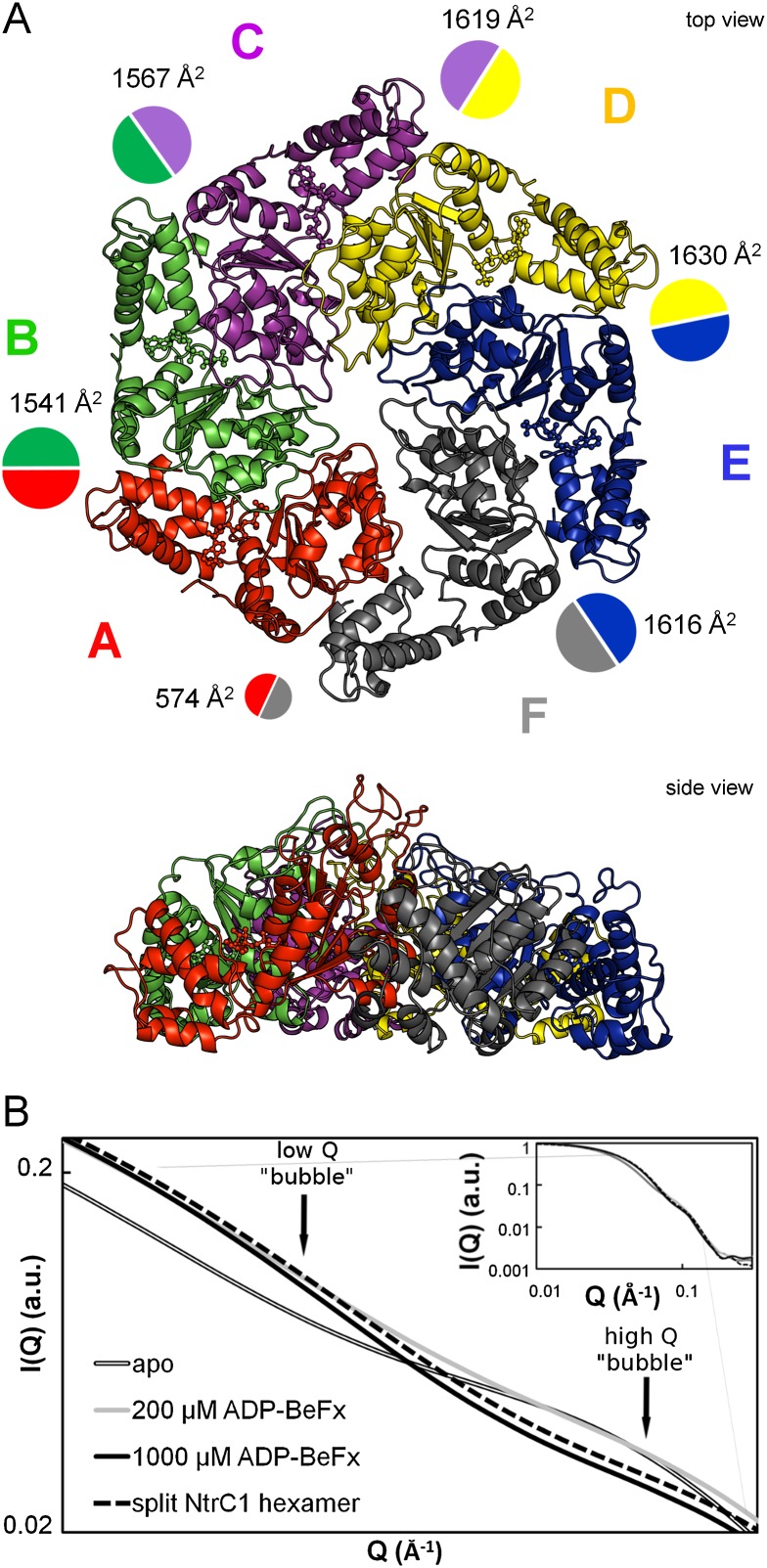
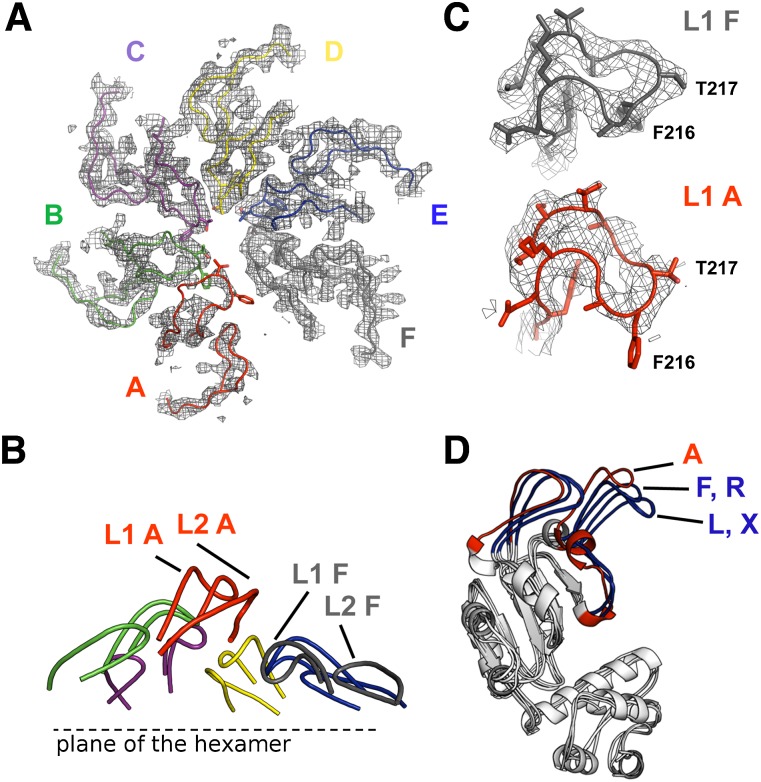
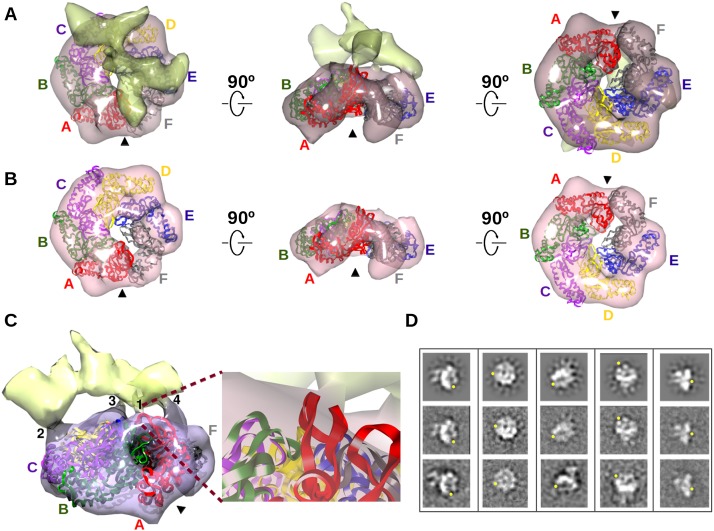
It is largely unknown how the typical homomeric ring geometry of ATPases associated with various cellular activities enables them to perform mechanical work. Small-angle solution X-ray scattering, crystallography, and electron microscopy (EM) reconstructions revealed that partial ATP occupancy caused the heptameric closed ring of the bacterial enhancer-binding protein (bEBP) NtrC1 to rearrange into a hexameric split ring of striking asymmetry. The highly conserved and functionally crucial GAFTGA loops responsible for interacting with σ54-RNA polymerase formed a spiral staircase. We propose that splitting of the ensemble directs ATP hydrolysis within the oligomer, and the ring's asymmetry guides interaction between ATPase and the complex of σ54 and promoter DNA. Similarity between the structure of the transcriptional activator NtrC1 and those of distantly related helicases Rho and E1 reveals a general mechanism in homomeric ATPases whereby complex allostery within the ring geometry forms asymmetric functional states that allow these biological motors to exert directional forces on their target macromolecules.
目前尚不清楚与各种细胞活动相关的 ATP 酶的典型同型环几何形状如何使它们能够进行机械工作。小角度溶液 X 射线散射、晶体学和电子显微镜 (EM) 重建表明,部分 ATP 占据导致细菌增强结合蛋白 (bEBP) NtrC1 的七聚体封闭环重新排列成具有惊人不对称性的六聚体分裂环。负责与 σ54-RNA 聚合酶相互作用的高度保守且功能至关重要的 GAFTGA 环形成了螺旋梯。我们提出,集合的分裂在寡聚体内指导 ATP 水解,并且环的不对称性指导 ATP 酶与 σ54 和启动子 DNA 复合物之间的相互作用。转录激活剂 NtrC1 的结构与远缘解旋酶 Rho 和 E1 的结构相似,揭示了同型 ATP 酶的一般机制,其中环几何形状内的复杂变构形成不对称功能状态,使这些生物马达能够对其靶大分子施加定向力。