Department of Cell, Developmental and Integrative Biology, University of Alabama at Birmingham, Birmingham, Alabama, United States of America.
PLoS One. 2013 Nov 11;8(11):e78728. doi: 10.1371/journal.pone.0078728. eCollection 2013.
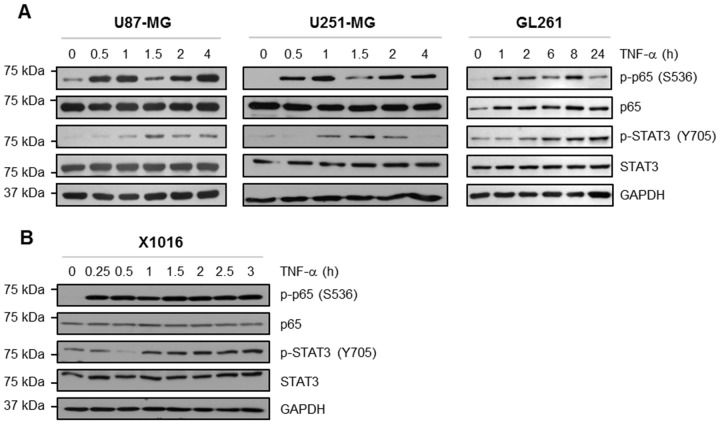
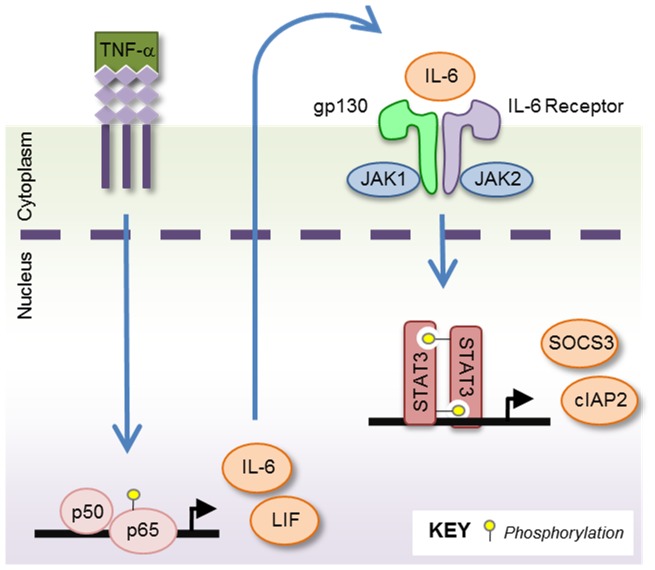
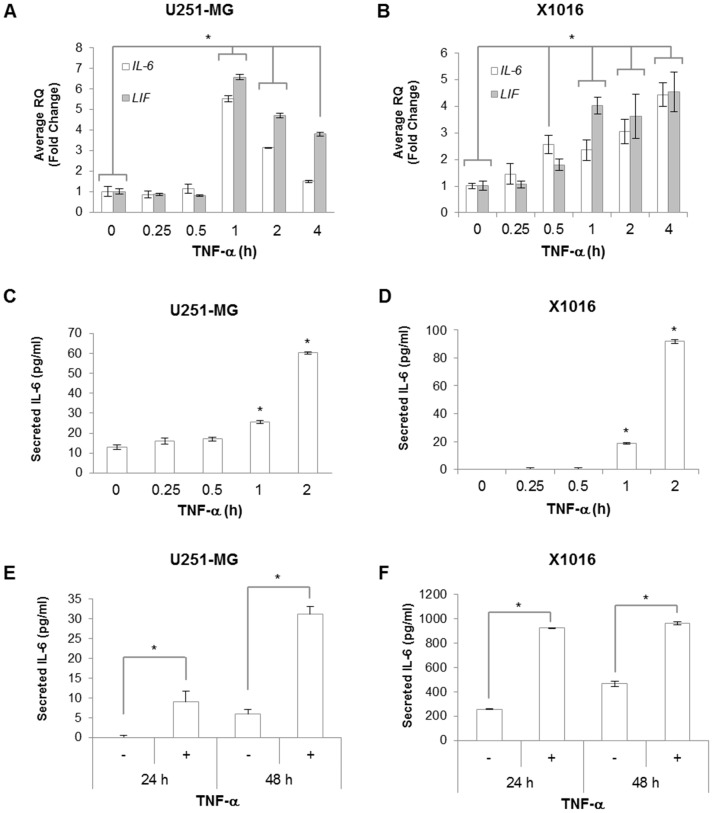
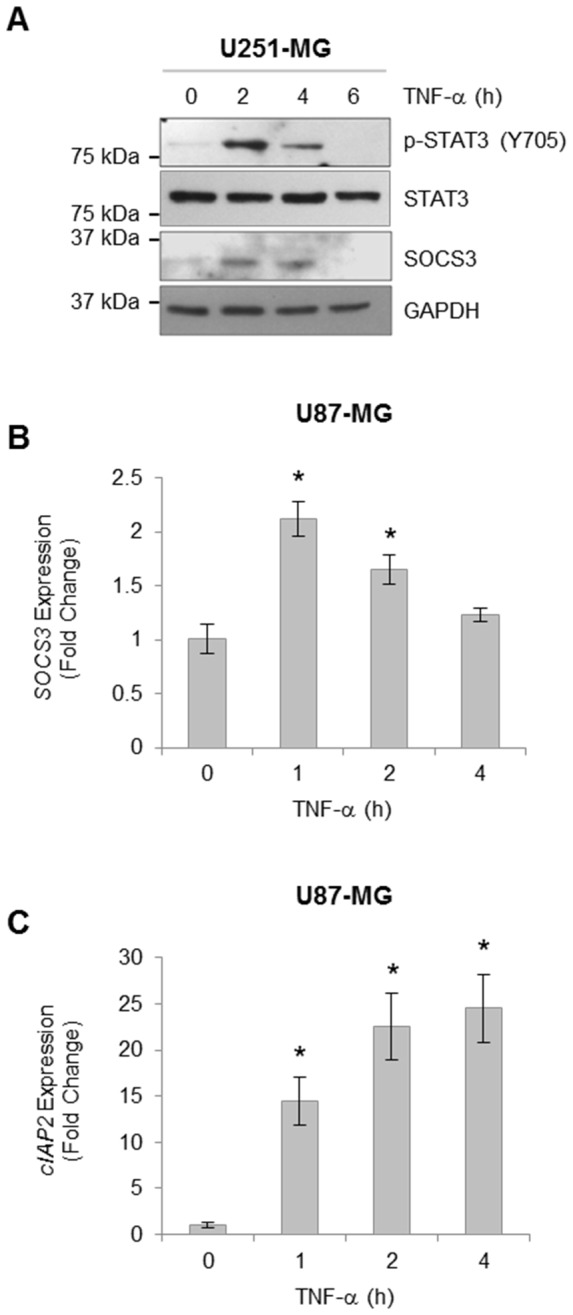
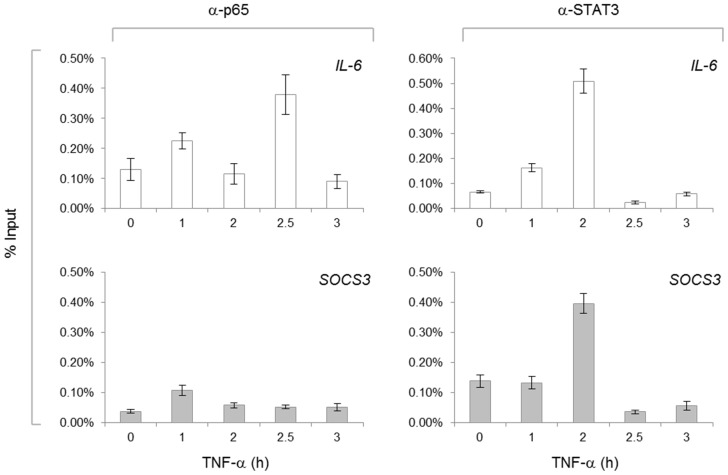
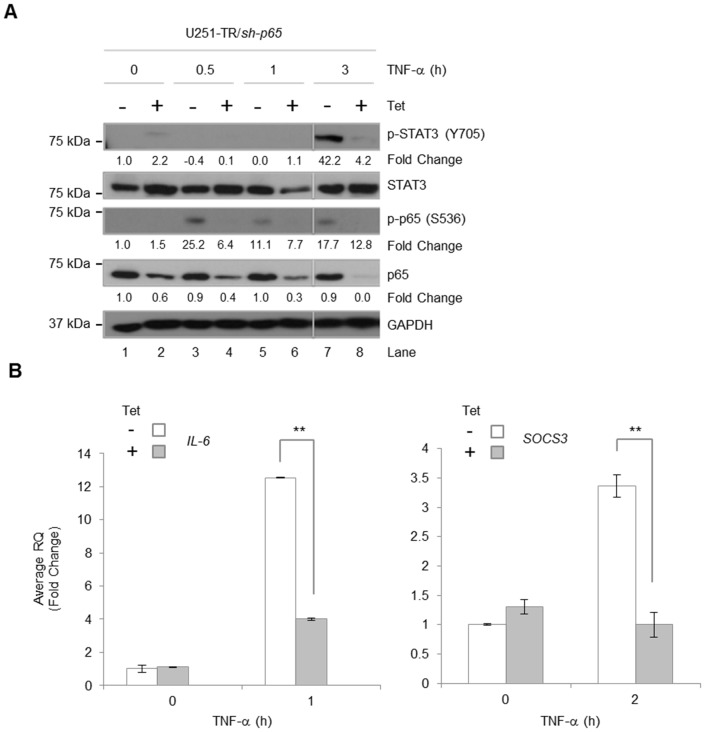
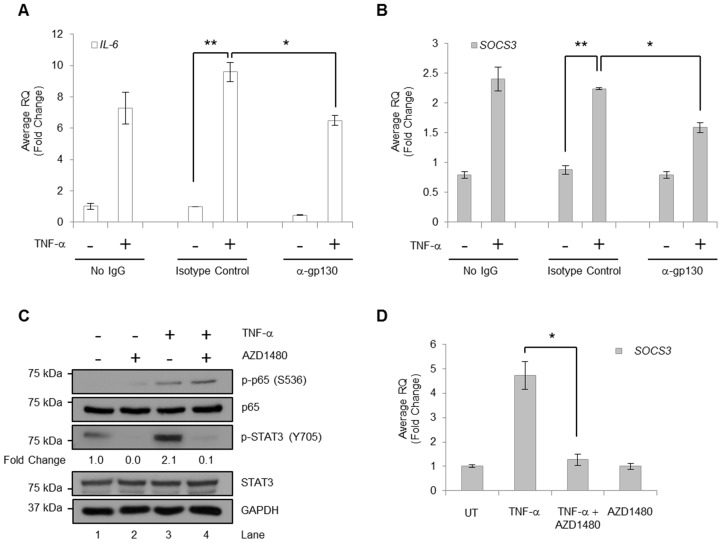
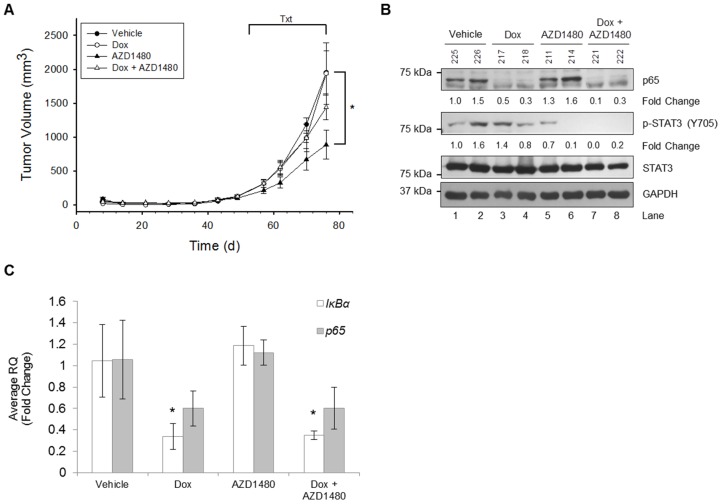
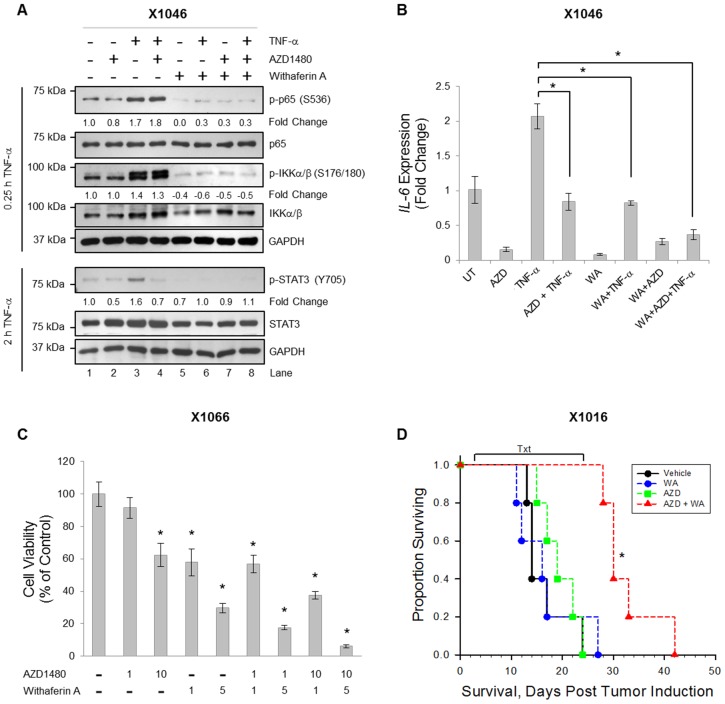
Glioblastoma (GBM) is the most aggressive, neurologically destructive and deadly tumor of the central nervous system (CNS). In GBM, the transcription factors NF-κB and STAT3 are aberrantly activated and associated with tumor cell proliferation, survival, invasion and chemoresistance. In addition, common activators of NF-κB and STAT3, including TNF-α and IL-6, respectively, are abundantly expressed in GBM tumors. Herein, we sought to elucidate the signaling crosstalk that occurs between the NF-κB and STAT3 pathways in GBM tumors. Using cultured GBM cell lines as well as primary human GBM xenografts, we elucidated the signaling crosstalk between the NF-κB and STAT3 pathways utilizing approaches that either a) reduce NF-κB p65 expression, b) inhibit NF-κB activation, c) interfere with IL-6 signaling, or d) inhibit STAT3 activation. Using the clinically relevant human GBM xenograft model, we assessed the efficacy of inhibiting NF-κB and/or STAT3 alone or in combination in mice bearing intracranial xenograft tumors in vivo. We demonstrate that TNF-α-induced activation of NF-κB is sufficient to induce IL-6 expression, activate STAT3, and elevate STAT3 target gene expression in GBM cell lines and human GBM xenografts in vitro. Moreover, the combined inhibition of NF-κB and STAT3 signaling significantly increases survival of mice bearing intracranial tumors. We propose that in GBM, the activation of NF-κB ensures subsequent STAT3 activation through the expression of IL-6. These data verify that pharmacological interventions to effectively inhibit the activity of both NF-κB and STAT3 transcription factors must be used in order to reduce glioma size and aggressiveness.
胶质母细胞瘤(GBM)是中枢神经系统(CNS)中最具侵袭性、神经破坏性和致命性的肿瘤。在 GBM 中,转录因子 NF-κB 和 STAT3 异常激活,并与肿瘤细胞增殖、存活、侵袭和化疗耐药性相关。此外,NF-κB 和 STAT3 的常见激活剂,分别为 TNF-α和 IL-6,在 GBM 肿瘤中大量表达。在此,我们试图阐明 GBM 肿瘤中 NF-κB 和 STAT3 通路之间发生的信号串扰。使用培养的 GBM 细胞系和原发性人 GBM 异种移植物,我们利用以下方法阐明了 NF-κB 和 STAT3 通路之间的信号串扰:a)降低 NF-κB p65 表达,b)抑制 NF-κB 激活,c)干扰 IL-6 信号,或 d)抑制 STAT3 激活。使用临床相关的人 GBM 异种移植物模型,我们评估了在携带颅内异种移植物肿瘤的小鼠中单独或联合抑制 NF-κB 和/或 STAT3 的疗效。我们证明 TNF-α诱导的 NF-κB 激活足以诱导 IL-6 表达,激活 STAT3,并在体外的 GBM 细胞系和人 GBM 异种移植物中上调 STAT3 靶基因表达。此外,联合抑制 NF-κB 和 STAT3 信号显著增加了携带颅内肿瘤的小鼠的存活率。我们提出,在 GBM 中,NF-κB 的激活通过 IL-6 的表达确保随后的 STAT3 激活。这些数据验证了必须使用药理学干预来有效抑制 NF-κB 和 STAT3 转录因子的活性,以减少神经胶质瘤的大小和侵袭性。