Reed Brent N, Sueta Carla A
University of North Carolina, 160 Dental Circle, CB 7075, Chapel Hill, NC 27599-7075, USA.
Curr Cardiol Rev. 2015;11(1):23-32. doi: 10.2174/1574884708666131117125508.
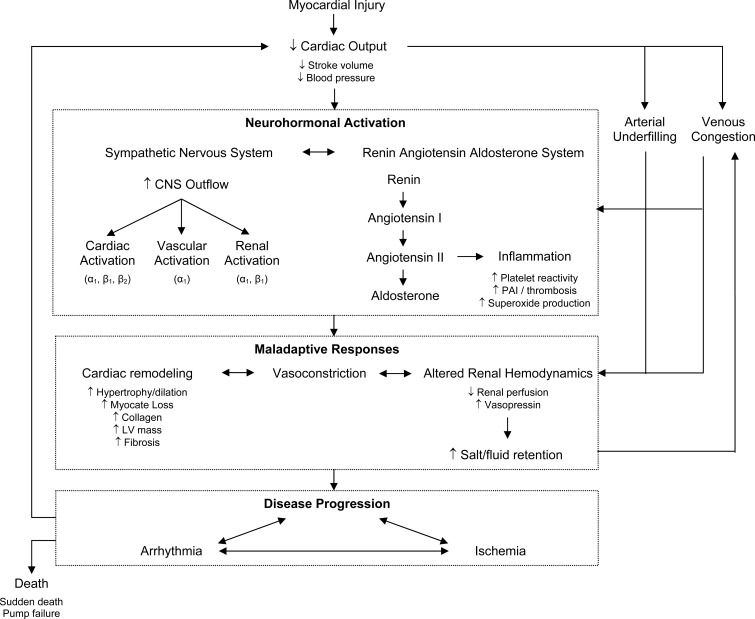
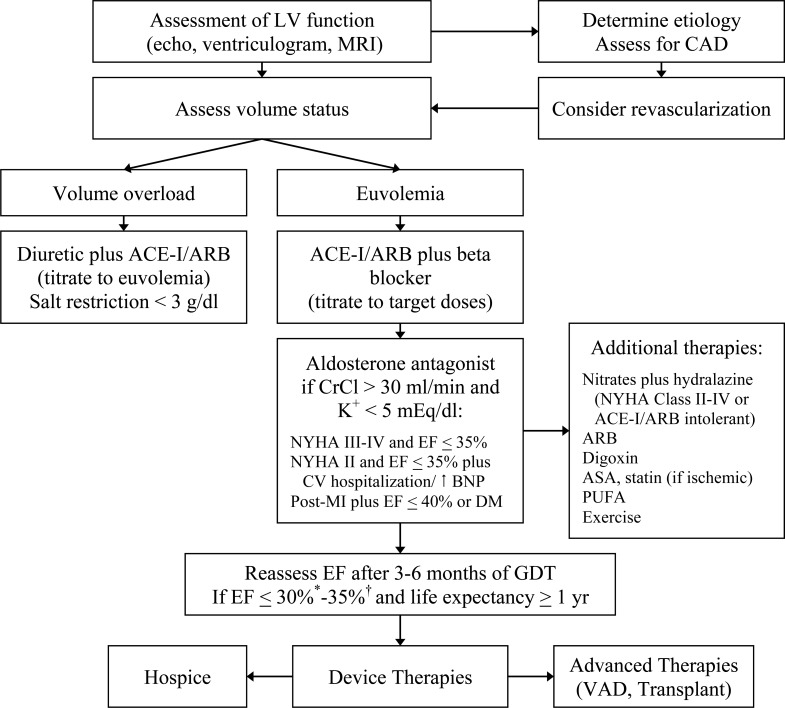
This review will outline the management of patients with symptomatic systolic heart failure or heart failure with reduced ejection fraction (HFrEF), i.e., those with structural heart disease and previous or current symptoms. Determination of volume status and appropriate diuretic administration is important in heart failure management. Inhibition of the renin-angiotensin-aldosterone and sympathetic nervous systems improves survival and decreases hospitalizations in patients with systolic or reduced ejection fraction HF (HFrEF). Beta blockers and aldosterone antagonists improve ejection fraction. Indications for additional agents including nitrates plus hydralazine, digoxin, statins, omega 3 polyunsaturated fatty acids, anticoagulants, and antiarrhythmics will be discussed. Choice of agents, dose-related effects, strategies to minimize adverse effects, and medications to avoid will be presented.
本综述将概述有症状的收缩性心力衰竭或射血分数降低的心力衰竭(HFrEF)患者的管理,即那些患有结构性心脏病且有既往或当前症状的患者。确定容量状态和适当使用利尿剂在心力衰竭管理中很重要。抑制肾素-血管紧张素-醛固酮系统和交感神经系统可提高收缩性或射血分数降低的心力衰竭(HFrEF)患者的生存率并减少住院次数。β受体阻滞剂和醛固酮拮抗剂可改善射血分数。还将讨论其他药物的适应证,包括硝酸盐加肼屈嗪、地高辛、他汀类药物、ω-3多不饱和脂肪酸、抗凝剂和抗心律失常药。将介绍药物的选择、剂量相关效应、尽量减少不良反应的策略以及应避免使用的药物。