Ishii Kei, Kanatsu-Shinohara Mito, Shinohara Takashi
Department of Molecular Genetics, Graduate School of Medicine, Kyoto University, Kyoto 606-8501, Japan.
J Reprod Dev. 2014 Mar 7;60(1):37-46. doi: 10.1262/jrd.2013-083. Epub 2013 Nov 21.
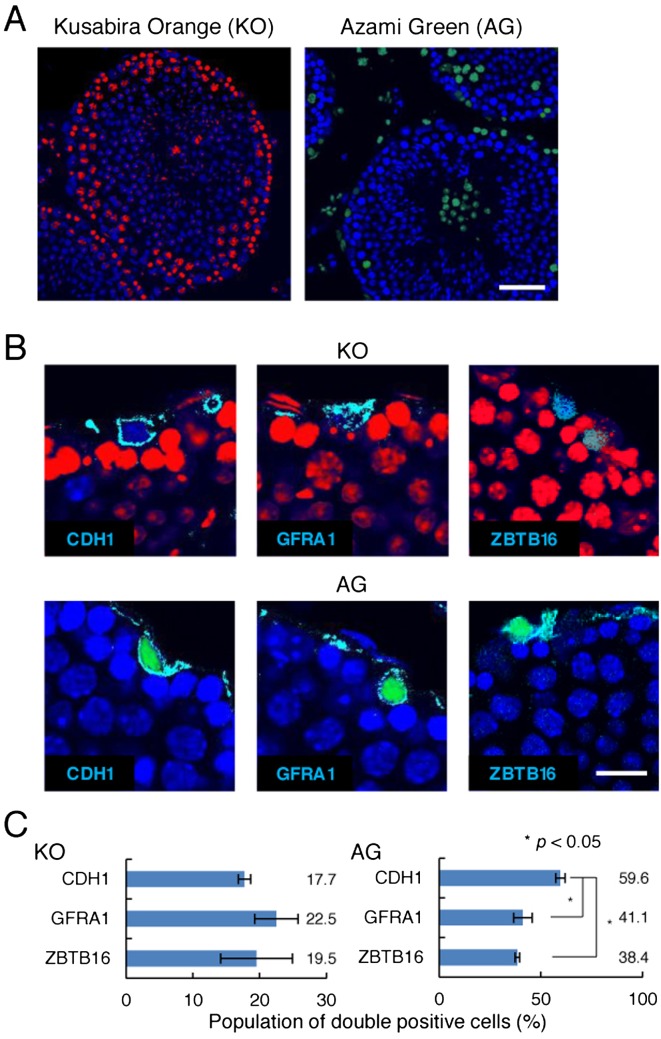
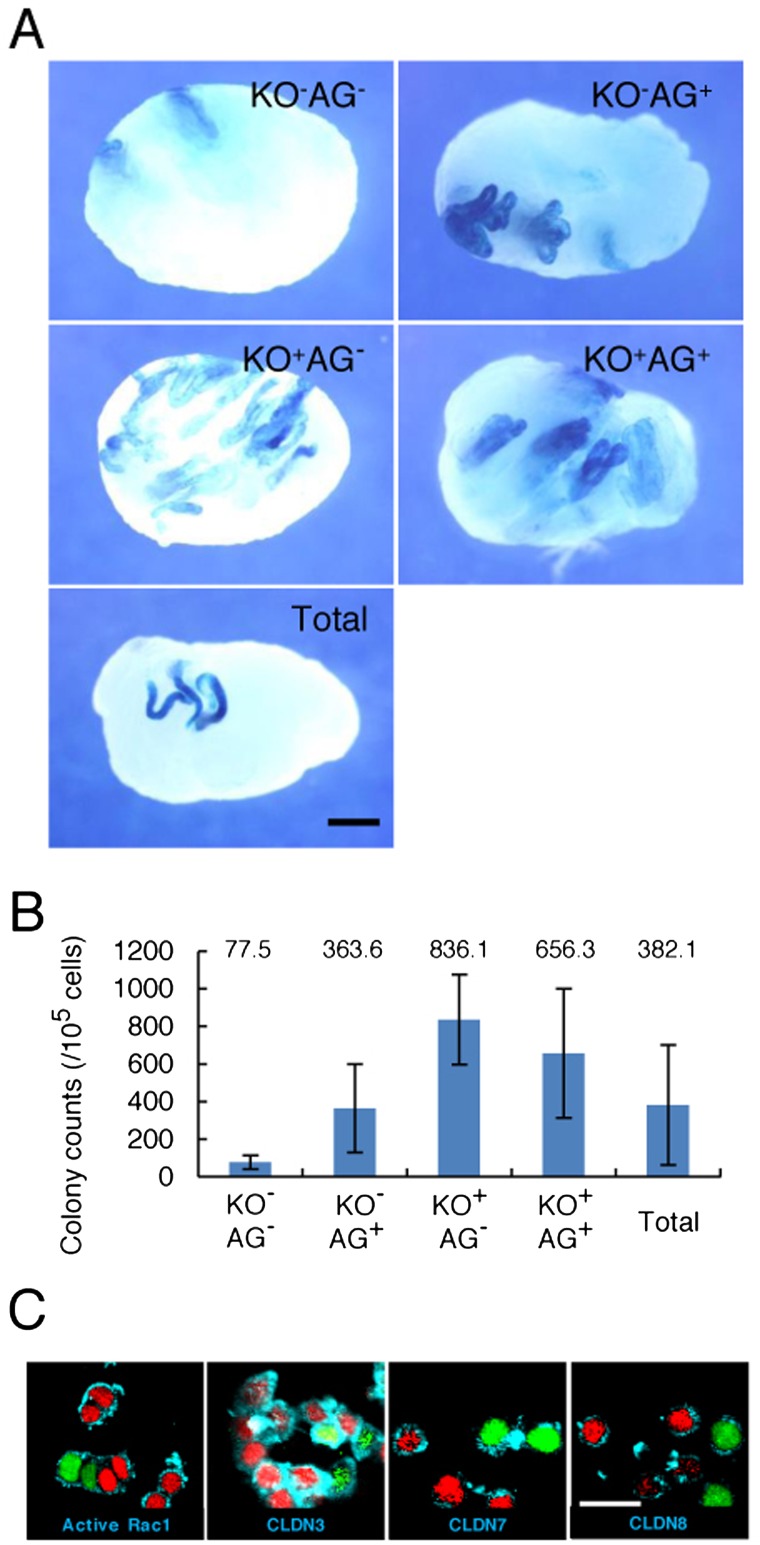
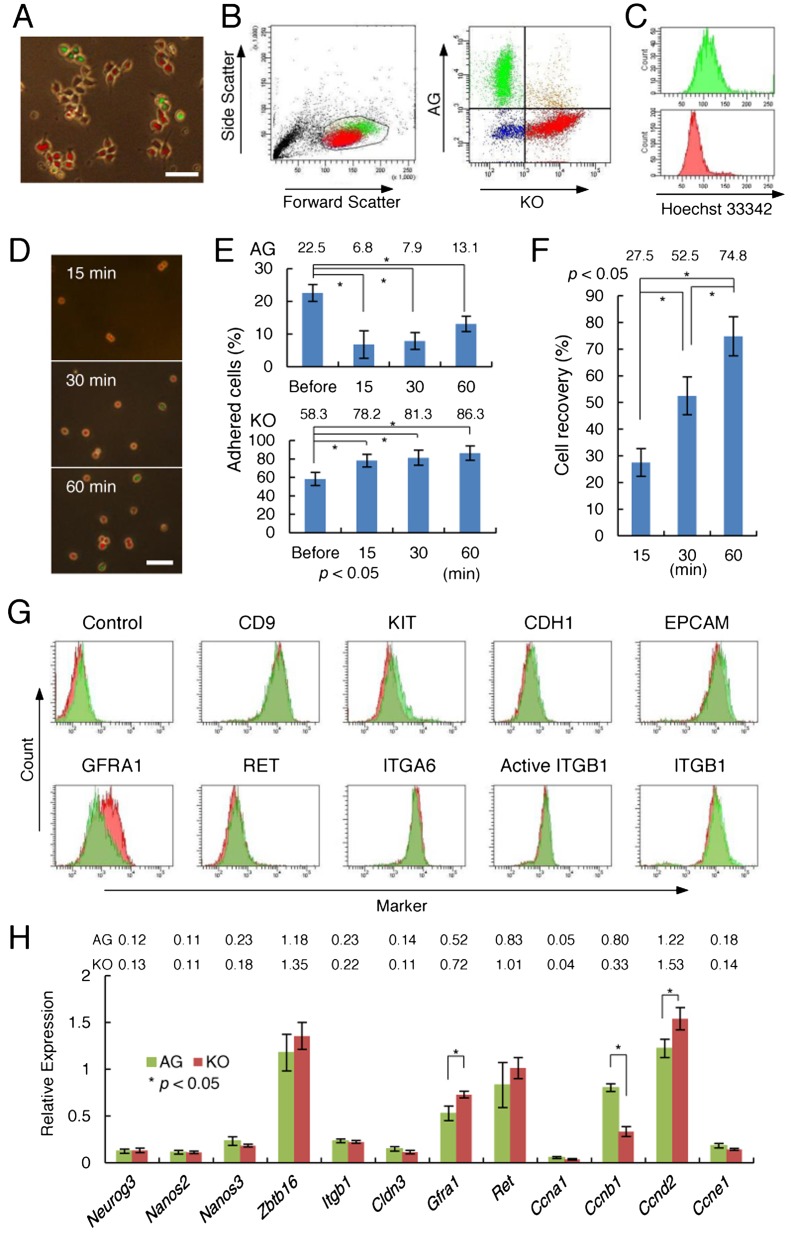
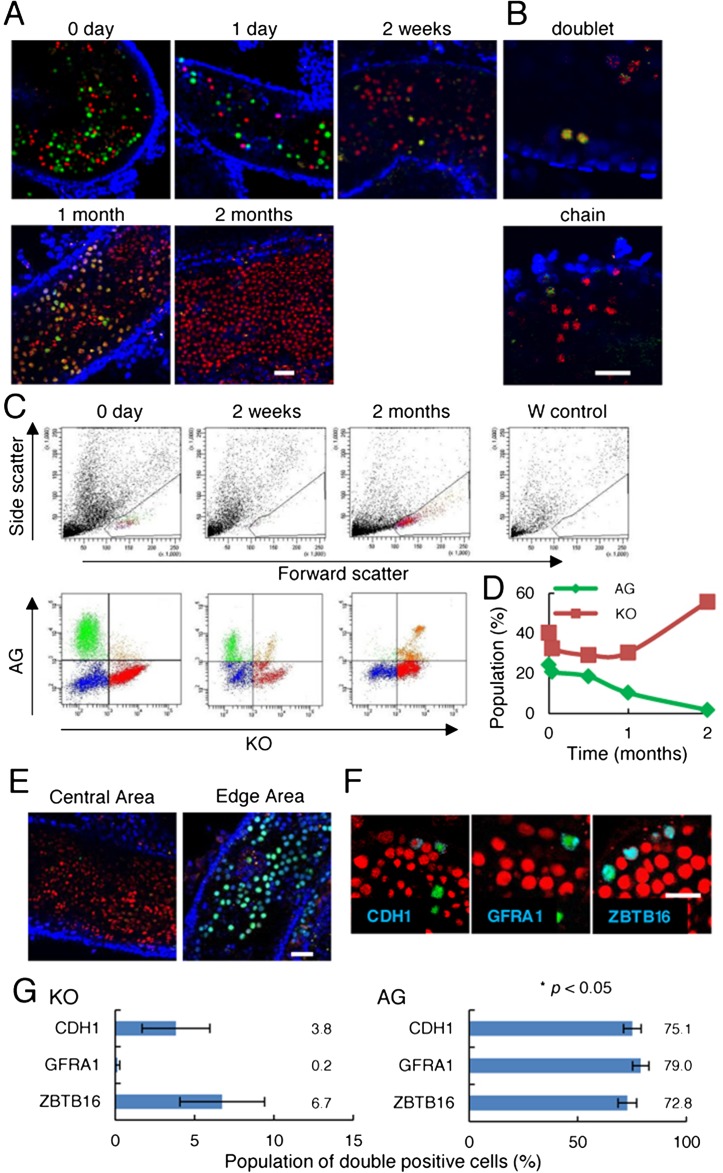
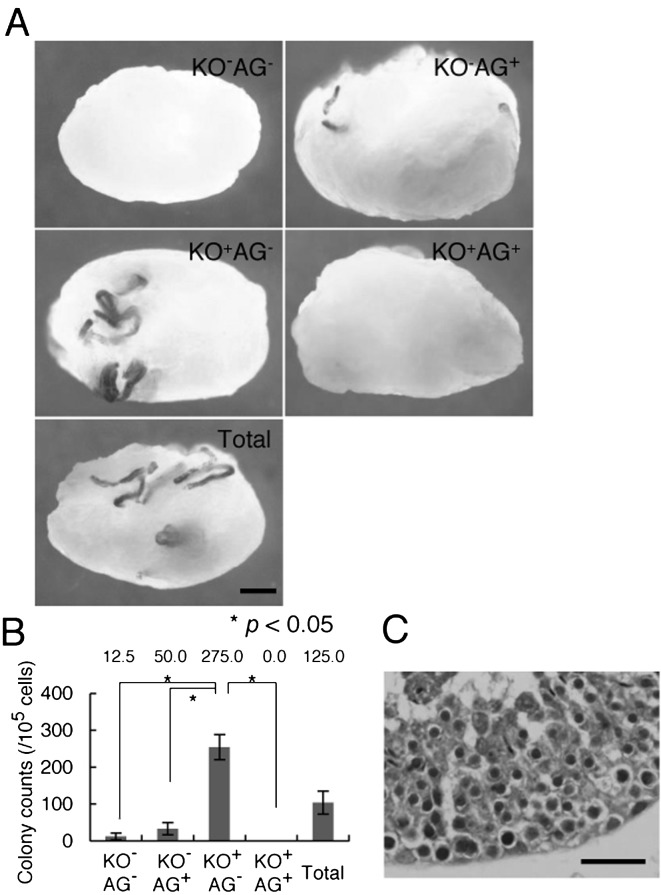
Spermatogonial stem cells (SSCs) migrate to the niche upon introduction into the seminiferous tubules of the testis of infertile animals. However, only 5-10% of the transplanted cells colonize recipient testes. In this study, we analyzed the impact of cell cycle on spermatogonial transplantation. We used fluorescent ubiquitination-based cell cycle indicator transgenic mice to examine the influence of cell cycle on SSC activity of mouse germline stem (GS) cells, a population of cultured spermatogonia enriched for SSCs. GS cells in the G1 phase are more efficient than those in the S/G2-M phase in colonizing the seminiferous tubules of adult mice. Cells in the G1 phase not only showed higher expression levels of GFRA1, a component of the GDNF self-renewal factor receptor, but also adhered more efficiently to laminin-coated plates. Furthermore, this cell cycle-dependency was not observed when cells were transplanted into immature pup recipients, which do not have the blood-testis barrier (BTB) between Sertoli cells, suggesting that cells in the G1 phase may passage through the BTB more readily than cells in the S/G2-M phase. Thus cell cycle status is an important factor in regulating SSC migration to the niche.
精原干细胞(SSCs)在被引入不育动物睾丸的生精小管后会迁移至龛位。然而,只有5%-10%的移植细胞能在受体睾丸中定植。在本研究中,我们分析了细胞周期对精原细胞移植的影响。我们使用基于荧光泛素化的细胞周期指示剂转基因小鼠来检测细胞周期对小鼠生殖系干细胞(GS)细胞(一群富集了SSCs的培养精原细胞)的SSC活性的影响。处于G1期的GS细胞在定植成年小鼠的生精小管方面比处于S/G2-M期的细胞更有效。处于G1期的细胞不仅显示出胶质细胞源性神经营养因子(GDNF)自我更新因子受体的一个组分GFRA1的更高表达水平,而且能更有效地黏附于层粘连蛋白包被的平板。此外,当将细胞移植到未成熟幼崽受体中时未观察到这种细胞周期依赖性,这些幼崽在支持细胞之间没有血睾屏障(BTB),这表明处于G1期的细胞可能比处于S/G2-M期的细胞更容易穿过BTB。因此,细胞周期状态是调节SSC向龛位迁移的一个重要因素。